Humble in Harris County, Texas — The American South (West South Central)
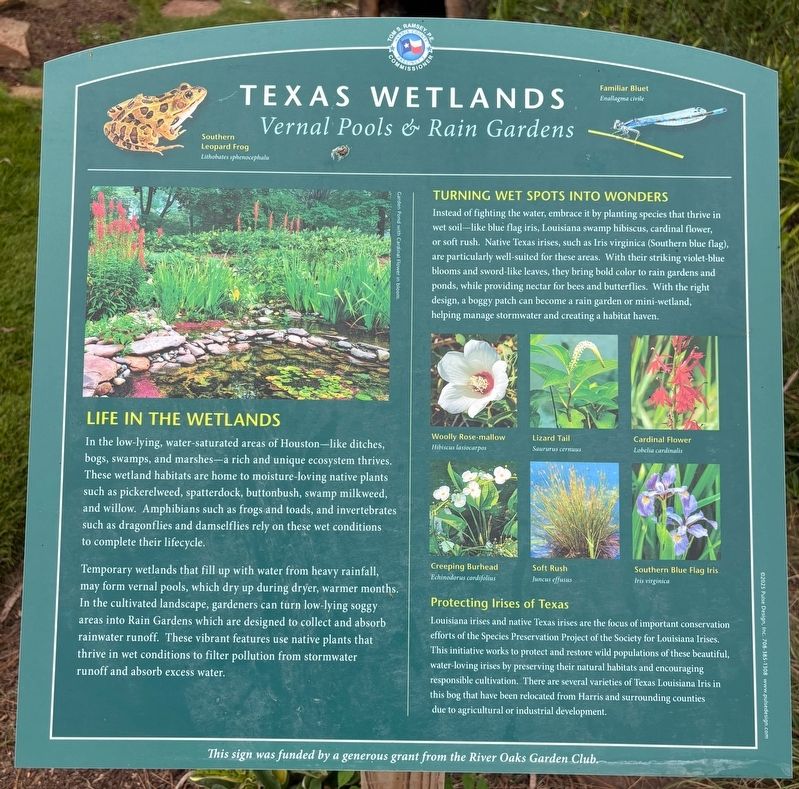
Texas Wetlands
Vernal Pools & Rain Gardens
Photographed by Sean P. Flynn, September 17, 2026
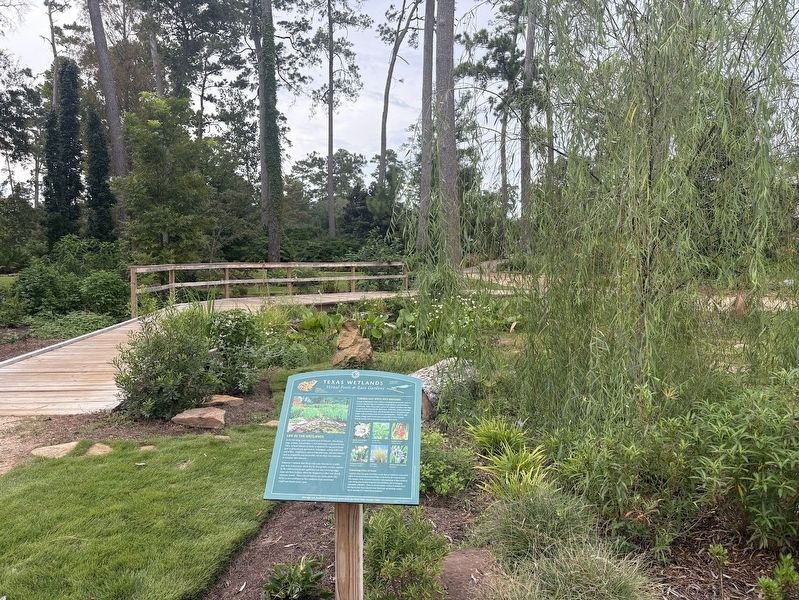
1. Texas Wetlands Marker
Life in the Wetlands
In the low-lying, water-saturated areas of Houston-like ditches, bogs, swamps, and marshes a rich and unique ecosystem thrives. These wetland habitats are home to moisture-loving native plants such as pickerelweed, spatterdock, buttonbush, swamp milkweed, and willow. Amphibians such as frogs and toads, and invertebrates such as dragonflies and damselflies rely on these wet conditions to complete their lifecycle.
Temporary wetlands that fill up with water from heavy rainfall, may form vernal pools, which dry up during dryer, warmer months. In the cultivated landscape, gardeners can turn low-lying soggy areas into Rain Gardens which are designed to collect and absorb rainwater runoff. These vibrant features use native plants that thrive in wet conditions to filter pollution from stormwater runoff and absorb excess water.
Turning Wet Spots into Wonders
Instead of fighting the water, embrace it by planting species that thrive in wet soil-like blue flag iris, Louisiana swamp hibiscus, cardinal flower, or soft rush. Native Texas irises, such as Iris virginica (Southern blue flag), are particularly
this page online
Protecting Irises of Texas
Louisiana irises and native Texas irises are the focus of important conservation efforts of the Species Preservation Project of the Society for Louisiana Irises. This initiative works to protect and restore wild populations of these beautiful, water-loving irises by preserving their natural habitats and encouraging responsible cultivation. There are several varieties of Texas Louisiana Iris in this bog that have been relocated from Harris and surrounding counties due to agricultural or industrial development.
Topics. This historical marker is listed in these topic lists: Environment • Horticulture & Forestry • Waterways & Vessels.
Location. 30° 2.368′ N, 95° 22.867′ W. Marker is in Humble, Texas, in Harris County. It can be
Photographed by Sean P. Flynn, September 17, 2026
2. Texas Wetlands Marker

Regionally, this marker is in the Houston Metropolitan Area. It is also in the American South and on the Gulf Coast. Globally, it is in North America, a Gulf of Mexico state, the Western Hemisphere, the Western World, and the Anglosphere. Historically, it finds itself in what was once New Spain, the Republic of Texas, one of the Confederate States of America, and the Antebellum South.
Other nearby markers. At least 8 other markers are within walking distance of this marker: Petrified Wood (within shouting distance of this marker); If Tree Facts Give You a Headache.... (within shouting distance of this marker); Prehistoric Garden (within shouting distance of this marker); Borden Oak (about 300 feet away, measured in a direct line); Endangered Species (about 400 feet away); Rain Gardens in Texas (about 400 feet away); The Healing Garden (about 400 feet away); Don't Bag It — Compost It!
Photographed by Sean P. Flynn, September 17, 2026
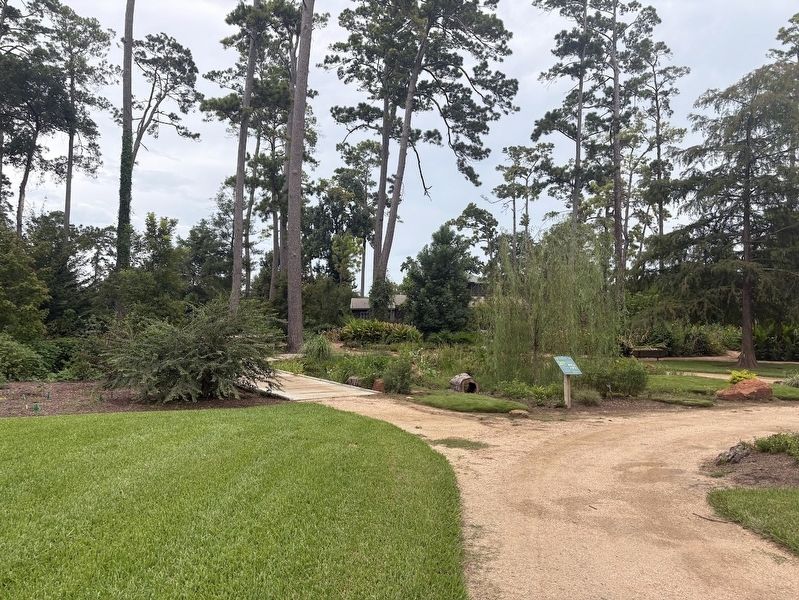
3. Texas Wetlands Marker
Also see . . . Society for Louisiana Irises: Species Preservation Project. (Submitted on September 18, 2026, by Sean P. Flynn of Oak Park, Illinois.)
Credits. This page was last revised on September 18, 2026. It was originally submitted on September 18, 2026, by Sean P. Flynn of Oak Park, Illinois. This page has been viewed 3 times since then. Photos: 1, 2, 3. submitted on September 18, 2026, by Sean P. Flynn of Oak Park, Illinois.
