Humble in Harris County, Texas — The American South (West South Central)
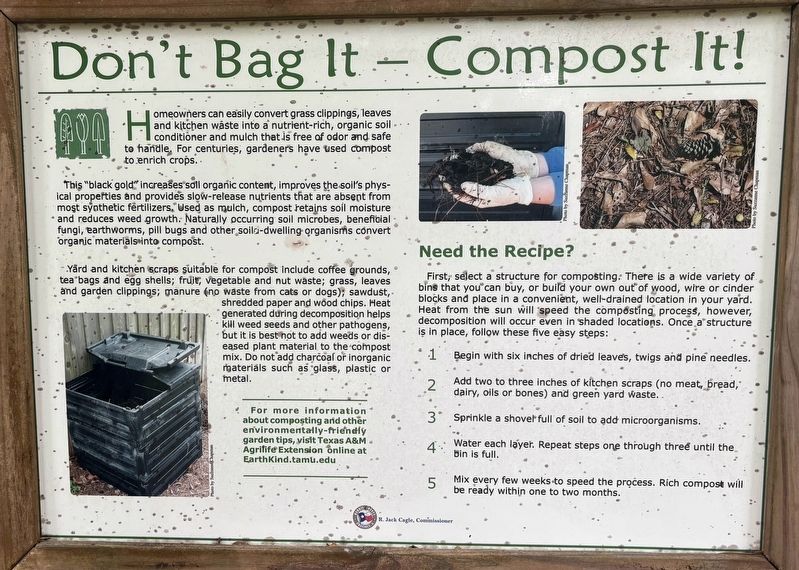
Don't Bag It — Compost It!
Photographed by Sean P. Flynn, September 17, 2026
1. Don't Bag It — Compost It! Marker
This "black gold" increases soil organic content, improves the soil's physical properties and provides slow-release nutrients that are absent from most synthetic fertilizers. Used as mulch, compost retains soil moisture and reduces weed growth. Naturally occurring soil microbes, beneficial fungi, earthworms, pill bugs and other soila-dwelling organisms convert organic materials into compost.
Yard and kitchen scraps suitable for compost include coffee grounds, tea bags and egg shells; fruit, vegetable and nut waste; grass, leaves and garden clippings; manure (no waste from cats or dogs); sawdust, shredded paper and wood chips. Heat generated during decomposition helps kill weed seeds and other pathogens, but it is best not to add weeds or diseased plant material to the compost mix. Do not add charcoal or inorganic materials such as glass, plastic or metal.
For more information about composting
this page online
Need the Recipe?
First, select a structure for composting. There is a wide variety of bins that you can buy, or build your own out of wood, wire or cinder blocks and place in a convenient, well-drained location in your yard. Heat from the sun will speed the composting process, however, decomposition will occur even in shaded locations. Once a structure is in place, follow these five easy steps:
1. Begin with six inches of dried leaves, twigs and pine needles.
2. Add two to three inches of kitchen scraps (no meat, bread, dairy, oils or bones) and green yard waste.
3. Sprinkle a shovel full of soil to add microorganisms.
4. Water each layer. Repeat steps one through three until the bin is full.
5. Mix every few weeks to speed the process. Rich compost will be ready within one to two months.
Topics. This historical marker is listed in these topic lists: Agriculture • Environment • Food & Drink.
Location. 30° 2.322′ N, 95° 22.811′ W. Marker is in Humble, Texas,
Photographed by Sean P. Flynn, September 17, 2026
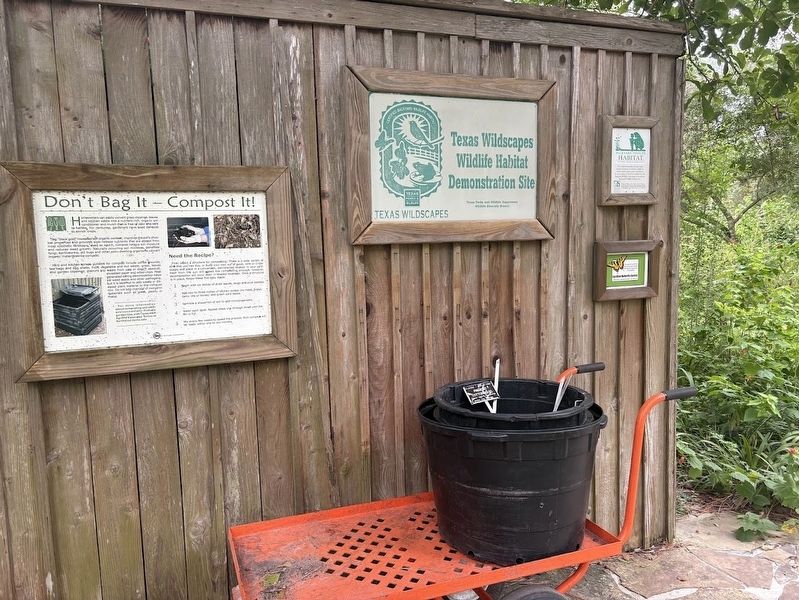
2. Don't Bag It — Compost It! Marker

Regionally, this marker is in the Houston Metropolitan Area. It is also in the American South and on the Gulf Coast. Globally, it is in North America, a Gulf of Mexico state, the Western Hemisphere, the Western World, and the Anglosphere. Historically, it finds itself in what was once New Spain, the Republic of Texas, one of the Confederate States of America, and the Antebellum South.
Other nearby markers. At least 8 other markers are within walking distance of this marker: Rain Gardens in Texas (a few steps from this marker); Endangered Species (a few steps from this marker); a different marker also named Endangered Species (a few steps from this marker); a different marker also named Endangered Species (a few steps from this marker); The Healing Garden (within shouting distance of this marker); Monarch Habitat (within shouting distance of this
Photographed by Sean P. Flynn, September 17, 2026
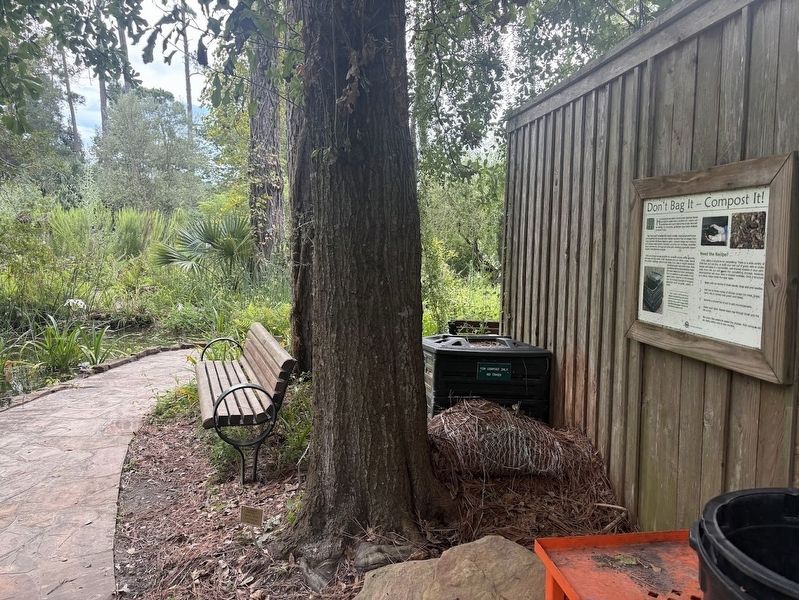
3. Don't Bag It — Compost It! Marker at Mercer Botanic Gardens
Credits. This page was last revised on September 18, 2026. It was originally submitted on September 18, 2026, by Sean P. Flynn of Oak Park, Illinois. This page has been viewed 6 times since then. Photos: 1, 2, 3. submitted on September 18, 2026, by Sean P. Flynn of Oak Park, Illinois.
