Humble in Harris County, Texas — The American South (West South Central)
Endangered Species
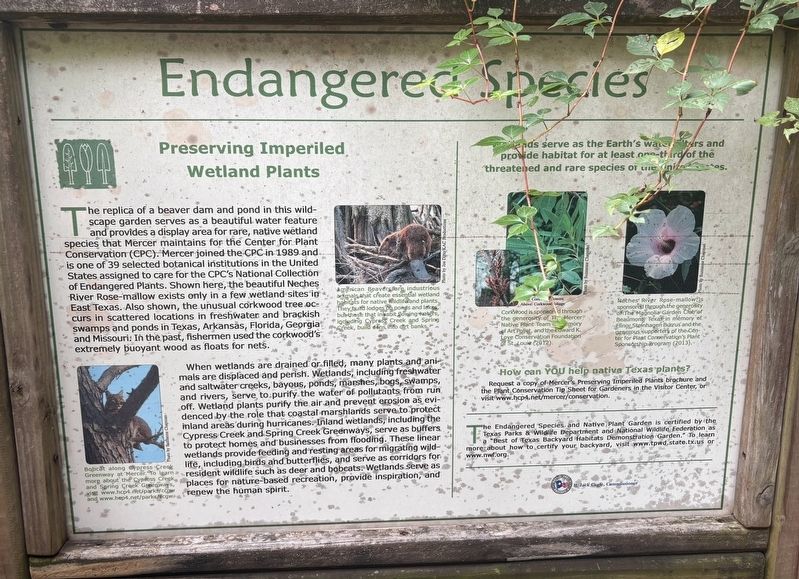
Preserving Imperiled Wetland Plants
Photographed by Sean P. Flynn, September 17, 2026
1. Endangered Species Marker
When wetlands are drained or filled, many plants and animals are displaced and perish. Wetlands, including freshwater and saltwater creeks, bayous, ponds, marshes, bogs, swamps, and rivers, serve, to purify the water of pollutants from run off. Wetland plants purify the air and prevent erosion as evidenced by the role that coastal marshlands serve to protect inland areas during hurricanes.
this page online
[Caption beneath the beaver photo:]
American Beavers are industrious animals that create essential wetland habitats for native wildlife and plants. They build lodges on ponds and lakes, but those that inhabit flowing waters, including Cypress Creek and Spring Creek, build dens, into dirt banks.
[Caption beneath the bobcat photo:]
Bobcat along Cypress Creek Greenway at Mercer. To learn more about the Cypress Creek and Spring Creek Greenways, visit www.hcp4.net/parks/ccow and www.hep4.net/parks/scgw.
Wetlands serve as the Earth's water filters and provide habitat for at least one-third of the threatened and rare species of the United States.
How can YOU help native Texas plants?
Request a copy of Mercer's
Photographed by Sean P. Flynn, September 17, 2026
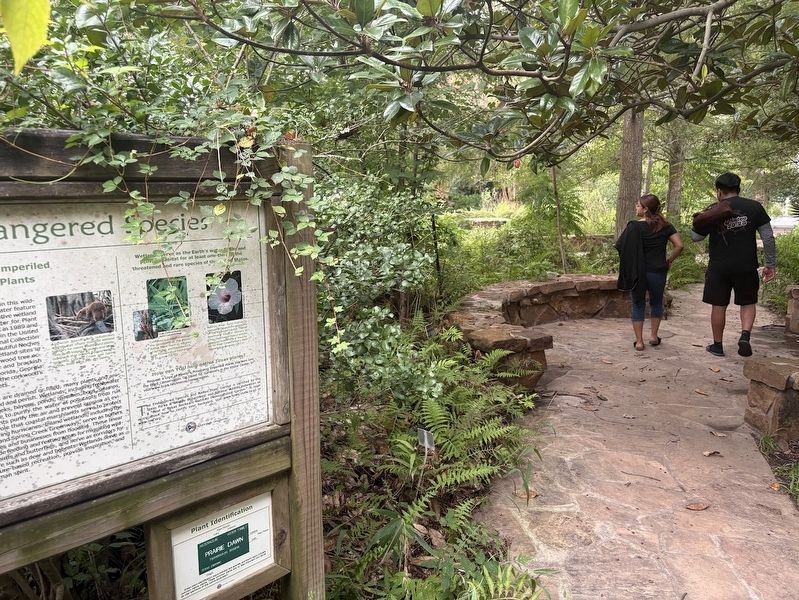
2. Endangered Species Garden at Mercer Botanic Gardens
The Endangered Species and Native Plant Garden is certified by the Texas Parks & Wildlife Department and National Wildlife Federation as a "Best of Texas Backyard Habitats Demonstration Garden." To learn more about how to certify your backyard, visit www.tpwd.state.tx.us or www.nwf.org.
Topics. This historical marker is listed in these topic lists: Environment • Horticulture & Forestry • Waterways & Vessels. A significant historical year for this entry is 1989.
Location. 30° 2.323′ N, 95° 22.821′ W. Marker is in Humble, Texas, in Harris County. It can be reached from Aldine Westfield Road half a mile north of Treaschwig Road, on the right when traveling north. The marker is in Mercer Botanic Gardens. Touch for map. Marker is at or near this postal address: 22306 Aldine Westfield Road, Houston TX 77073, United States of America. Touch for directions.

Regionally, this marker is in the Houston Metropolitan Area. It is also in the American South and on the Gulf Coast.
Photographed by Sean P. Flynn, September 17, 2026
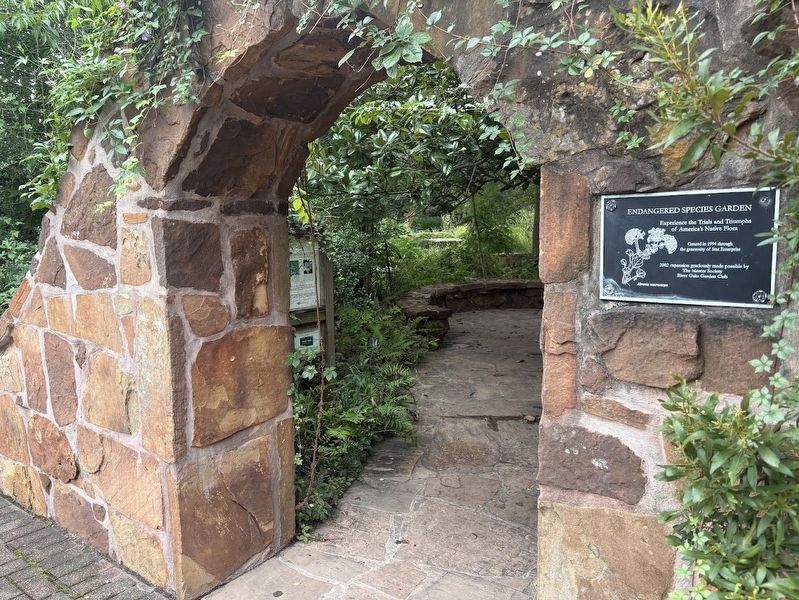
3. Entrance to Endangered Species Garden at Mercer Botanic Gardens
Other nearby markers. At least 8 other markers are within walking distance of this marker: Rain Gardens in Texas (a few steps from this marker); Don't Bag It — Compost It! (a few steps from this marker); a different marker also named Endangered Species (a few steps from this marker); a different marker also named Endangered Species (within shouting distance of this marker); Shakespeare Garden (within shouting distance of this marker); The Healing Garden (within shouting distance of this marker); Monarch Habitat (within shouting distance of this marker); Prehistoric Garden (within shouting distance of this marker). Touch for a list and map of all markers in Humble.
More about this marker. This is one of several signs with this title that can be found around the Endangered Species Garden at Mercer Botanic Gardens. Each has somewhat different text.
Credits. This page was last revised on September 18, 2026. It was originally submitted on September 18, 2026, by Sean P. Flynn of Oak Park, Illinois. This page has been viewed 3 times since then. Photos: 1, 2, 3. submitted on September 18, 2026, by Sean P. Flynn of Oak Park, Illinois.
