Eustis in Lake County, Florida — The American South (South Atlantic)
Tangelo Tree
Grapefruit X Tangerine Cross
Photographed by Cosmos Mariner, September 26, 2026
1. Tangelo Tree Marker
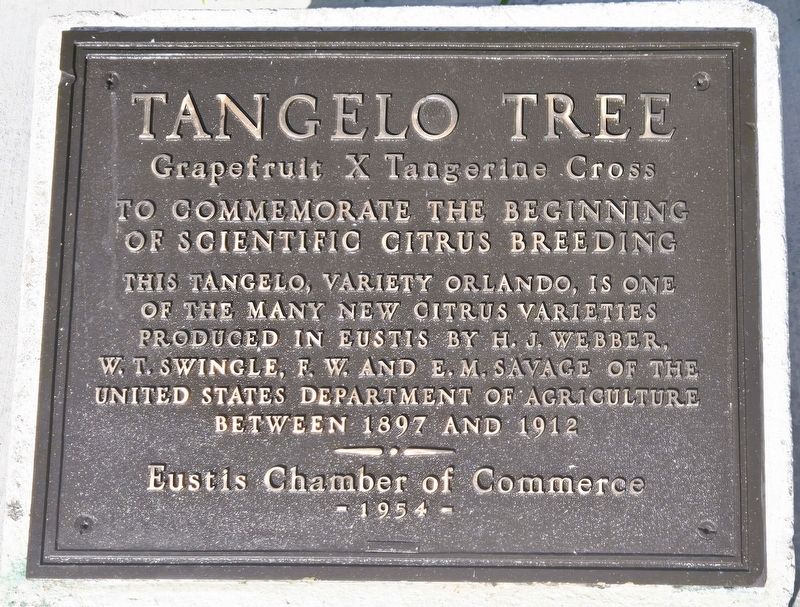
To commemorate the beginning of scientific citrus breeding this tangelo, variety Orlando, is one of the many new citrus varieties produced in Eustis by H. J. Webber, W. T. Swingle, F. W. and E. M. Savage of the United States Department of Agriculture between 1897 and 1912.
Erected 1954 by Eustis Chamber of Commerce.
Topics. This historical marker is listed in these topic lists: Agriculture • Horticulture & Forestry • Science & Medicine. A significant historical year for this entry is 1897.
Location. 28° 51.479′ N, 81° 41.155′ W. Marker is in Eustis, Florida, in Lake County. It is on North Bay Street (Florida Route 19) just south of Northshore Drive (Bates Avenue), on the right when traveling south. The marker is beside the front/east sidewalk on the Eustis Historical Museum grounds. Touch for map. Marker is at or near this postal address: 536 North Bay Street, Eustis FL 32726, United States of America. Touch for directions.

Regionally, this marker is in Greater Orlando and in Central Florida. It is also in the American South. Globally, it is in the North Atlantic Region, North America, a Gulf of Mexico
this page online
Other nearby markers. At least 8 other markers are within walking distance of this marker: Captain David M. Walker (here, next to this marker); The Clifford House (a few steps from this marker); Entrance Names (about 300 feet away, measured in a direct line); a different marker also named Clifford House (about 400 feet away); The Pavilion (about 400 feet away); On The Waterfront (about 400 feet away); Boat Works (about 500 feet away); Lake Eustis (about 500 feet away). Touch for a list and map of all markers in Eustis.
Also see . . .
1. U.S. Horticultural Research Laboratory (U.S. Department of Agriculture).
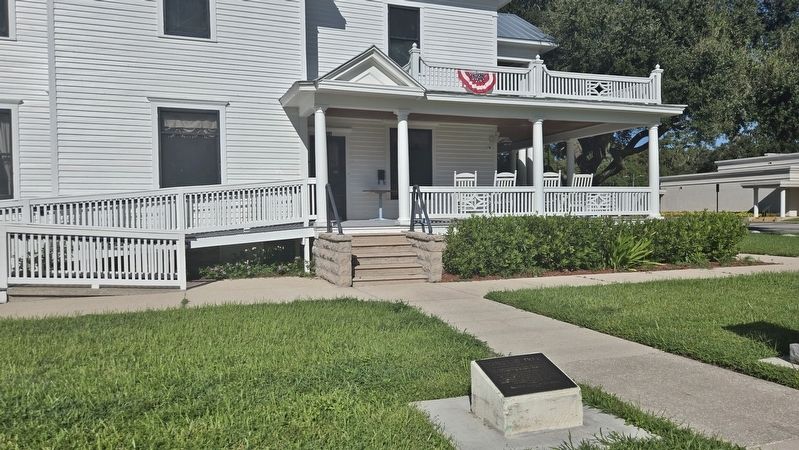
Excerpt: The United States Department of Agriculture (USDA) established the first citrus experiment station in Eustis, Florida in 1892. Scientists Dr. Walter T. Swingle and Herbert J. Webber began a plant improvement program that introduced new citrus hybrids such(Submitted on September 26, 2026, by Cosmos Mariner of Cape Canaveral, Florida.)as the Tangelo. The freezes of 1895 and 1896 shut down the citrus industry and the scientists were recalled to Washington, DC. They returned in 1898 to continue their work.Photographed by Cosmos Mariner, September 26, 20262. Tangelo Tree MarkerThe marker is beside the sidewalk on the east side of the Eustis Historical Museum.
The newly named US Horticultural Research Laboratory (USHRL) moved from Eustis to Orlando in 1931 and then again to north Orlando in 1952. It remained there until a new facility was built in 1999 in Ft Pierce, Florida.
Employees at the USHRL conduct research important to farmers across the US. This location is organized into four teams: Subtropical Insects and Horticulture, Subtropical Plant Pathology, Citrus and Other Subtropical Products and a new Aquaculture research unit.
2. A Brief Overview of Citrus Breeding in Florida (University of Florida).
(by Fred G Gmitter Jr., 2019) Excerpt: From where did new varieties come?(Submitted on September 26, 2026, by Cosmos Mariner of Cape Canaveral, Florida.)
• ALL citrus previously came from seedlings or chance bud sport mutations
• Mendel developed the science of genetics
• Swingle began a few years BEFORE the rediscovery of Mendel’s work
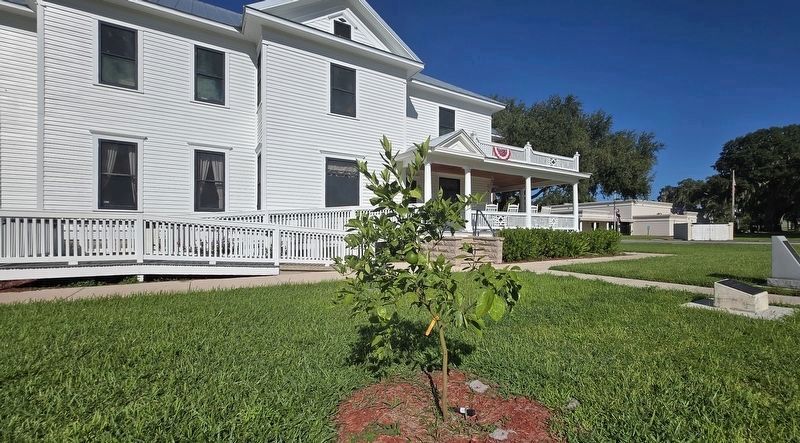
• Swingle and Webber, USDA, began breeding at a time when most sweetoranges in the US came from a handful of trees (1st crosses in 1893)Photographed by Cosmos Mariner, September 26, 20263. Tangelo Tree & MarkerThe young tangelo tree is in the foreground, the marker is on the right, and the Eustis Historical Museum is in the background.
• 2nd crosses: Citrus x Poncirus for cold hardiness
• Tangelo breeding started in 1897 and proceeded to 1911: led to the Minneola and Orlando
3. A Brief History of the Honeybell Orange (Pittman & Davis).
Excerpt: According to official state records, the Honeybell Orange was not discovered on a private orchard or farm, but rather at the U.S. Department of Agriculture Horticulture Research Station in Orlando. After perfecting the new variety, it was released to growers in 1931.(Submitted on September 27, 2026, by Cosmos Mariner of Cape Canaveral, Florida.)
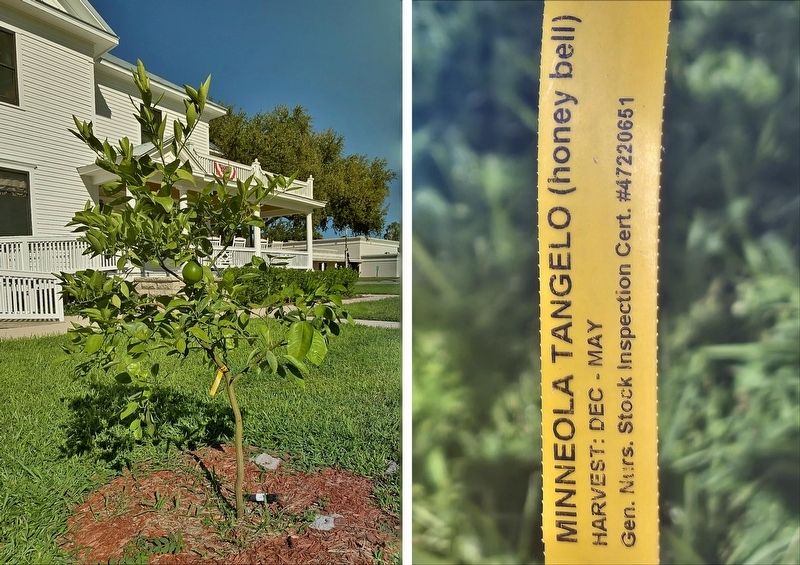
The cross between a Duncan Grapefruit and a Darcy Tangerine, this hybrid fruit was instantly identifiable from its bell-shaped stem end, for which it was named. But it was the taste of the new tangelo (a portmanteau word for a tangerine and grapefruit mix) that really got people excited. With the size of the grapefruit and the juiciness of a tangerine, the Honeybell holds more liquid than any other orange-related variety. How much? Just two medium-sized Honeybells yield half a glass of juice! That'sabout as much as four ordinary oranges!Photographed by Cosmos Mariner, September 26, 20264. Minneola Tangelo (honey bell) Tree
Photographed by Cosmos Mariner, September 26, 2026
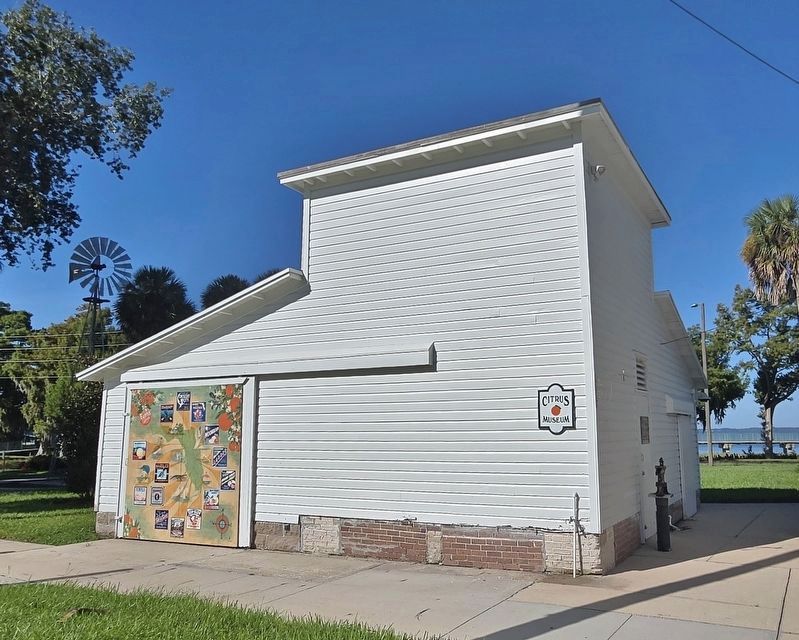
5. Citrus Museum
The Citrus Museum is on the south side of the Eustis Historical Museum.
Photographed by Cosmos Mariner, September 26, 2026
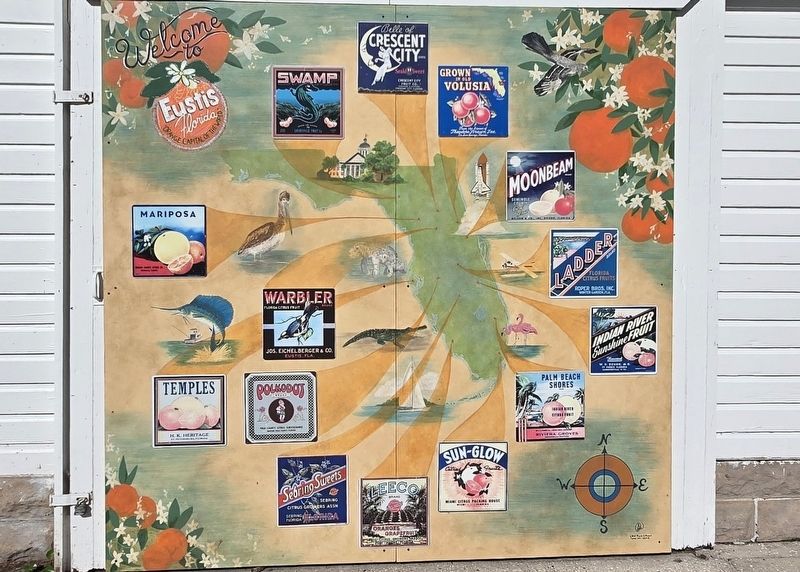
6. Citrus Labels
Historic citrus labels are displayed on the east side of the Citrus Museum.
Photographed by Cosmos Mariner, September 26, 2026
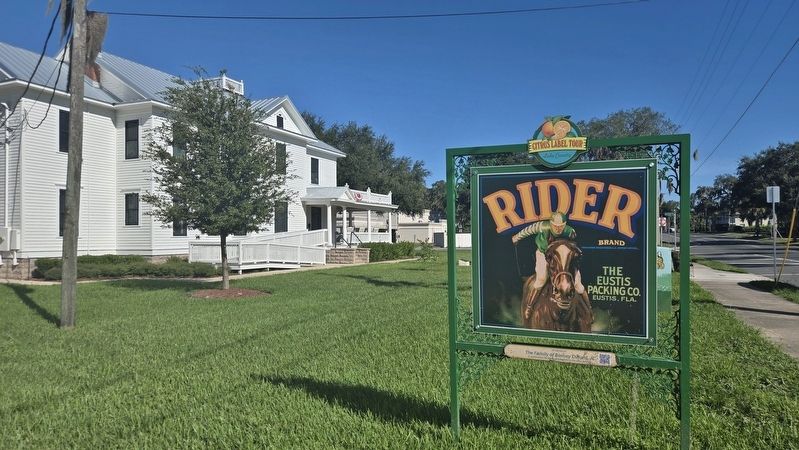
7. Lake County Citrus Label Tour
Looking north along North Bay Street. The tangelo tree and marker are visible in the background, in front of the Eustis Historical Museum.
Credits. This page was last revised on September 27, 2026. It was originally submitted on September 25, 2026, by Cosmos Mariner of Cape Canaveral, Florida. This page has been viewed 10 times since then. Photos: 1, 2, 3, 4, 5, 6, 7. submitted on September 26, 2026, by Cosmos Mariner of Cape Canaveral, Florida.
