Fall River in Bristol County, Massachusetts — The American Northeast (New England)
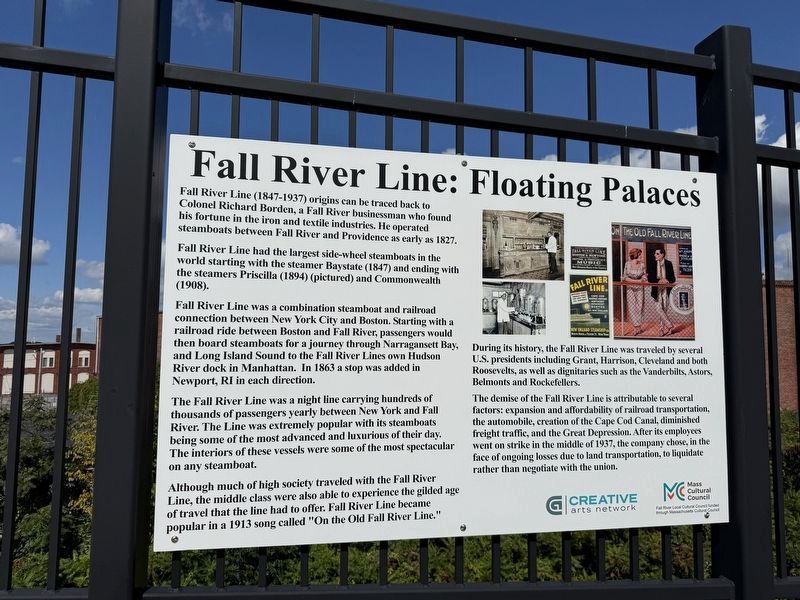
Fall River Line: Floating Palaces
Photographed by Devry Becker Jones (CC0), September 18, 2026
1. Fall River Line: Floating Palaces Marker
Fall River Line (1847-1937) origins can be traced back to Colonel Richard Borden, a Fall River businessman who found his fortune in the iron and textile industries. He operated steamboats between Fall River and Providence as early as 1827.
Fall River Line had the largest side-wheel steamboats in the world starting with the steamer Baystate (1847) and ending with the steamers Priscilla (1894) (pictured) and Commonwealth (1908).
Fall River Line was a combination steamboat and railroad connection between New York City and Boston. Starting with a railroad ride between Boston and Fall River, passengers would then board steamboats for a journey through Narragansett Bay, and Long Island Sound to the Fall River Lines own Hudson River dock in Manhattan. In 1863 a stop was added in Newport, RI in each direction.
The Fall River Line was a night line carrying hundreds of thousands of passengers yearly between New York and Fall River. The Line was extremely popular with its steamboats being soem of the most advanced and luxurious of their day. The interiors of these vessels were some of the most spectacular on any steamboat.
Although
this page online
During its history, the Fall River Line was traveled by several U.S. presidents including Grant, Harrison, Cleveland and both Roosevelts, as well as dignitaries such as the Vanderbilts, Astors, Belmonts and Rockefellers.
The demise of the Fall River Line is attributable to several factors: expansion and affordability of railroad transportation, the automobile, creation of the Cape Cod Canal, diminished freight traffic, and the Great Depression. After its employees went on strike in the middle of 1937, the company chose, in the face of ongoing losses due to land transportation, to liquidate rather than negotiate with the union.
Erected by Creative Arts Network; Mass Cultural Council.
Topics. This historical marker is listed in these topic lists: Arts, Letters, Music • Industry & Commerce • Labor Unions • Waterways & Vessels. A significant historical year for this entry is 1827.
Location. 41° 42.11′ N,
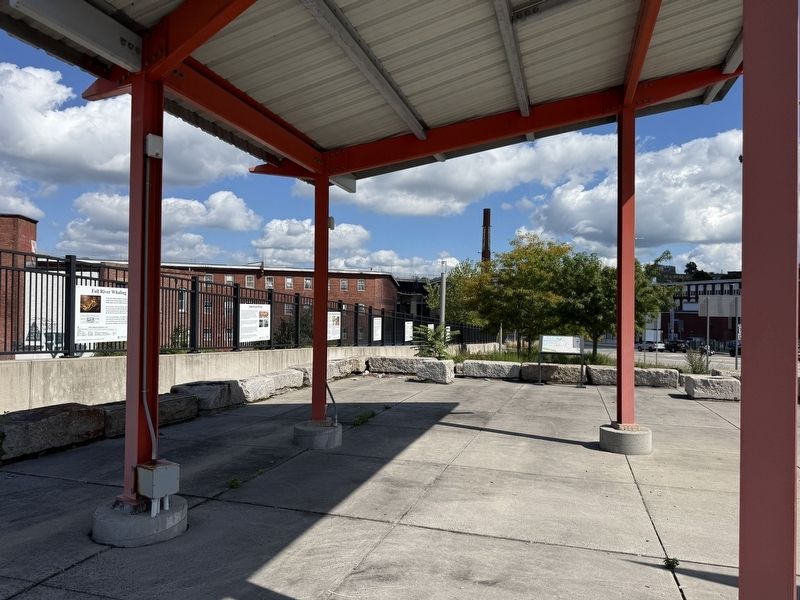

Regionally, this marker is in the South Coast. It is also in the American Northeast, in New England, and on the Eastern Seaboard. Globally, it is in the North Atlantic Region, North America, the Western Hemisphere, the Western World, and the Anglosphere. Historically, it finds itself in what was once one of the original Thirteen Colonies.
Other nearby markers. At least 8 other markers are within walking distance of this marker: American Print (here, next to this marker); Mechanics Mill (a few steps from this marker); Fall River Whaling (a few steps from this marker); Fall River and Ponta Delgada, Sister Cities (a few steps from this marker); "Hortensia" (a few steps from this marker); Portuguese Presidential Visit (about 500 feet away, measured in a direct line); Gates of the City (about 600
Photographed by Devry Becker Jones (CC0), September 18, 2026
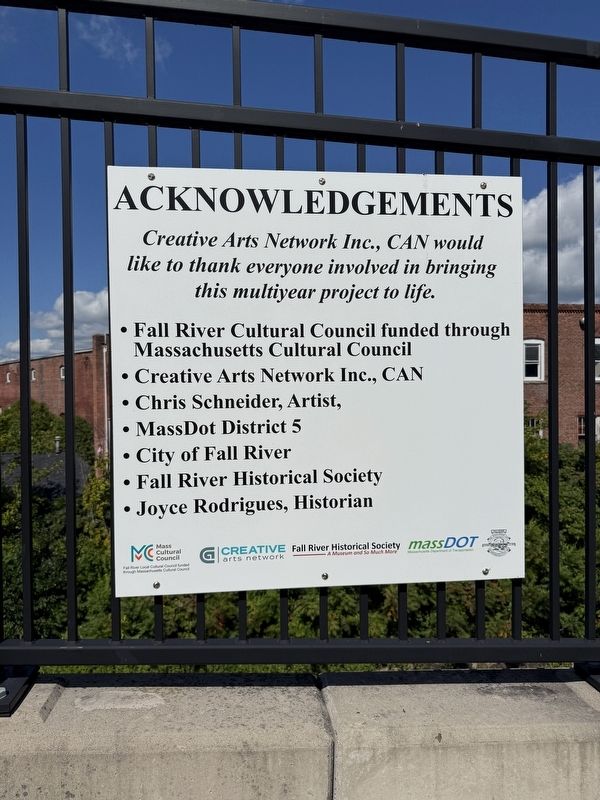
3. Acknowledgement for the marker dislpay
Credits. This page was last revised on October 4, 2026. It was originally submitted on October 4, 2026, by Devry Becker Jones of Washington, District of Columbia. This page has been viewed 5 times since then. Photos: 1, 2, 3. submitted on October 4, 2026, by Devry Becker Jones of Washington, District of Columbia.
