Cheyenne in Laramie County, Wyoming — The American West (Mountains)
1700s Cheyenne Area Garden
Rotary Century Plaza
Photographed by William Fischer, Jr., September 28, 2026
1. 1700s Cheyenne Area Garden Marker
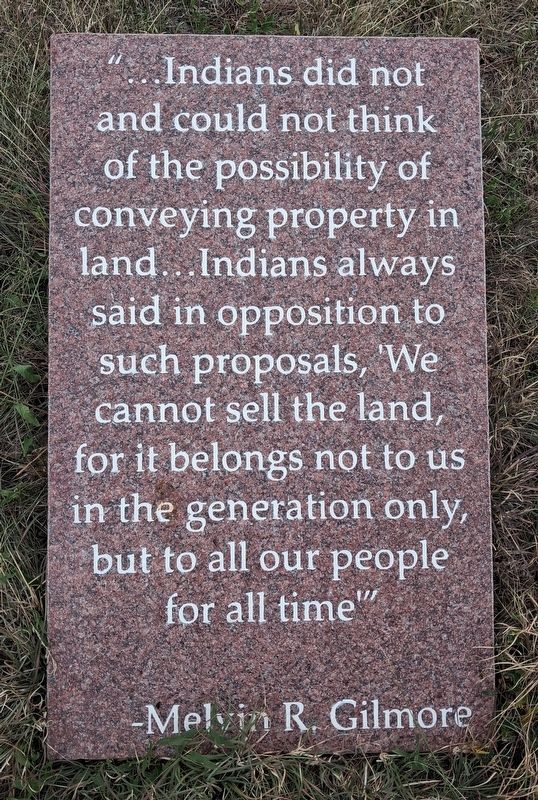
"...Indians did not and could not think of the possibility of conveying property in land... Indians always said in opposition to such proposals, 'We cannot sell the land, for it belongs not to us in the generation only, but to all our people for all time"
—Melvin R. Gilmore
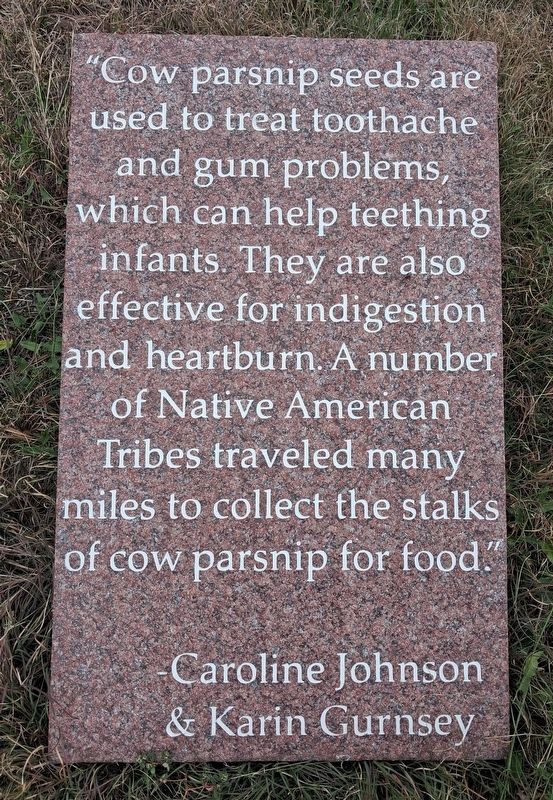
“Cow parsnip seeds are used to treat toothache and gum problems, which can help teething infants. They are also effective for indigestion and heartburn. A number of Native American Tribes traveled many miles to collect the stalks of cow parsnip for food."
—Caroline Johnson & Karin Gurnsey
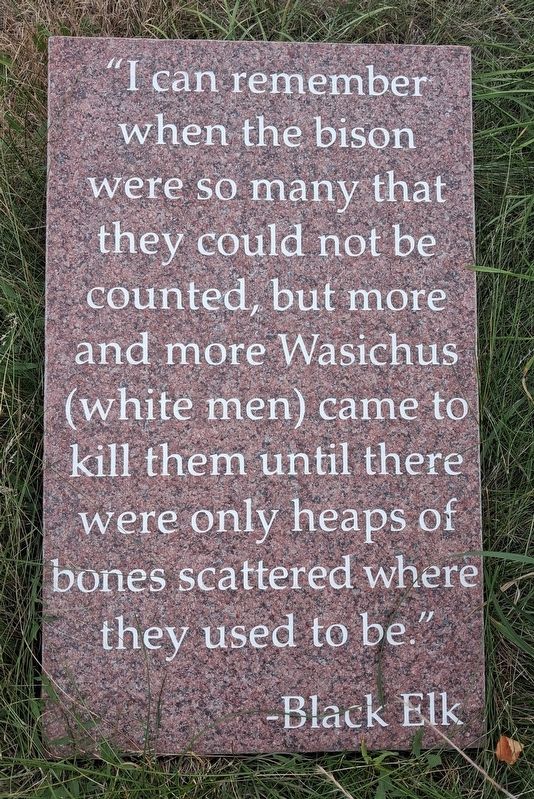
"I can remember when the bison were so many that they could not be counted, but more and more Wasichus (white men) came to kill them until there were only heaps of bones scattered where they used to be."
-Black Elk
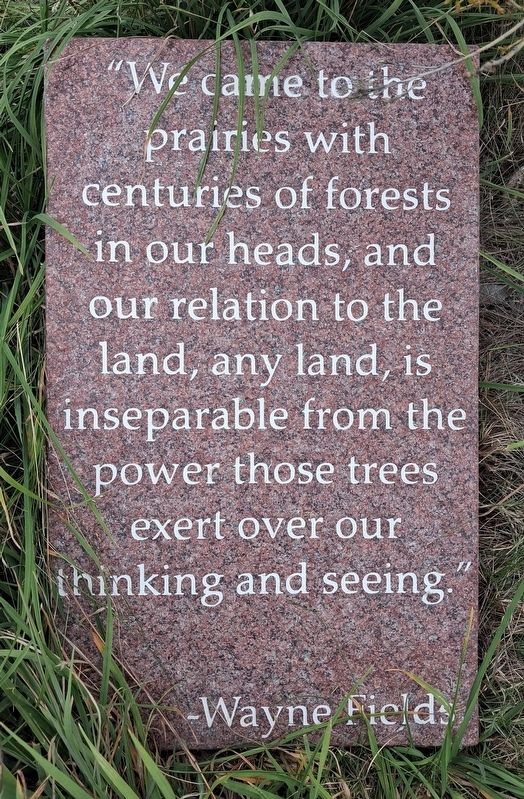
"We came to the prairies with centuries of forests in our heads, and our relation to the land, any land, is inseparable from the power those trees exert over our thinking and seeing.
-Wayne Fields
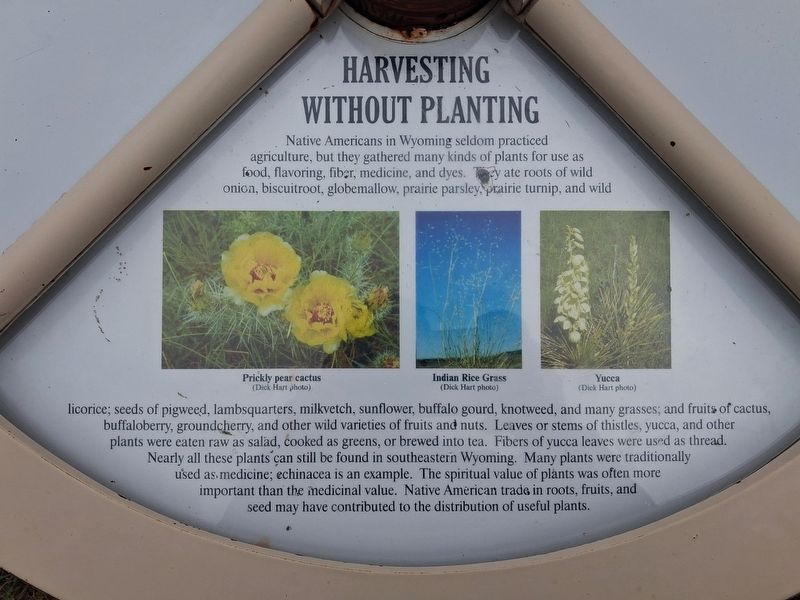
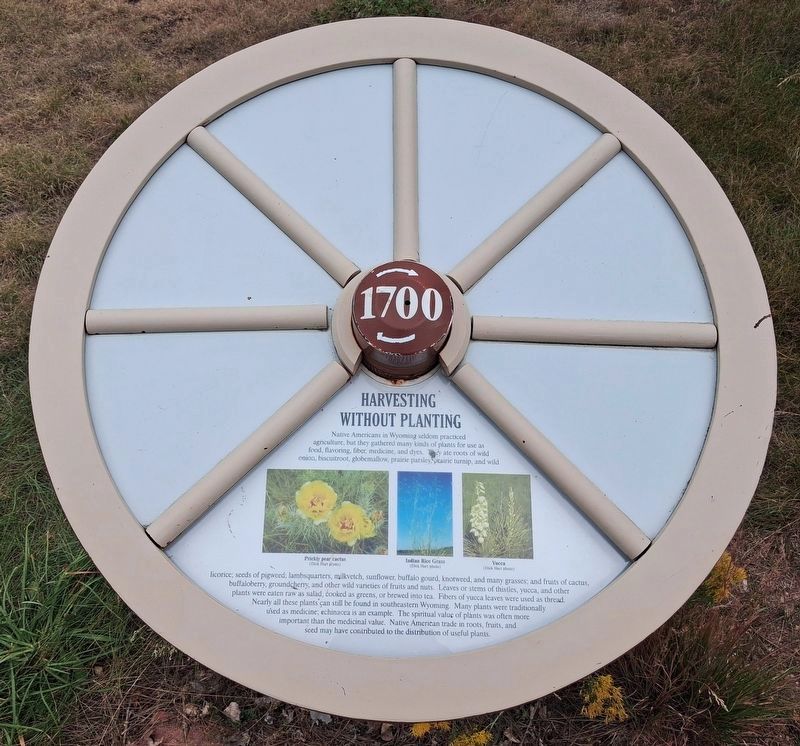
HARVESTING WITHOUT PLANTING
Native Americans in Wyoming seldom practiced agriculture, but they gathered many kinds of plants for use as food, flavoring, fiber, medicine, and dyes. They ate roots of wild onion, biscuitroot, globemallow, prairie parsley, prairie turnip, and wild licorice; seeds of pigweed, lambsquarters, milkvetch, sunflower, buffalo gourd, knotweed, and many grasses; and fruits of cactus, buffaloberry, groundcherry, and other wild varieties of fruits and nuts. Leaves or stems of thistles, yucca, and other plants were eaten raw as salad, cooked as greens, or brewed into tea. Fibers of yucca leaves were used as thread. Nearly all these plants can still be found in southeastern Wyoming. Many plants were traditionally used as medicine; echinacea is an example. The spiritual value of plants
this page online
[Photo captions, left to right, read]
• Prickly pear cactus
• Indian Rice Grass
• Yucca
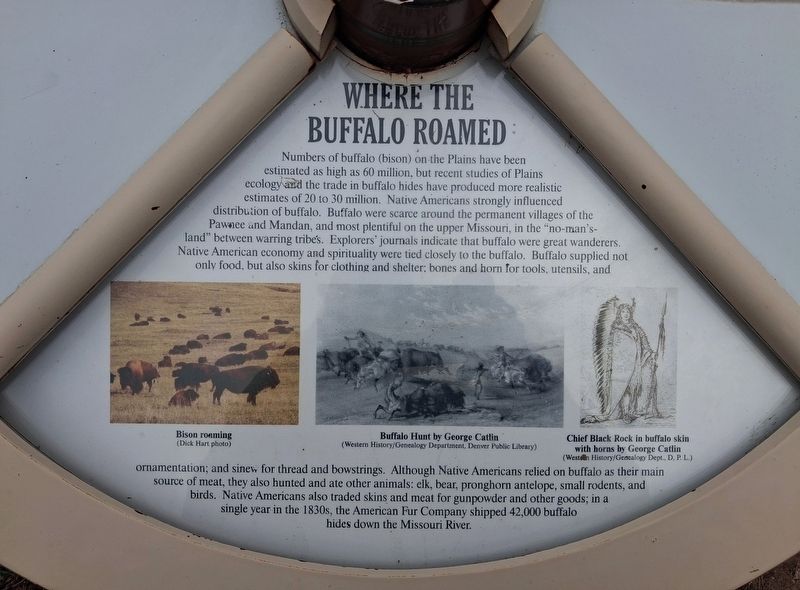
WHERE THE BUFFALO ROAMED
Numbers of buffalo (bison) on the Plains have been estimated as high as 60 million, but recent studies of Plains ecology and the trade in buffalo hides have produced more realistic estimates of 20 to 30 million. Native Americans strongly influenced distribution of buffalo. Buffalo were scarce around the permanent villages of the Pawnee and Mandan, and most plentiful on the upper Missouri, in the "no-man's-land” between warring tribes. Explorers' journals indicate that buffalo were great wanderers. Native American economy and spirituality were tied closely to the buffalo. Buffalo supplied not only food, but also skins for clothing and shelter: bones and horn for tools, utensils, and ornamentation; and sinew for thread and bowstrings. Although Native Americans relied on buffalo as their main source of meat, they also hunted and ate other animals: elk, bear, pronghorn
Photographed by William Fischer, Jr., September 28, 2026
2. 1700s Cheyenne Area Garden Marker
[Photo captions, left to right, read]
• Bison roaming
• Buffalo Hunt by George Catlin
• Chief Black Rock in buffalo skin with horns by George Catlin
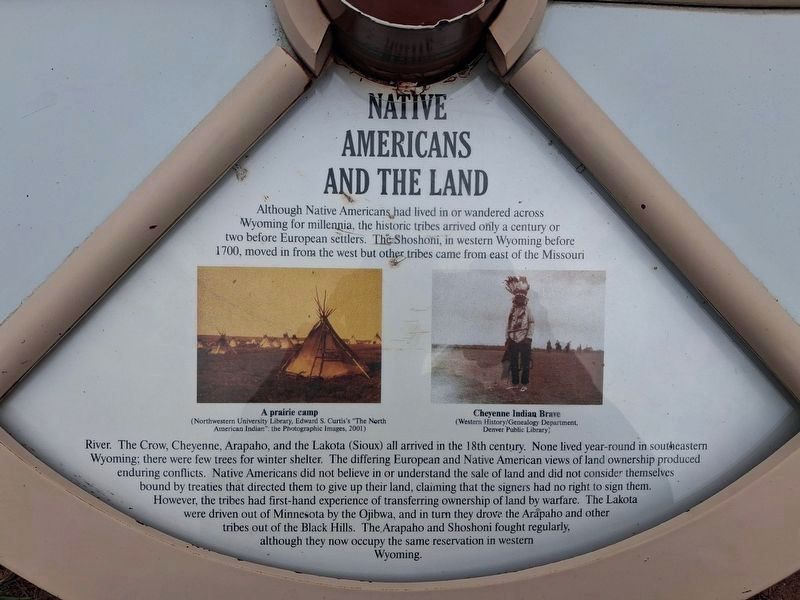
NATIVE AMERICANS AND THE LAND
Although Native Americans had lived in or wandered across Wyoming for millennia, the historic tribes arrived only a century or two before European settlers. The Shoshoni, in western Wyoming before 1700, moved in from the west but other tribes came from east of the Missouri River. The Crow, Cheyenne, Arapaho, and the Lakota (Sioux) all arrived in the 18th century. None lived year-round in southeastern Wyoming; there were few trees for winter shelter. The differing European and Native American views of land ownership produced enduring conflicts. Native Americans did not believe in or understand the sale of land and did not consider themselves bound by treaties that directed them to give up their land, claiming that the signers had no
Photographed by William Fischer, Jr., September 28, 2026
3. 1700s Cheyenne Area Garden Marker
[Photo captions, left to right, read]
• A prairie camp
• Cheyenne Indian Brave
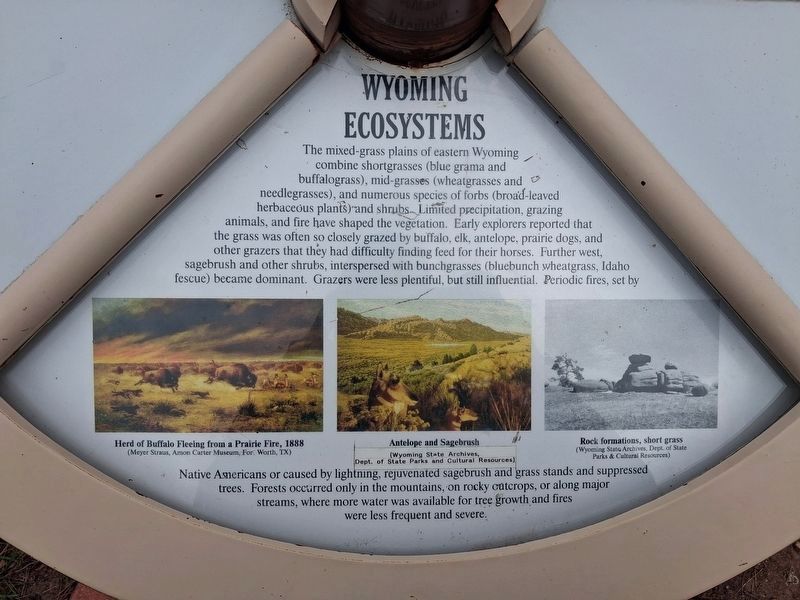
WYOMING ECOSYSTEMS
The mixed-grass plains of eastern Wyoming combine shortgrasses (blue grama and buffalograss), mid-grasses (wheatgrasses and needlegrasses), and numerous species of forbs (broad-leaved herbaceous plants) and shrubs Limited precipitation, grazing animals, and fire have shaped the vegetation. Early explorers reported that the grass was often so closely grazed by buffalo, elk, antelope, prairie dogs, and other grazers that they had difficulty finding feed for their horses. Further west, sagebrush and other shrubs, interspersed with bunchgrasses (bluebunch wheatgrass, Idaho fescue) became dominant. Grazers were less plentiful, but still influential. Periodic fires, set by Native Americans or caused by lightning, rejuvenated sagebrush and grass stands and suppressed trees. Forests occurred only in the mountains, on rocky outcrops, or along major streams, where more water was available for tree growth and fires were less frequent and severe.
[Photo captions, left to right, read]
• Herd of Buffalo Fleeing from a Prairie Fire, 1888
• Antelope and Sagebrush
• Rock formations, short grass
Erected by Cheyenne Botanic Gardens, Rotary, and Concerned Citizens and Organizations.
Topics. This historical marker is listed in these topic lists: Environment • Indigenous Peoples and Communities • Settlements & Settlers. A significant historical year for this entry is 1750.
Location. 41° 9.472′ N,
Photographed by William Fischer, Jr., September 28, 2026
4. 1700s Cheyenne Area Garden Marker

Regionally, this marker is in the Laramie Basin. It is also in the American Mountain West, on the Great Plains, and specifically on the High Plains. Globally, it is in North America, the Western Hemisphere, the Western World, and the Anglosphere. Historically, it finds itself in what was once the Louisiana Purchase.
Other nearby markers. At least 8 other markers are within walking distance of this marker: Horsetail Joint Fir (a few steps from this marker); Floyd and Edna Young Folk Art Fence (a few steps from this marker); Union Pacific Steam Engine #1242 (within shouting distance of this marker); Sky Trail Sculpture/Today's Common Styles of Horseshoes (within shouting distance of this marker); 1800s Cheyenne Area Garden (within shouting distance of this marker); The Trails (Part I) (within shouting distance of this marker); 1929 Farmall "Regular Series" Tractor (within shouting distance of this marker); Gene Howard (within shouting distance of this marker). Touch for a list and map of all markers in Cheyenne.
Photographed by William Fischer, Jr., September 28, 2026
5. Harvesting Without Planting Marker
On the 1700s Cheyenne Area Garden Marker Wheel
Photographed by William Fischer, Jr., September 28, 2026
6. Where The Buffalo Roamed
On the 1700s Cheyenne Area Garden Marker Wheel
Photographed by William Fischer, Jr., September 28, 2026
7. Native Americans and the Land Marker
On the 1700s Cheyenne Area Garden Marker Wheel
Photographed by William Fischer, Jr., September 28, 2026
8. Wyoming Ecosystems Marker
On the 1700s Cheyenne Area Garden Marker Wheel
Photographed by William Fischer, Jr., September 28, 2026
9. The 1700s Cheyenne Area Garden Marker Wheel
Turn the center knob to expose the four separate texts one at a time
Photographed by William Fischer, Jr., September 28, 2026
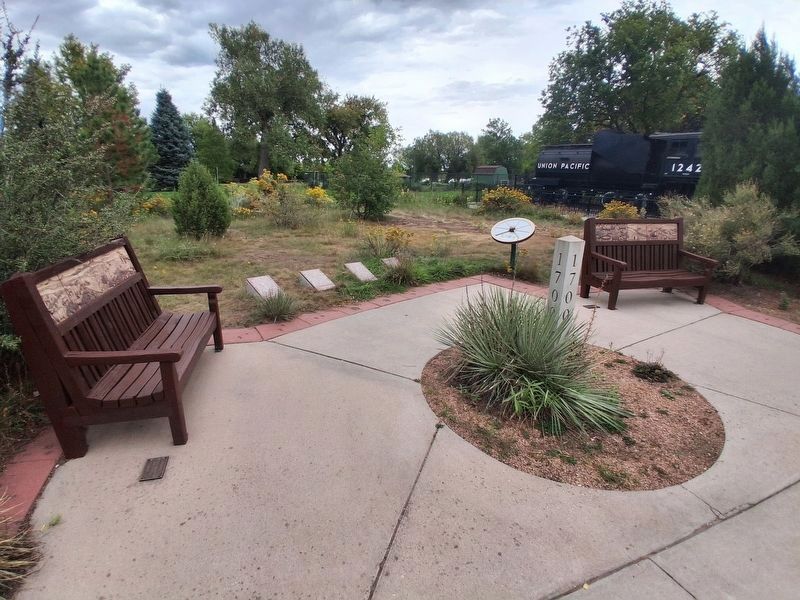
10. 1700s Cheyenne Area Garden and Markers
Photographed by William Fischer, Jr., September 28, 2026
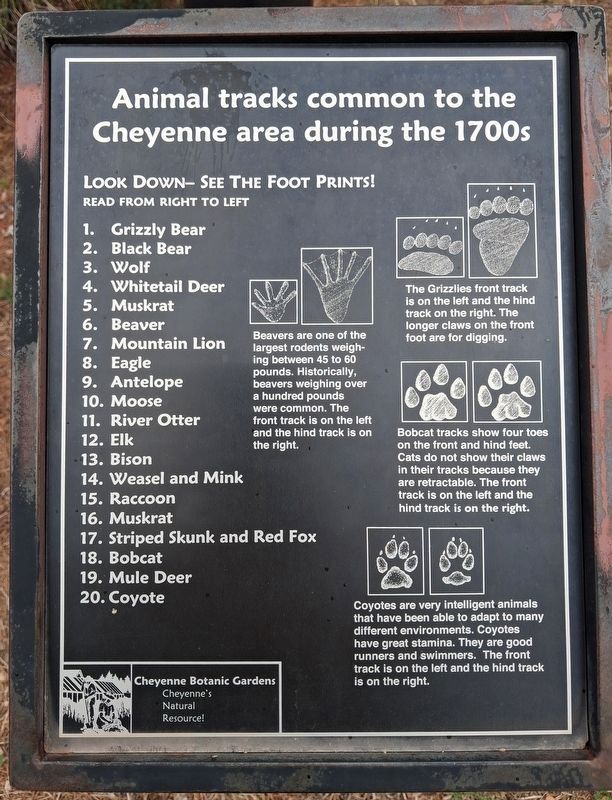
11. Animal Tracks Marker near 1700s Cheyenne Area Garden
Informational; not transcribed
Credits. This page was last revised on October 31, 2026. It was originally submitted on October 30, 2026, by William Fischer, Jr. of Reynoldsburg, Ohio. This page has been viewed 13 times since then. Photos: 1, 2, 3, 4, 5, 6, 7, 8, 9, 10, 11. submitted on October 30, 2026, by William Fischer, Jr. of Reynoldsburg, Ohio.
