Napierville in Les Jardins-de-Napierville, Québec — Central Canada (French-Canadian)
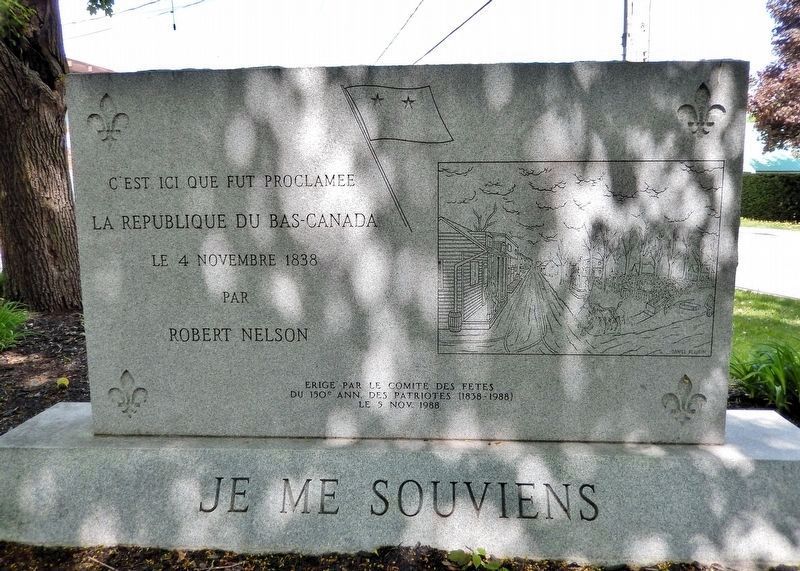
C'est ici que fut proclamée la République du Bas-Canada
Photographed by Cosmos Mariner, May 19, 2024
1. C'est ici que fut proclamée la République du Bas-Canada Marker (south side)

Erige par le comite des fêtes
du 150e ann. des patriotes (1838-1988)
le 5 Nov. 1988
je me souviens
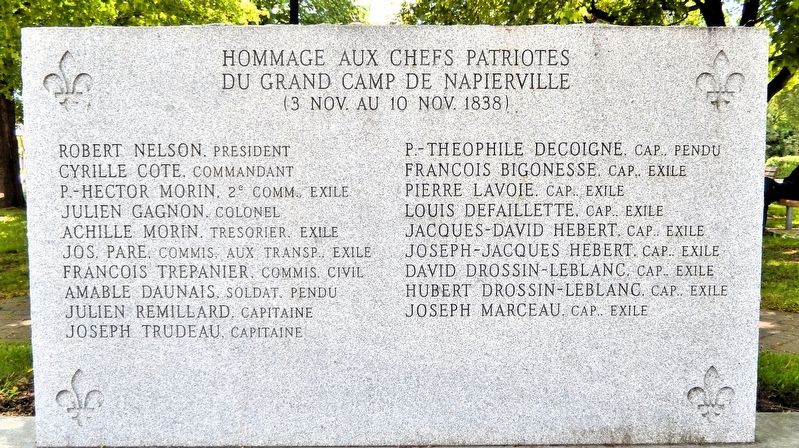
Hommage aux Chefs Patriotes du Grand Camp de Napierville
(3 Nov. au 10 Nov. 1838)
November 4, 1838 by Robert Nelson
Erected by the Celebration Committee
of the 150th Anniversary of the Patriots (1838-1988)
on Nov. 5, 1988
I remember
Tribute to the Patriot Leaders of the Grand Camp at Napierville
(Nov. 3 to
this page online
Erected 1988 by comite des fêtes du 150e ann. des patriotes / Committee of Celebrations of the 150th Anniversary of the Patriots.
Topics. This memorial is listed in these topic lists: Colonial Era • Patriots & Patriotism • Wars, Non-US. A significant historical date for this entry is November 4, 1838.
Location. 45° 11.226′ N, 73° 24.294′ W. Memorial is in Napierville, Québec, in Les Jardins-de-Napierville. It is at the intersection of Rue de l'Église (Québec Route 219) and Rue Saint-Jacques ( Route
Photographed by Cosmos Mariner, May 19, 2024
2. C'est ici que fut proclamée la République du Bas-Canada Marker (north side)

Regionally, this memorial is in Central Canada. Globally, it is in North America, the Western Hemisphere, and the Western World. Historically, it finds itself in what was once a British colony, the Viceroyalty of New France, the Haudenosaunee (Iroquois) Confederacy, and Rupert’s Land.
Other nearby markers. At least 8 other markers are within walking distance of this marker: Jean-Baptiste Lukin N.P. (within shouting distance of this marker); Loop Odell (within shouting distance of this marker); La Prison (about 120 meters away, measured in a direct line); Palais de Justice et prison du comté de L'Acadie / Acadie County Court House and Goal (about 120 meters away); Docteur C.-H.-O. Côté, m.d. (about 150 meters away); Napierville Historique (about 210 meters away); Magasin d'Allen Clark (about 210 meters away); La Chapelle-Presbytère (1825-1886) (about 210 meters away). Touch for a list and map
Photographed by Cosmos Mariner, May 19, 2024
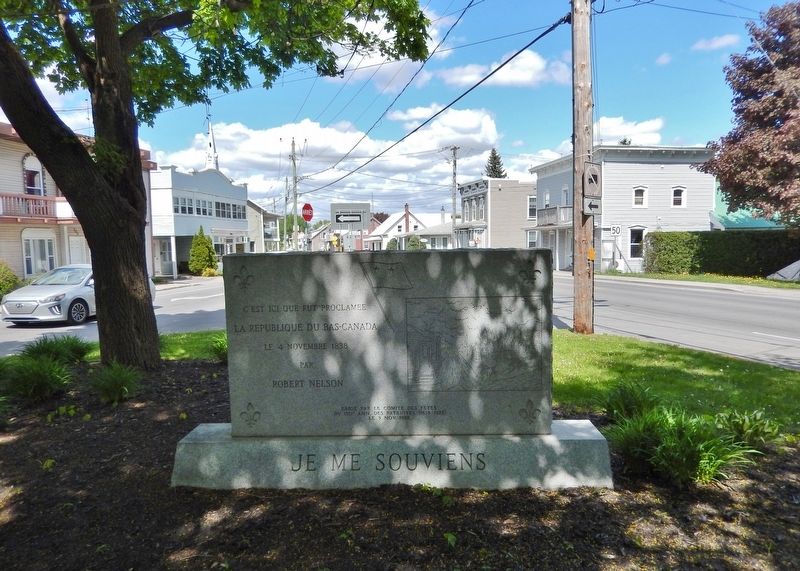
3. C'est ici que fut proclamée la République du Bas-Canada Marker
Looking north through Parc Pointe des Patriotes (Patriots Point Park) along Rue de l'Église (Québec Route 219).
Related markers. Click here for a list of markers that are related to this marker.
Also see . . .
1. Republic of Lower Canada (Wikipedia).
Excerpt: The Republic of Lower Canada was a break-away state proclaimed in the aftermath of the Rebellions of 1837–1838. The defeat of the rebellion meant that the state could never be properly established. A British colony since 1763, Canada was divided into two distinct entities in 1791: Lower Canada, mainly inhabited by the descendants of the colonists of New France, and Upper Canada, mainly inhabited by British colonists. Lower and Upper Canada were frequently in tension with each other, which made governing difficult. Robert Nelson declared himself the president of the republic and read the Declaration of Independence of Lower Canada in front of thousands of people cheering him along in Napierville.(Submitted on November 6, 2026, by Cosmos Mariner of Cape Canaveral, Florida.)
2. Lower Canada Rebellion (Wikipedia).
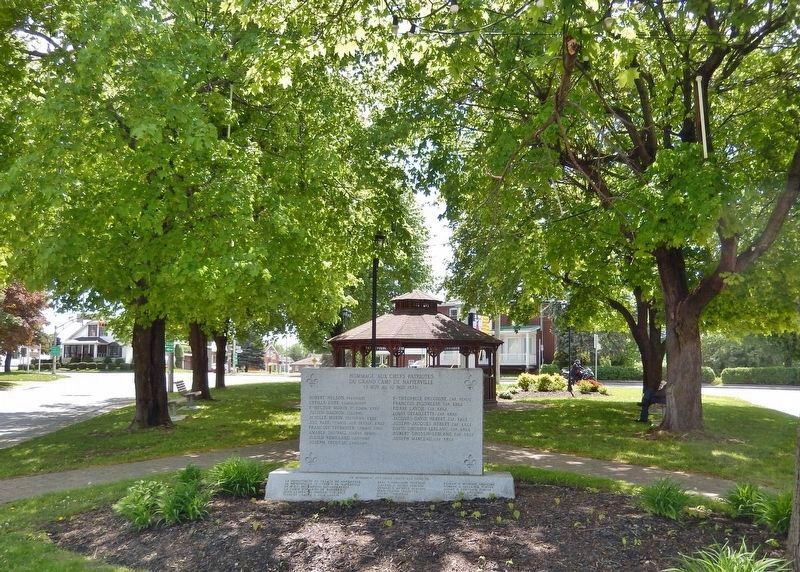
Excerpt: The Lower Canada Rebellion, commonly referred to as the Patriots' Rebellion in French, is the name given(Submitted on November 6, 2026, by Cosmos Mariner of Cape Canaveral, Florida.)to the armed conflict in 1837–38 between rebels and the British colonial government of Lower Canada (now southern Quebec). Together with the simultaneous rebellion in the neighbouring colony of Upper Canada (now southern Ontario), it formed the Rebellions of 1837–38. As a result of the rebellions, the Province of Canada was created from the former Lower Canada and Upper Canada. In Quebec, the rebellion, as well as the parliamentary and popular struggle, is now commemorated as the Journée nationale des Patriotes (National Patriots' Day) on the Canadian statutory holiday, Victoria Day.Photographed by Cosmos Mariner, May 19, 20244. C'est ici que fut proclamée la République du Bas-Canada MarkerLooking south through Parc Pointe des Patriotes (Patriots Point Park). Rue Saint-Jacques (Québec Route 221) crosses in the background. Note: the donor list across the base of the monument is not transcribed here.
Credits. This page was last revised on November 6, 2026. It was originally submitted on November 3, 2026, by Cosmos Mariner of Cape Canaveral, Florida. This page has been viewed 7 times since then. Photos: 1, 2, 3, 4. submitted on November 6, 2026, by Cosmos Mariner of Cape Canaveral, Florida.
