Urbanna in Middlesex County, Virginia — The American South (Mid-Atlantic)
Colonial Herb Garden
A Selection of Medicinal Herbs of Colonial Gardens and their Uses
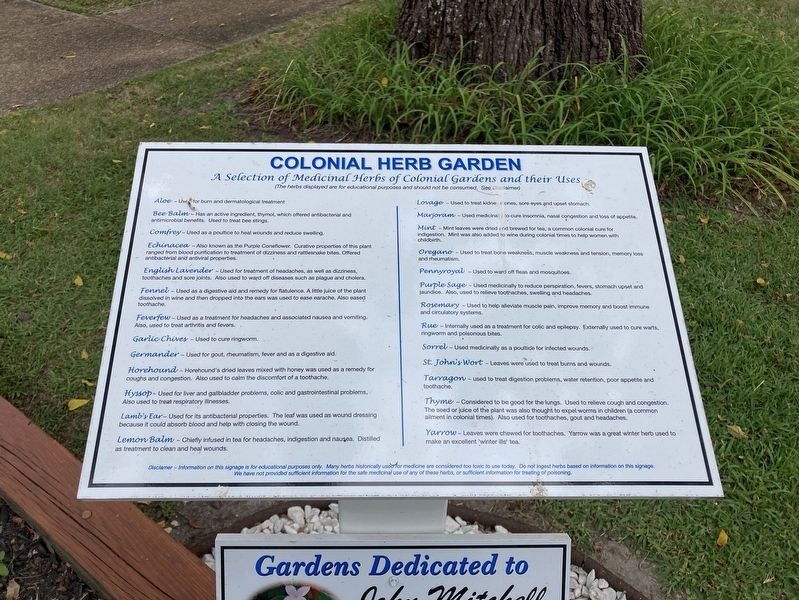
Photographed by Evan Dwyer, August 8, 2025
1. Colonial Herb Garden Marker
(The herbs displayed are for educational purposes and should not be consumed. See Disclaimer)
Aloe ~ Used for burn and dermatological treatment
Bee Balm ~ Has an active ingredient, thymol, which offered antibacterial and antimicrobial benefits. Used to treat bee stings.
Comfrey ~ Used as a poultice to heal wounds and reduce swelling.
Echinacea ~ Also known as the Purple Coneflower. Curative properties of this plant ranged from blood purification to treatment of dizziness and rattlesnake bites. Offered antibacterial and antiviral properties.
English Lavender ~ Used for treatment of headaches, as well as dizziness, toothaches and sore joints. Also used to ward off diseases such as plague and cholera.
Fennel ~ Used as a digestive aid and remedy for flatulence. A little juice of the plant dissolved in wine and then dropped into the ears was used to ease earache. Also eased toothache.
Feverfew ~ Used as a treatment for headaches and associated nausea and vomiting. Also, used to treat arthritis and fevers.
Garlic Chives ~ Used to cure ringworm.
Germander ~ Used for gout, rheumatism, fever and as a digestive aid.
Horehound
this page online
Hyssop ~ Used for liver and gallbladder problems, colic and gastrointestinal problems. Also used to treat respiratory illnesses.
Lamb's Ear ~ Used for its antibacterial properties. The leaf was used as wound dressing because it could absorb blood and help with closing the wound.
Lemon Balm ~ Chiefly infused in tea for headaches, indigestion and nausea. Distilled as treatment to clean and heal wounds.
Lovage ~ Used to treat kidney stones, sore eyes and upset stomach.
Marjoram ~ Used medicinally to cure insomnia, nasal congestion and loss of appetite.
Mint ~ Mint leaves were dried and brewed for tea, a common colonial cure for indigestion. Mint was also added to wine during colonial times to help women with childbirth.
Oregano ~ Used to treat bone weakness, muscle weakness and tension, memory loss and rheumatism.
Pennyroyal ~ Used to ward off fleas and mosquitoes.
Purple Sage ~ Used medicinally to reduce perspiration, fevers, stomach upset and jaundice. Also, used to relieve toothaches,
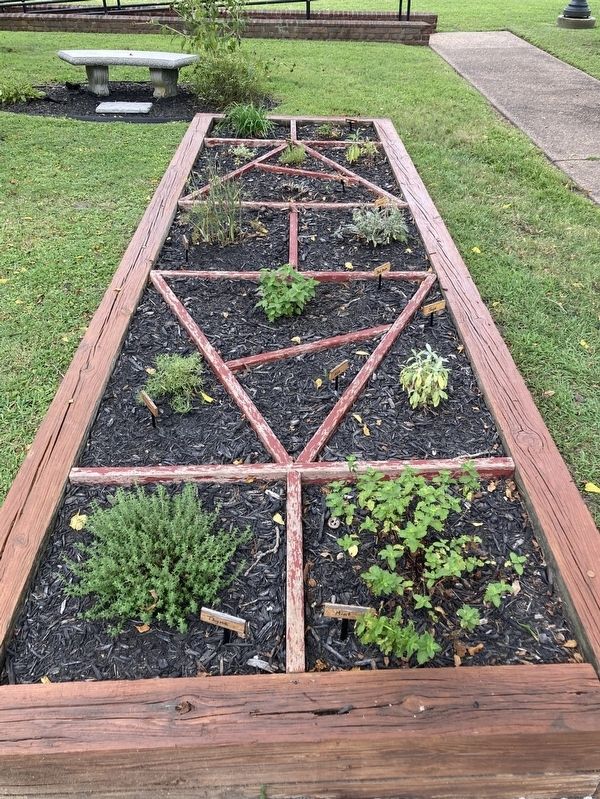
Photographed by Evan Dwyer, August 8, 2025
2. Colonial Herb Garden
Nearest garden bed
Rosemary ~ Used to help alleviate muscle pain, improve memory and boost immune and circulatory systems.
Rue ~ Internally used as a treatment for colic and epilepsy. Externally used to cure warts, ringworm and poisonous bites.
Sorrel ~ Used medicinally as a poultice for infected wounds.
St. John's Wort ~ Leaves were used to treat burns and wounds.
Tarragon ~ used to treat digestion problems, water retention, poor appetite and toothache.
Thyme ~ Considered to be good for the lungs. Used to relieve cough and congestion. The seed or juice of the plant was also thought to expel worms in children (a common ailment in colonial times). Also used for toothaches, gout and headaches.
Yarrow ~ Leaves were chewed for toothaches. Yarrow was a great winter herb used to make and excellent 'winter ills' tea.
Disclaimer - Information on this signage is for educational purposes only. Many herbs historically used for medicine are considered too toxic to use today. Do not ingest herbs based on information on this signage. We have not provided sufficient information for the safe medicinal use of any of these herbs, or sufficient information for treating of poisoining.
Erected by John
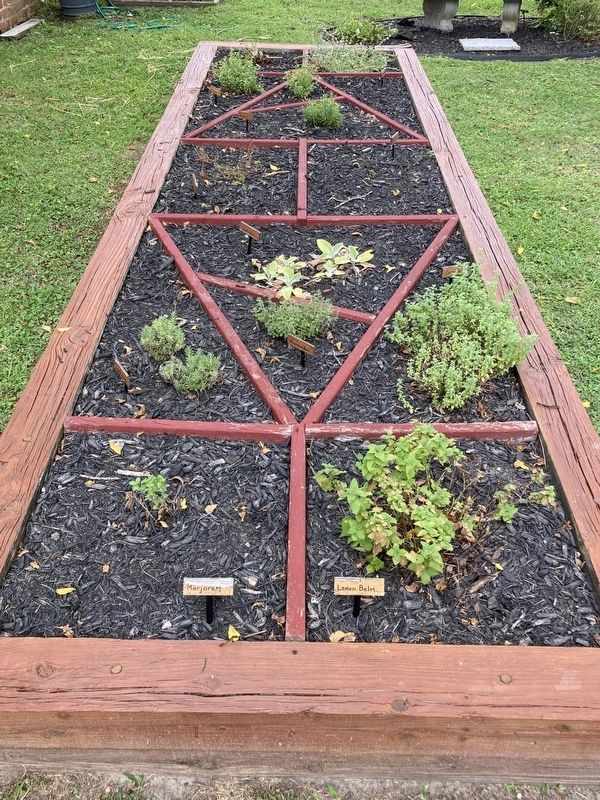
Photographed by Evan Dwyer, August 8, 2025
3. Colonial Herb Garden
Second bed, closest to Scottish Factors Store (Urbanna Museum & Visitor Center)
Topics. This historical marker is listed in these topic lists: Colonial Era • Horticulture & Forestry • Science & Medicine.
Location. 37° 38.187′ N, 76° 34.393′ W. Marker is in Urbanna, Virginia, in Middlesex County. It can be reached from Virginia Street 0.1 miles west of Oyster Road, on the right when traveling east. Marker is behind the Town of Urbanna Museum & Visitors Center. Touch for map. Marker is at or near this postal address: 130 Virginia Street, Urbanna VA 23175, United States of America. Touch for directions.

Regionally, this marker is on the Middle Peninsula. It is also in the American South, specifically in the Upper South, in the Tidewater, in the Chesapeake Bay Region, and on the Eastern Seaboard. Globally, it is in the North Atlantic Region, North America, the Western Hemisphere, the Western World, and the Anglosphere. Historically, it finds itself in what was once the territory of the Mississippian Culture, one of the original Thirteen Colonies, one of the Confederate States of America, and the Antebellum South.
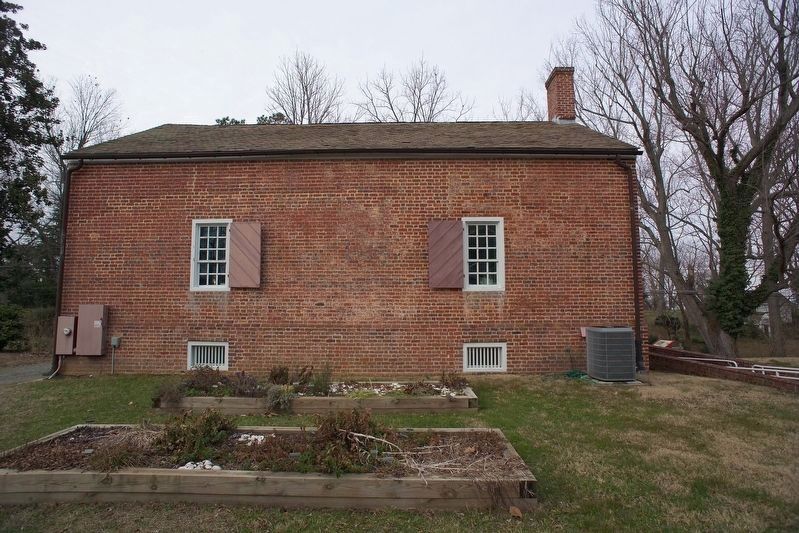
Photographed by Tom Fuchs, January 16, 2010
4. Scottish Factors Store
This building houses the Urbanna Museum & Visitors Center. The marker is just to the left, between the parking area and the raised garden boxes shown in the foreground. This photograph was taken before the restoration of the garden.
Other nearby markers. At least 8 other markers are within walking distance of this marker: Gardens Dedicated to John Mitchell (here, next to this marker); Old Tobacco Warehouse (a few steps from this marker); The Backyard Garden Was Essential (a few steps from this marker); Urbanna Museum & Visitors Center (a few steps from this marker); Tobacco Was Money (a few steps from this marker); A Hub For Commerce (a few steps from this marker); John Mitchell’s Map (a few steps from this marker); Tobacco Road (a few steps from this marker). Touch for a list and map of all markers in Urbanna.
Credits. This page was last revised on November 12, 2026. It was originally submitted on November 12, 2026, by Evan Dwyer of Richmond, Virginia. This page has been viewed 5 times since then. Photos: 1, 2, 3. submitted on November 12, 2026, by Evan Dwyer of Richmond, Virginia. 4. submitted on January 18, 2010, by Tom Fuchs of Greenbelt, Maryland.
