
Gettysburg in Adams County, Pennsylvania — The American Northeast (Mid-Atlantic)
Stevens Hall
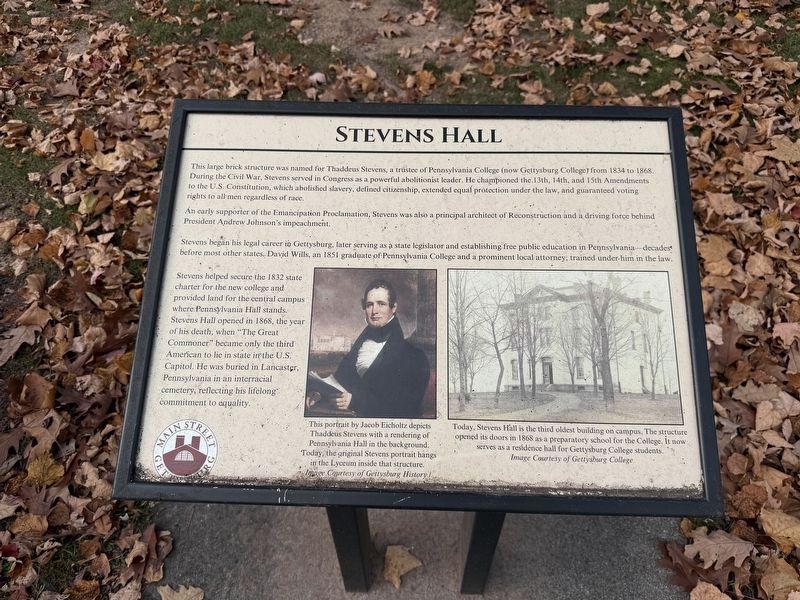
This large brick structure was named for Thaddeus Stevens, a trustee of Pennsylvania College (now Gettysburg College) from 1834 to 1868. During the Civil War, Stevens served in Congress as a powerful abolitionist leader. He championed the 13th, 14th, and 15th Amendements to the U.S. Constitution, which abolished slavery, defined citizenship, extended equal protection under the law, and guaranteed voting rights to all men regardless of race.
An early supporter of the Emancipation Proclamation, Stevens was also a principal architect of Reconstruction and a driving force behind President Andrew Johnson's impeachment.
Stevens began his legal career in Gettysburg, later serving as a state legislator and establishing free public education in Pennsylvania—decades before most other states. David Wills, an 1851 graduate oof Pennsylvania College and a prominent local attorney, trained under him in the law.
Stevens helped secure the 1832 state charter for the new college and provided land for the central campus where Pennsylvania Hall stands. Stevens Hall opened in 1868, the year of his death, when "The Great Commoner"
this page online
[Captions:]
This portrait by Jacob Eicholtz depicts Thaddeus Stevens with a rendering of Pennsylvania Hall in the background. Today, the original Stevens portrait hangs in the Lyceum inside that structure.
Image Courtesy of Gettysburg History / Adams County Historical Society
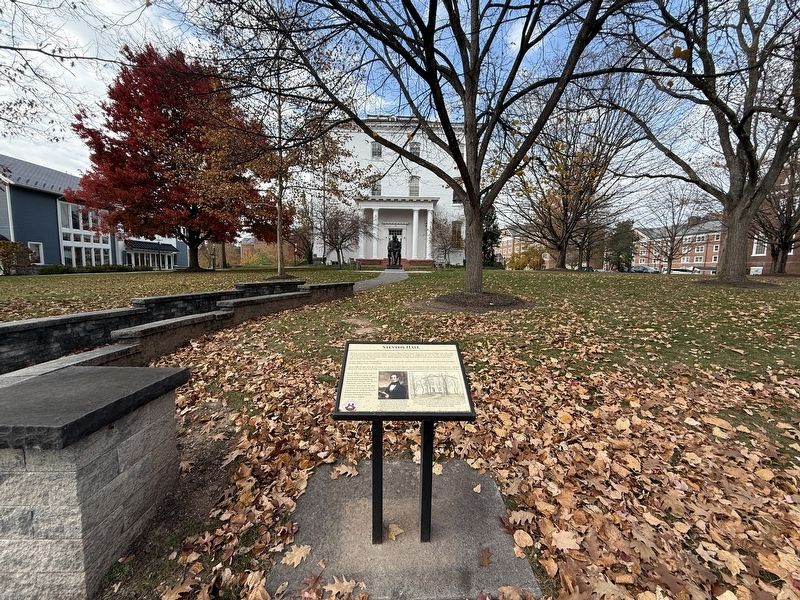
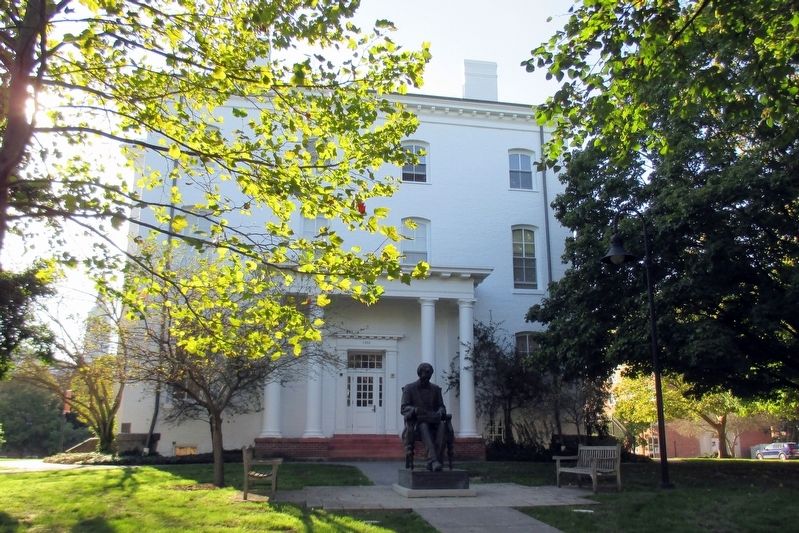
Today, Stevens Hall is the third oldest building on campus. The structure opened its doors in 1868 as a preparatory school for the College. It now serves as a residence hall for Gettysburg College students.
Image Courtesy of Gettysburg College
Erected 2024 by Main Street Gettysburg.
Topics and series. This historical marker is listed in these topic lists: Abolition & Underground RR • Education • Government & Politics • War, US Civil. In addition, it is included in the Pennsylvania, Main Street Gettysburg series list. A significant historical year for this entry is 1834.
Location. 39° 50.156′ N, 77° 13.875′ W. Marker is in Gettysburg, Pennsylvania, in Adams

Regionally, this marker is in South-Central Pennsylvania. It is also in the American Northeast, in the Mid-Atlantic, in Appalachia, and specifically in Northern Appalachia. Globally, it is in North America, the Western Hemisphere, the Western World, and the Anglosphere. Historically, it finds itself in what was once the Haudenosaunee (Iroquois) Confederacy and also one of the original Thirteen Colonies.
Other nearby markers. At least 8 other markers are within walking distance of this marker: President Abraham Lincoln Signing the Emancipation Proclamation (a few steps from this marker); Eddie Plank (1875-1926) (within shouting distance of this marker); Dwight D. Eisenhower (within shouting distance of this marker); The Office of a President (about 300 feet away, measured in a direct line); Battery K, First Ohio Light Artillery (about 300 feet away); Gettysburg College Rooted in History
Photographed by Larry Gertner, October 2024
3. Stevens Hall and statue
Another marker is no longer nearby. Stevens Hall (has been replaced with this marker).
Credits. This page was last revised on November 15, 2026. It was originally submitted on November 15, 2026, by Devry Becker Jones of Washington, District of Columbia. This page has been viewed 12 times since then. Photos: 1, 2. submitted on November 15, 2026, by Devry Becker Jones of Washington, District of Columbia. 3. submitted on October 10, 2024, by Larry Gertner of New York, New York.
