North End in Boston in Suffolk County, Massachusetts — The American Northeast (New England)
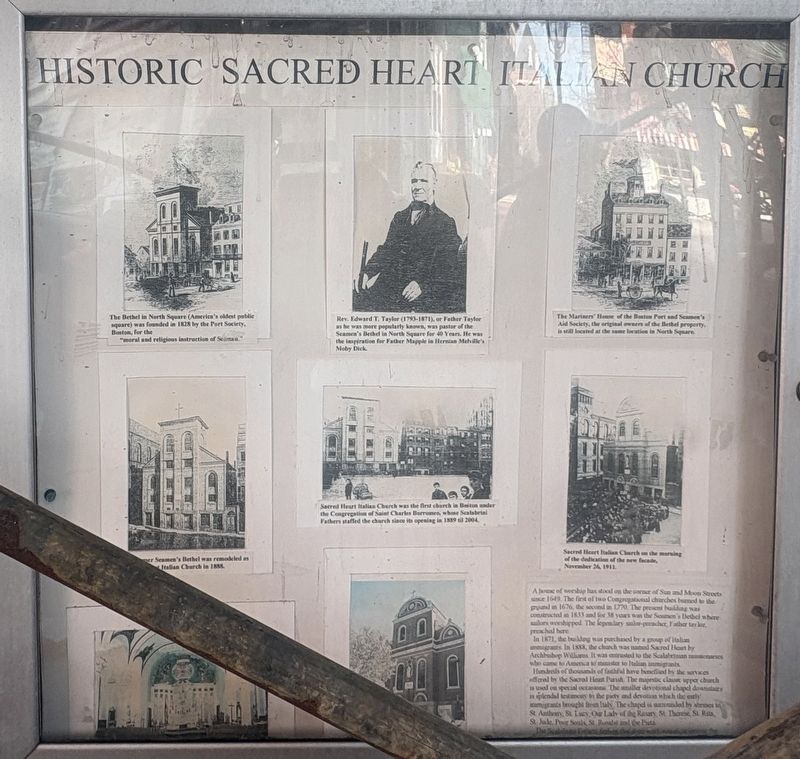
Historic Sacred Heart Italian Church
Photographed by Sean P. Flynn, November 8, 2026
1. Historic Sacred Heart Italian Church Marker
 [Captions beneath the photos:]
The Bethel in North Square (America's oldest public square) was founded in 1828 by the Port Society, Boston, for the "moral and religious instruction of Seamen.
Rev. Edward T. Taylor (1793-1871), or Father Taylor as he was more popularly known, was pastor of the Seamen's Bethel in North Square for 40 Years. He was the inspiration for Father Mapple in Herman Melville's Moby Dick.
The Mariners House of the Boston Part and Seamen's Aid Society, the original owners of the Bethel, property. is still located at the same location in North Square.
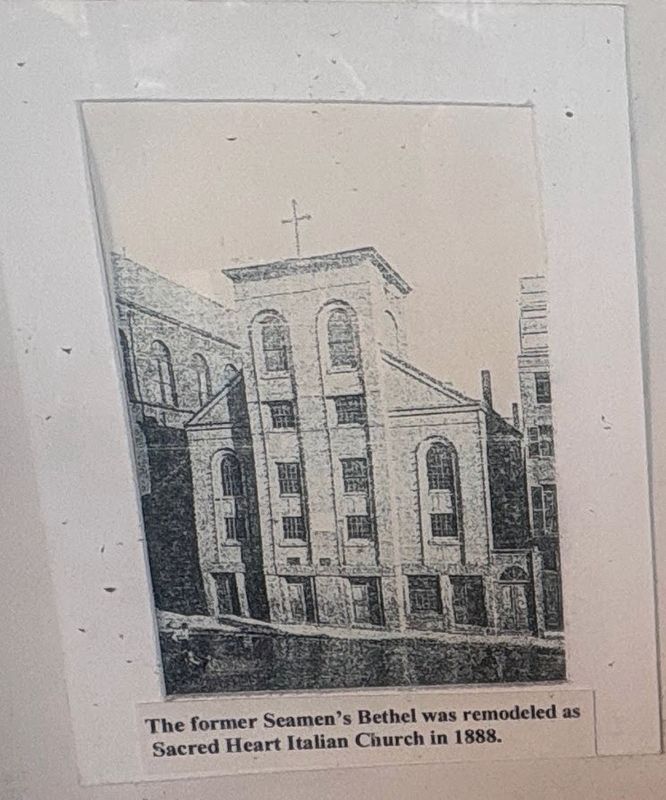
The former Seamen's Bethel was remodeled as Sacred Heart Italian Church in 1888.
Sacred Heart Italian Church was the first church in Boston under the Congregation of Saint Charles Borromeo, whose Scalabrini Fathers staffed the church since its opening in 1889 til 2004.
Sacred Heart Italian Church on the morning of the dedication of the new facade, November 26, 1911.
[Text in bottom right corner:]
A house of worship has stood on the corner of Sun and Moon Streets since 1649. The first of two Congregational churches burned to the
this page online
In 1871, the building was purchased by a group of Italian immigrants. In 1888, the church was named Sacred Heart by Archbishop Williams. It was entrusted to the Scalabrinian missionaries who came to America to minister to Italian immigrants.
Hundreds of thousands of faithful have benefited by the services offered by the Sacred Heart Parish. The majestic classic upper church is used on special occasions. The smaller devotional chapel downstairs is splendid testimony to the piety and devotion which the early immigrants brought from Italy. The chapel is surrounded by shrines St. Anthony, St Lucy, Our Lady of the Rosary, St. Therese, St. Rita, St. Jude, Poor Souls, St. Rosalie and the Pieta.
The Scalabrini Fathers feeling that their work was done among the [the remainder of the text is cut off]
Topics. This historical marker is listed in these topic lists: Arts, Letters, Music • Immigration • Religion & Religious Structures
Photographed by Sean P. Flynn, November 8, 2026
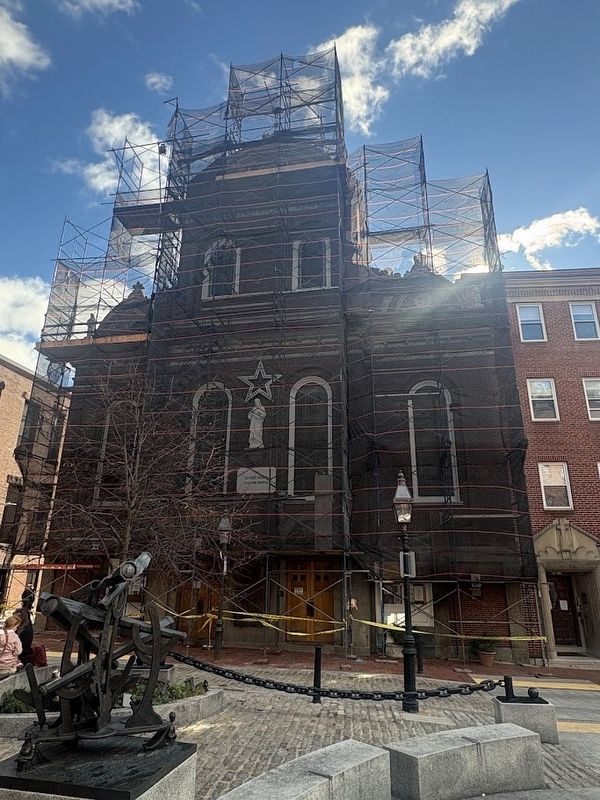
2. Historic Sacred Heart Italian Church
The marker is to the left of the main entrance into the church.
Location. 42° 21.832′ N, 71° 3.188′ W. Marker is in Boston, Massachusetts, in Suffolk County. It is in North End. It is at the intersection of North Square and Sun Court Street, on the right when traveling north on North Square. Touch for map. Marker is at or near this postal address: 12 North Square, Boston MA 02109, United States of America. Touch for directions.

Regionally, this marker is in Historic Boston. It is also in the American Northeast, in New England, and on the Eastern Seaboard. Globally, it is in the North Atlantic Region, North America, the Western Hemisphere, the Western World, and the Anglosphere. Historically, it finds itself in what was once one of the original Thirteen Colonies.
Other nearby markers. At least 8 other markers are within walking distance of this marker: November 28, 1887 | Piacenza, Italy (here, next to this marker); Bishop John Baptist Scalabrini (here, next to this marker); The Missionaries of St. Charles (here, next to this marker); Father Taylor’s Bethel (a few steps from this marker); Second Church Site (a few
Photographed by Sean P. Flynn, November 8, 2026
3. Historic image of Sacred Heart Italian Church on the marker
Photographed by Sean P. Flynn, November 8, 2026
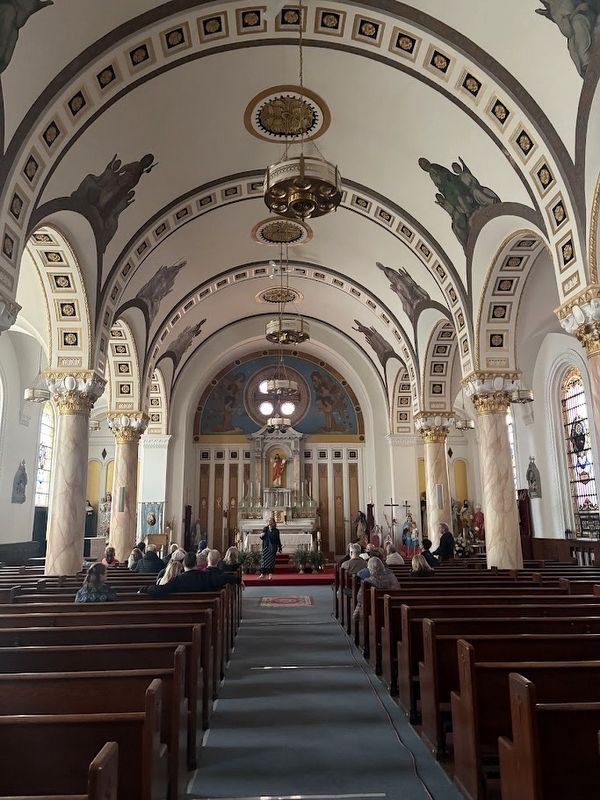
4. Inside Sacred Heart Italian Church
Photographed by Sean P. Flynn, November 8, 2026
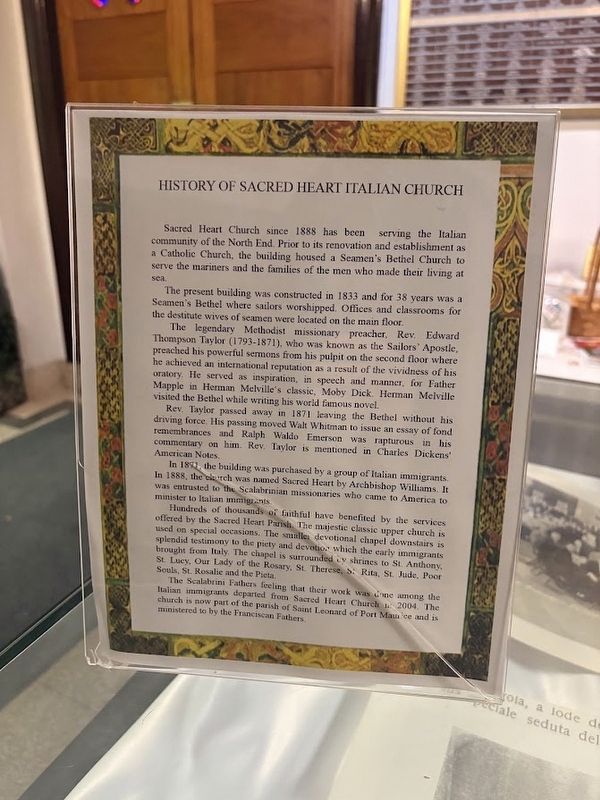
5. History of Sacred Heart Italian Church
This history of the church is inside the church, near its front door.
Credits. This page was last revised on November 16, 2026. It was originally submitted on November 15, 2026, by Sean P. Flynn of Oak Park, Illinois. This page has been viewed 9 times since then. Photos: 1. submitted on November 15, 2026, by Sean P. Flynn of Oak Park, Illinois. 2, 3, 4, 5. submitted on November 16, 2026, by Sean P. Flynn of Oak Park, Illinois.