Islamadora in Monroe County, Florida — The American South (South Atlantic)
The Florida Keys Memorial
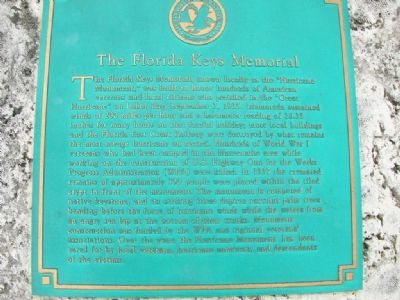
Photographed by Julie Szabo, August 16, 2007
1. The Florida Keys Memorial Marker
this page online
Topics and series. This historical marker and memorial is listed in these topic lists: Disasters • Notable Events • Railroads & Streetcars • Roads & Vehicles. In addition, it is included in the Florida East Coast Railroad and Hotels, and the Works Progress Administration (WPA) projects series lists. A significant historical month for this entry is September 1824.
Location. 24° 55.023′ N, 80° 38.165′ W. Marker is in Islamadora, Florida, in Monroe County. It is on U.S. 1, on the left when traveling south. Touch for map. Marker is in this post office area: Islamorada FL 33036, United States of America. Touch for directions.

Regionally, this marker and memorial is on the Florida Keys. It is also in the American South and on the Gulf Coast. Globally, it is in the North Atlantic Region, North America, a Gulf of Mexico state, the Western Hemisphere, the Western World, and the Anglosphere. Historically, it finds itself in what was once New Spain, the territory of the Mississippian Culture, one of the Confederate States of America, and the Antebellum
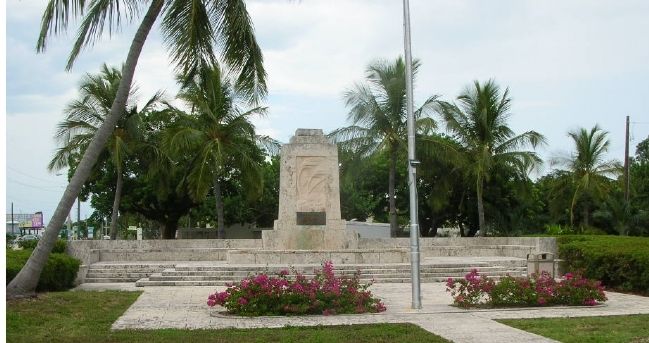
Photographed by Julie Szabo, August 16, 2007
2. The Florida Keys Memorial Marker
Other nearby markers. At least 8 other markers are within walking distance of this marker: The 1935 Hurricane (a few steps from this marker); Hurricane Monument (a few steps from this marker); Helen Wadley Branch Library (within shouting distance of this marker); Matecumbe Methodist Church (within shouting distance of this marker); The Sweeting House (about 300 feet away, measured in a direct line); Hurricane Houses (about 400 feet away); Pioneer Cemetery (approx. 0.2 miles away); Green Turtle Inn (approx. half a mile away).
Regarding The Florida Keys Memorial. Henry Flagler’s East Coast Railway dispatched a rescue train to pick up the road workers; however it was blown off the tracks by the storm surge except for its engine, “Old 447.”
Also see . . . The Florida Keys Memorial. (Submitted on May 13, 2015, by Marsha A. Matson of Palmetto Bay, Florida.)
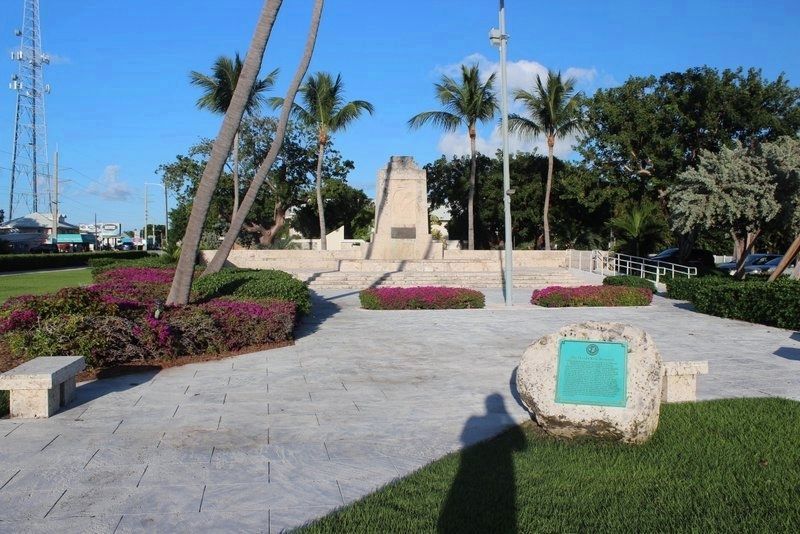
Photographed by Tim Fillmon, November 5, 2019
3. The Florida Keys Memorial marker and surrounding area.
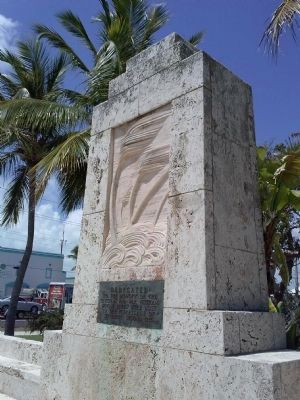
Photographed by Marsha A. Matson, May 11, 2015
4. Close-up of Memorial
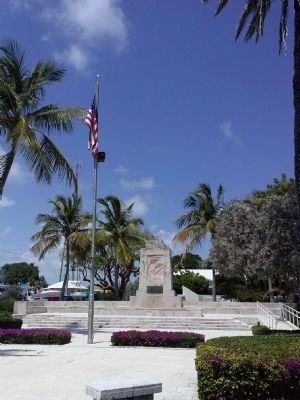
Photographed by Marsha A. Matson, May 11, 2015
5. The Florida Keys Memorial with Flag
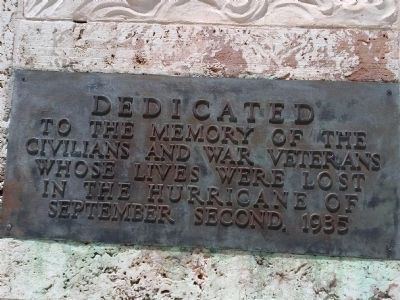
Photographed by Marsha A. Matson, May 11, 2015
6. Bronze marker on the front of the Memorial
To the memory of the
civilians and war veterans
whose lives were lost
in the hurricane of
September second, 1935
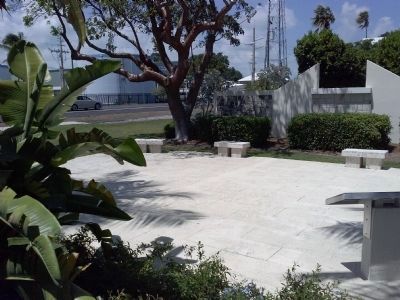
Photographed by Marsha A. Matson, May 11, 2015
7. Meditation area
Credits. This page was last revised on November 6, 2019. It was originally submitted on October 31, 2007, by Julie Szabo of Oldsmar, Florida. This page has been viewed 3,028 times since then and 43 times this year. Photos: 1, 2. submitted on October 31, 2007, by Julie Szabo of Oldsmar, Florida. 3. submitted on November 5, 2019, by Tim Fillmon of Webster, Florida. 4, 5, 6, 7. submitted on May 13, 2015, by Marsha A. Matson of Palmetto Bay, Florida. • J. J. Prats was the editor who published this page.
