Harlandale in San Antonio in Bexar County, Texas — The American South (West South Central)
San Antonio Missions
⎯⎯⎯
Las misiones de San Antonio
Photographed by William Fischer, Jr., March 29, 2010
1. San Antonio Missions / Las misiones de San Antonio Marker
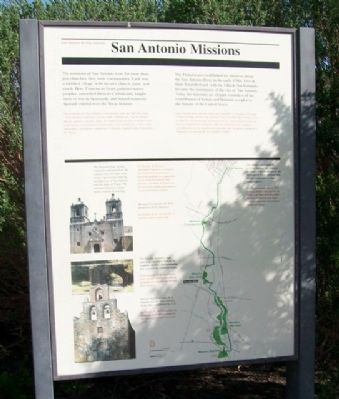
The missions of San Antonio were far more than just churches, they were communities. Each was a fortified village, with its own church, farm, and ranch. Here, Franciscan friars gathered native peoples, converted them to Catholicism, taught them to live as Spaniards, and helped maintain Spanish control over the Texas frontier.
The Franciscans established six missions along the San Antonio River in the early 1700s. Five of them flourished and, with the Villa de San Fernando, became the foundation of the city of San Antonio. Today the missions are elegant reminders of the contribution of Indian and Hispanic peoples to the history of the United States.
The National Park Service maintains and preserves the mission sites through cooperative agreements with the Archdiocese of San Antonio and the state of Texas. The mission churches remain active centers of worship.
The Alamo - established in 1718 as Mission San Antonio de Valero. The Daughters of the Republic of Texas maintains this site as a memorial to Texas Independence.
——————
Las misiones de San Antonio eran mucho más que iglesias, eran comunidades. Cada una era una
this page online
Los franciscanos establecieron seis misiones a principios del siglo XVIII a lo largo del río San Antonio. Cinco de ellas florecieron, y con la Villa de San Fernando, pasaron a ser los cimientos de lo que es hoy la ciudad de San Antonio. Hoy, las misiones son elegantes recordatorios de la contribución aportada por las gentes indígenas e hispanas a la historia de los Estados Unidos.
El Servicio de Parques Nacionales mantiene y conserva los recinto de las misiones a través de acuerdos de cooperación con la Arquidiócesis de San Antonio y el estado de Texas. Las iglesias de la misiones permanecen como parroquias activas.
El Alamo - establecido en 1718 como la Misión San Antonio de Valero. Las Hijas de la República de Texas mantienen este lugar como monumento a la independencia de Texas.
Erected by National Park Service.
Topics. This historical marker is listed in these topic
Photographed by William Fischer, Jr., March 29, 2010
2. San Antonio Missions / Las misiones de San Antonio Marker
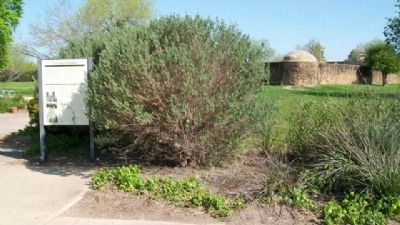
Mission San Jose compound wall in distant background.
Location. This marker has been replaced by another marker nearby. It was located near 29° 21.617′ N, 98° 28.79′ W. Marker was in San Antonio, Texas, in Bexar County. It was in Harlandale. It could be reached from San Jose Drive. Marker is immediately east of the San Antonio Missions National Historic Park Visitor Center (at Mission San Jose). Touch for map. Marker was at or near this postal address: 2202 Roosevelt Avenue, San Antonio TX 78210, United States of America. Touch for directions.

Regionally, this marker was in South Texas. It was also in the American South. Globally, it was in North America, a Gulf of Mexico state, the Western Hemisphere, the Western World, and the Anglosphere. Historically, it found itself in what was once New Spain, the Republic of Texas, and one of the Confederate States of America.
Other nearby markers. At least 8 other markers are within walking distance of this location: Mission San José / La misión San José
Photographed by William Fischer, Jr., March 29, 2010
3. San Antonio Missions Photo on Marker
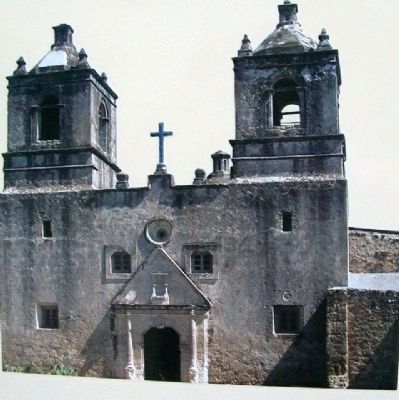
[Caption reads] Mission Concepción, the best preserved of the mission
La Misión de la Concepción, la misión mejor conservada
La Misión de la Concepción, la misión mejor conservada
Other markers no longer nearby. The Mission Road / El Camino de las Misiones (was within shouting distance of this marker but has been replaced with another marker now near it); The Convento / El convento (was about 600 feet away but has been replaced with another marker now near it); Indian Quarters / Habitaciones de los Indios (was about 600 feet away but has been replaced with another marker now near it); Rose Window / Ventana de Rosa (was about 700 feet away but has been replaced with another marker now near it).
Also see . . . San Antonio Missions National Historical Park.
Photographed by William Fischer, Jr., March 29, 2010
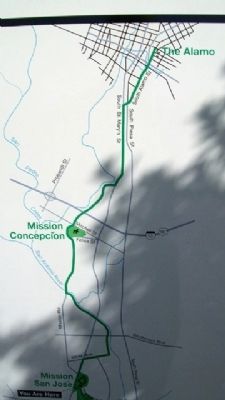
4. San Antonio Missions Map on Marker
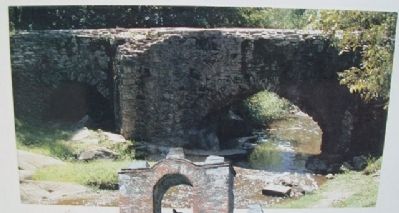
Photographed by William Fischer, Jr., March 29, 2010
5. Espada Aqueduct Photo on Marker
[Caption reads] The Espada Aqueduct was part of an extensive system of irrigation ditches called acequias that watered the mission's fields.
El acueducto de la Espada era parte de un extenso sistema de acequias que regaban las labores de la misión.
El acueducto de la Espada era parte de un extenso sistema de acequias que regaban las labores de la misión.
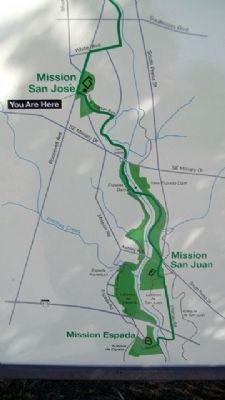
Photographed by William Fischer, Jr., March 29, 2010
6. San Antonio Missions Map on Marker
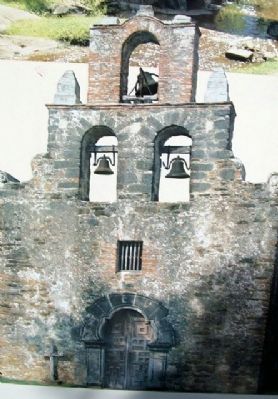
Photographed by William Fischer, Jr., March 29, 2010
7. San Antonio Missions Photo on Marker
[Caption reads] Mission San Francisco de la Espada was the final mission of the three established in 1731.
La Misión de San Francisco de la Espada fue la última misión de las tres establecidas en el año 1731.
La Misión de San Francisco de la Espada fue la última misión de las tres establecidas en el año 1731.
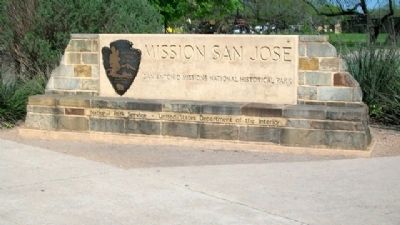
Photographed by William Fischer, Jr.
8. Mission San Jose Site Marker
Credits. This page was last revised on February 28, 2025. It was originally submitted on August 3, 2010, by William Fischer, Jr. of Reynoldsburg, Ohio. This page has been viewed 3,368 times since then and 34 times this year. Photos: 1, 2, 3, 4, 5, 6, 7, 8. submitted on August 3, 2010, by William Fischer, Jr. of Reynoldsburg, Ohio.
