Greenville in Greenville County, South Carolina — The American South (South Atlantic)
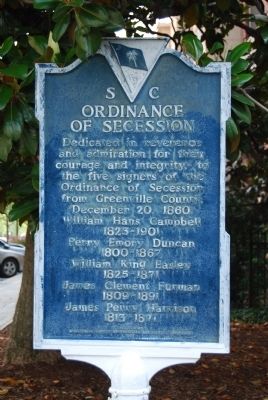
SC Ordinance of Secession
Photographed by Brian Scott, June 4, 2008
1. SC Ordinance of Secession Marker
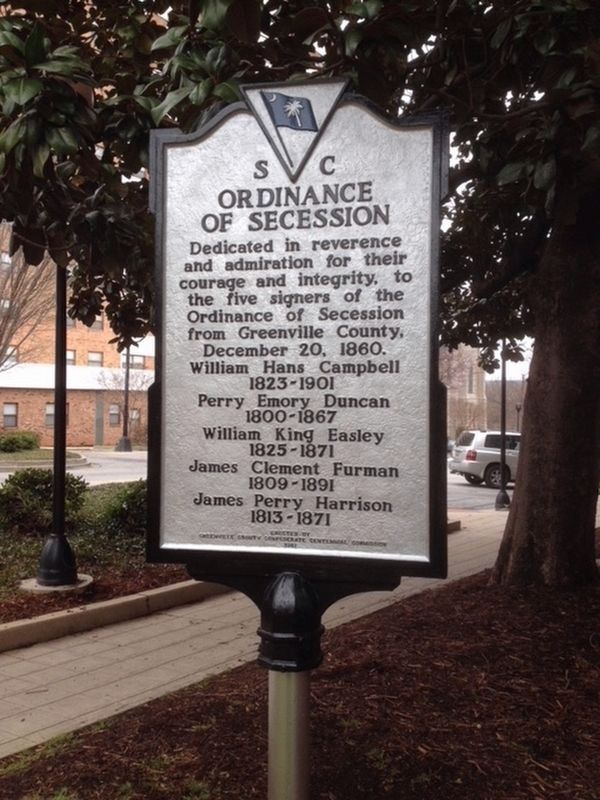
Dedicated in reverence and admiration for their courage and integrity to the five signers of the Ordinance of Secession from Greenville County, December 20, 1860:
William Hans Campbell 1823-1901 • Perry Emory Duncan 1800-1867 • William King Easley 1825-1871 • James Clement Furman 1809-1891 • James Perry Harrison 1813-1871
Erected 1961 by Greenville County Confederate Centennial Commission. (Marker Number 23-7.)
Topics. This historical marker is listed in these topic lists: Notable Events • War, US Civil. A significant historical date for this entry is December 20, 1860.
Location. 34° 51.32′ N, 82° 23.816′ W. Marker is in Greenville, South Carolina, in Greenville County. It is at the intersection of North Main Street and East Elford Street, on the right when traveling north on North Main Street. The marker is part of a park designed to remember those with military service. It is near the entrance to Springwood Cemetery. Touch for map. Marker is in this post office area: Greenville SC 29601, United States of America. Touch for directions.

Regionally, this marker is in Upstate. It is also in the American South, specifically in the Deep South, in Appalachia, and specifically in Southern Appalachia. Globally, it is in North America, the Western Hemisphere, the Western World, and the Anglosphere. Historically, it finds itself in what was once the original Cherokee Nation, the territory of the Mississippian Culture, one of the original Thirteen Colonies, one of the Confederate States of America, and the Antebellum South.
Other nearby markers. At least 8 other markers are within walking distance of this marker: Confederate Armory (here, next to this marker); In Memory of 81st Wildcat Division / Camp Sevier (here, next to this marker); Kershaw Brigade (a few steps from this marker); General Robert E. Lee
this page online
Also see . . .
1. William King Easley Biography. The first member of the Easley family to come to the state of South Carolina, was Robert with his wife Mary Allen, who moved to the state from Virginia. (Submitted on February 11, 2009, by Brian Scott of Anderson, South Carolina.)
2. Text of South Carolina's Declaration of Secession, passed December 24, 1860.
(Submitted on February 1, 2026, by Devry Becker Jones of Washington, District of Columbia.)Confederate States of America - Declaration of the Immediate Causes Which Induce and Justify the Secession of South Carolina from the Federal Union
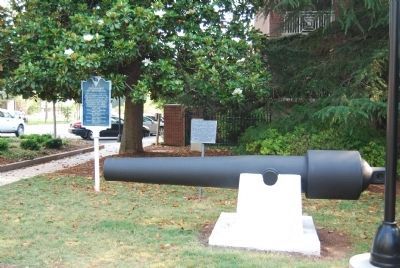
The people of the State of South Carolina, in Convention assembled, on the 26th day of April, A.D., 1852, declared that the frequent violations of the Constitution of the United States, by the Federal Government, and its encroachments uponthe reserved rights of the States, fully justified this State in then withdrawing from the Federal Union; but in deference to the opinions and wishes of the other slaveholding States, she forbore at that time to exercise this right. Since that time, these encroachments have continued to increase, and further forbearance ceases to be a virtue.Photographed by Brian Scott, June 4, 20082. SC Ordinance of Secession Marker VicinityThe cannon is a 6.4-inch (100-pounder) Parrott Rifle cast for the U.S. (Federal) Army in 1864. With some degree of irony, the cannon may have been used in the siege operations around Charleston, S.C.
And now the State of South Carolina having resumed her separate and equal place among nations, deems it due to herself, to the remaining United States of America, and to the nations of the world, that she should declare the immediate causes which have led to this act.
In the year 1765, that portion of the British Empire embracing Great Britain, undertook to make laws for the government of that portion composed of the thirteen American Colonies. A struggle for the right of self-government ensued, which resulted, on the 4th of July, 1776, in a Declaration, by the Colonies, "that they are, and of right ought to be, FREE AND INDEPENDENT STATES; and that, as free and independent States, they have full power to levy war, conclude peace, contract alliances, establish commerce, and to do all otheracts and things which independent States may of right do."Photographed by Randy Tucker, mar 20173. SC Ordinance of Secession Marker
They further solemnly declared that whenever any "form of government becomes destructive of the ends for which it was established, it is the right of the people to alter or abolish it, and to institute a new government." Deeming the Government of Great Britain to have become destructive of these ends, they declared that the Colonies "are absolved from all allegiance to the British Crown, and that all political connection between them and the State of Great Britain is, and ought to be, totally dissolved."
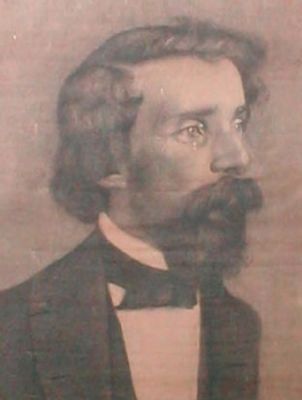
In pursuance of this Declaration of Independence, each of the thirteen States proceeded to exercise its separate sovereignty; adopted for itself a Constitution, and appointed officers for the administration of government in all its departments-- Legislative, Executive and Judicial. For purposes of defense, they united their arms and their counsels; and, in 1778, they entered into a League known as the Articles of Confederation, whereby they agreed to entrust the administration of their external relations to a common agent, known as the Congress of the United States, expresslydeclaring, in the first Article "that each State retains its sovereignty, freedom and independence, and every power, jurisdiction and right which is not, by this Confederation, expressly delegated to the United States in Congress assembled."Courtesy of Greater Easley Chamber of Commerce4. William King Easley
1825-1872
Under this Confederation the war of the Revolution was carried on, and on the 3rd of September, 1783, the contest ended, and a definite Treaty was signed by Great Britain, in which she acknowledged the independence of the Colonies in the following terms: "ARTICLE 1-- His Britannic Majesty acknowledges the said United States, viz: New Hampshire, Massachusetts Bay, Rhode Island and Providence Plantations, Connecticut, New York, New Jersey, Pennsylvania, Delaware, Maryland, Virginia, North Carolina, South Carolina and Georgia, to be FREE, SOVEREIGN AND INDEPENDENT STATES; that he treats with them as such; and for himself, his heirs and successors, relinquishes all claims to the government, propriety and territorial rights of the same and every part thereof."
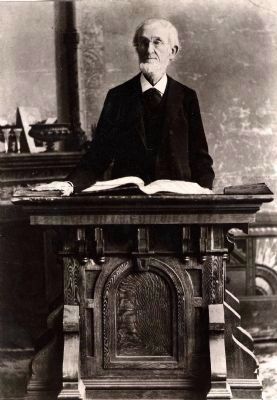
Thus were established the two great principles asserted by the Colonies, namely: the right of a State to govern itself; and the right ofa people to abolish a Government when it becomes destructive of the ends for which it was instituted. And concurrent with the establishment of these principles, was the fact, that each Colony became and was recognized by the mother Country a FREE, SOVEREIGN AND INDEPENDENT STATE.Photographed by Brian Scott5. James Clement Furman
1809-1891
In 1787, Deputies were appointed by the States to revise the Articles of Confederation, and on 17th September, 1787, these Deputies recommended for the adoption of the States, the Articles of Union, known as the Constitution of the United States.
The parties to whom this Constitution was submitted, were the several sovereign States; they were to agree or disagree, and when nine of them agreed the compact was to take effect among those concurring; and the General Government, as the common agent, was then invested with their authority.
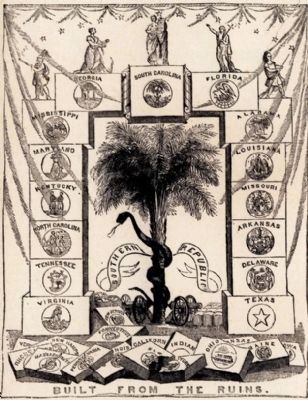
If only nine of the thirteen States had concurred, the other four would have remained as they then were-- separate, sovereign States, independent of any of the provisions of the Constitution. In fact, two of the States did not accede to the Constitution until long after it had gone into operation among the other eleven;and during that interval, they each exercised the functions of an independent nation.Photographed by Www.sonofthesouth.net, 18606. South Carolina Secession Banner
By this Constitution, certain duties were imposed upon the several States, and the exercise of certain of their powers was restrained, which necessarily implied their continued existence as sovereign States. But to remove all doubt, an amendment was added, which declared that the powers not delegated to the United States by the Constitution, nor prohibited by it to the States, are reserved to the States, respectively, or to the people. On the 23d May , 1788, South Carolina, by a Convention of her People, passed an Ordinance assenting to this Constitution, and afterwards altered her own Constitution, to conform herself to the obligations she had undertaken.
Thus was established, by compact between the States, a Government with definite objects and powers, limited to the express words of the grant. This limitation left the whole remaining mass of power subject to the clause reserving it to the States or to the people, and rendered unnecessary any specification of reserved rights.
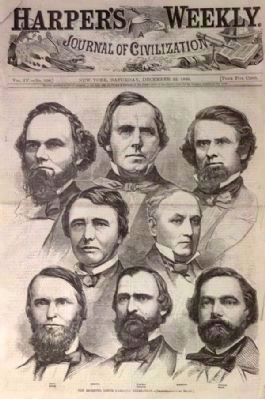
We hold that the Government thus established is subject to thetwo great principles asserted in the Declaration of Independence; and we hold further, that the mode of its formation subjects it to a third fundamental principle, namely: the law of compact. We maintain that in every compact between two or more parties, the obligation is mutual; that the failure of one of the contracting parties to perform a material part of the agreement, entirely releases the obligation of the other; and that where no arbiter is provided, each party is remitted to his own judgment to determine the fact of failure, with all its consequences.Photographed by Harper's Weekly, 18607. Harper's Weekly Cover
Members of the SC Congressional Delegation at the Time of Secession
In the present case, that fact is established with certainty. We assert that fourteen of the States have deliberately refused, for years past, to fulfill their constitutional obligations, and we refer to their own Statutes for the proof.
The Constitution of the United States, in its fourth Article, provides as follows: "No person held to service or labor in one State, under the laws thereof, escaping into another, shall, in consequence of any law or regulation therein, be discharged from such service or labor, but shall be delivered up, on claim of the party to whom such service or labor may be due."
This stipulation was so material to the compact, that without it that compact would not have been made. The greater number of the contracting parties held slaves, and they had previously evinced their estimate of the value of such a stipulation by making it a condition in the Ordinance for the government of the territory ceded by Virginia, which now composes the States north of the Ohio River.
The same article of the Constitution stipulates also for rendition by the several States of fugitives from justice from the other States.
The General Government, as the common agent, passed laws to carry into effect these stipulations of the States. For many years these laws were executed. But an increasing hostility on the part of the non-slaveholding States to the institution of slavery, has led to a disregard of their obligations, and the laws of the General Government have ceased to effect the objects of the Constitution. The States of Maine, New Hampshire, Vermont, Massachusetts, Connecticut, Rhode Island, New York, Pennsylvania, Illinois, Indiana, Michigan, Wisconsin and Iowa, have enacted laws which either nullify the Acts of Congress or render useless any attempt to execute them. In many of these States the fugitive is discharged from service or labor claimed, and in none of them has the State Government complied with the stipulation made in the Constitution. The State of New Jersey, at an early day, passed a law in conformity with her constitutional obligation; but the current of anti-slavery feeling has led her more recently to enact laws which render inoperative the remedies provided by her own law and by the laws of Congress. In the State of New York even the right of transit for a slave has been denied by her tribunals; and the States of Ohio and Iowa have refused to surrender to justice fugitives charged with murder, and with inciting servile insurrection in the State of Virginia. Thus the constituted compact has been deliberately broken and disregarded by the non-slaveholding States, and the consequence follows that South Carolina is released from her obligation.
The ends for which the Constitution was framed are declared by itself to be "to form a more perfect union, establish justice, insure domestic tranquility, provide for the common defence, promote the general welfare, and secure the blessings of liberty to ourselves and our posterity."
These ends it endeavored to accomplish by a Federal Government, in which each State was recognized as an equal, and had separate control over its own institutions. The right of property in slaves was recognized by giving to free persons distinct political rights, by giving them the right to represent, and burthening them with direct taxes for three-fifths of their slaves; by authorizing the importation of slaves for twenty years; and by stipulating for the rendition of fugitives from labor.
We affirm that these ends for which this Government was instituted have been defeated, and the Government itself has been made destructive of them by the action of the non-slaveholding States. Those States have assume the right of deciding upon the propriety of our domestic institutions; and have denied the rights of property established in fifteen of the States and recognized by the Constitution; they have denounced as sinful the institution of slavery; they have permitted open establishment among them of societies, whose avowed object is to disturb the peace and to eloign the property of the citizens of other States. They have encouraged and assisted thousands of our slaves to leave their homes; and those who remain, have been incited by emissaries, books and pictures to servile insurrection.
For twenty-five years this agitation has been steadily increasing, until it has now secured to its aid the power of the common Government. Observing the forms of the Constitution, a sectional party has found within that Article establishing the Executive Department, the means of subverting the Constitution itself. A geographical line has been drawn across the Union, and all the States north of that line have united in the election of a man to the high office of President of the United States, whose opinions and purposes are hostile to slavery. He is to be entrusted with the administration of the common Government, because he has declared that that "Government cannot endure permanently half slave, half free," and that the public mind must rest in the belief that slavery is in the course of ultimate extinction.
This sectional combination for the submersion of the Constitution, has been aided in some of the States by elevating to citizenship, persons who, by the supreme law of the land, are incapable of becoming citizens; and their votes have been used to inaugurate a new policy, hostile to the South, and destructive of its beliefs and safety.
On the 4th day of March next, this party will take possession of the Government. It has announced that the South shall be excluded from the common territory, that the judicial tribunals shall be made sectional, and that a war must be waged against slavery until it shall cease throughout the United States.
The guaranties of the Constitution will then no longer exist; the equal rights of the States will be lost. The slaveholding States will no longer have the power of self-government, or self-protection, and the Federal Government will have become their enemy.
Sectional interest and animosity will deepen the irritation, and all hope of remedy is rendered vain, by the fact that public opinion at the North has invested a great political error with the sanction of more erroneous religious belief.
We, therefore, the People of South Carolina, by our delegates in Convention assembled, appealing to the Supreme Judge of the world for the rectitude of our intentions, have solemnly declared that the Union heretofore existing between this State and the other States of North America, is dissolved, and that the State of South Carolina has resumed her position among the nations of the world, as a separate and independent State; with full power to levy war, conclude peace, contract alliances, establish commerce, and to do all other acts and things which independent States may of right do.
Adopted December 24, 1860
Additional commentary.
1. Perry Emory Duncan
Perry Emory Duncan, was born in Greenville, South Carolina, in 1800, and married Mary Anne Hill, who was born in Wilkes County, Georgia, in 1814. Of this marriage George W. Duncan was born in Greenville, South Carolina, on February 22, 1852. He was exceedingly fortunate in his father. A man of great business ability, Perry Emory Duncan had amassed a considerable estate. He owned a good plantation a few miles out of Greenville, had many slaves, and also operated a cotton plantation seven miles below Albany, Georgia, where the family passed the winter season. He was a strong Union man, strenuously opposed to secession, but was a member of the Convention, and when the State decided to go out threw in his lot with his compatriots and signed the ordinance of secession. He had been prominent in many ways in the State, served in the Legislature for a long period, was of recognized ability, of the highest personal character, and enjoyed the confidence and esteem of a large constituency. He gave the Confederacy a most loyal support. Too old a man to enter the army himself, being then in the sixties, he sent three of his sons, who were in active service throughout the war except when disabled by wounds or sickness. One of his sons, Robert Perry Duncan, rose to the rank of Colonel and was Chief of Staff to General R.H. Anderson, of South Carolina. Mrs. Perry Duncan organized a sewing society at Greenville for the benefit of the soldiers at the front, and as she had three sons in the Army of Northern Virginia, made constant trips, and was greatly loved by the soldiers for her many deeds of kindness. (Source: Men Of Mark In Georgia: A Complete And Elaborate History Of The State From Its Settlement To The Present Time, Chiefly Told In Biographies And Autobiographies by William J. Northen, pg 301.)
— Submitted September 14, 2009, by Brian Scott of Anderson, South Carolina.
2. James Clement Furman (1809-1891), South Carolina Baptist Leader
James Clement Furman participated in the Secession Convention in South Carolina and then ardently supported the Confederate cause through his efforts on the home front. The son of Richard Furman, an eminent South Carolina Baptist pastor and educator during the Revolutionary and Early Republic eras, and Dorothea Maria Burn, Furman worked as a Baptist pastor and educator in South Carolina. He graduated from the College of Charleston in 1826, and originally planned to pursue the medical profession. He, however, was converted during the preaching of Dr. Basil Manly, Sr., and began ministerial pursuits, preaching his first sermon and being licensed all in 1828. After studying for a time at the Furman Institution, he was ordained in 1832. The following year, he married Harriet E. Davis and began pastoring the Welsh Neck Church at Society Hill, South Carolina. When the Southern Baptist Convention was formed in May 1845, Furman participated in the inaugural convention.
His career as an educator began in December 1844, when he resigned his church to become the senior professor of the Furman Theological Institution (formerly the Furman Institution), an office that placed the leadership of the school upon him. When the institution became Furman University in 1852, he became chairman of the faculty. He also served as professor of intellectual philosophy and professor of sacred rhetoric and pastoral duties. In 1859, he accepted the position of president of the university, serving until his resignation in 1879. During the Civil war, the university closed, and Furman served as president and professor at the Greenville Baptist Female College. After his departure from Furman University, he remained active as a preacher and as the associate editor of the Baptist Courier until his death.
With the coming of the Civil War, Furman never hesitated regarding his support of secession. On 22 November 1860 at the courthouse in Greenville, South Carolina, he participated in a meeting designed to elect five candidates from the Greenville district to attend the state's Secession Convention. This district was one of the few in the state where a significant portion of anti-secessionist citizens resided. Many speeches were given that day arguing the merits of both sides, but in the end, the people elected five secessionist candidates, including Furman, to represent them in the convention to be held beginning on 17 December.
In his speech, Furman argued that the principles of the Constitution of the United States had been violated and unfulfilled by the Northern states. The government, for example, had trampled upon the principle of justice by failing to secure the property rights of the South and robbing Southerners of thousands of dollars. He cited the protective tariff system and the fugitive slave laws as examples. Abolitionist characterizations of slavery as a crime and the efforts to exclude slaveholders from the territories insulted the dignity of the Southern states, he said. Furthermore, the government had failed to uphold the domestic tranquility by allowing the dictatorial North to monopolize the oppressed South. He asserted that, "Domestic tranquility for Southern members of Congress is to play the part of a hen-pecked wight forever annoyed by a noisy vixen." Southerners could relieve their representatives by sending them to the Congress of the Southern Confederacy. Finally, Northerners had caused slaves to despise their masters, thereby creating perpetual turmoil. The election of Abraham Lincoln as president signaled continued hostility toward the South.
Furman maintained these sentiments even after Confederate losses during 1862-1863. During that time, he continued to question Northern motives for maintaining the Union, charging that the one master passion of the North was the love of money. This love was the only reason why the North desired any associations with the South. Yet, they hypocritically cloaked such desires in the love of the flag. Years later, Furman remained convinced that the North had violated the rights of the South, as well as the principles of the Constitution. At a Memorial Day address in 1880, he continued to argue the denial of self-government. He hoped that in years to come, those who had been seen as the enemies of the "best" government in the world would be heralded as the truest friends of liberty.
Furman had a great impact on Baptist life and on education in South Carolina. His primary contribution to the Civil War effort came from his leadership in bringing about secession and his attempts to maintain popular confidence in it. In the difficult years after the war, his efforts greatly aided Furman University's ability to remain open. (Source: Encyclopedia of the American Civil War: A Political, Social, and Military History by David J. Coles, David Stephen Heidler, Jeanne T. Heidler Ph.D., and Jeanne T. Heidler (2002) pgs 796-797.)
— Submitted September 15, 2009, by Brian Scott of Anderson, South Carolina.
3. Text of the South Carolina Ordinance of Secession
The State of South Carolina
At a Convention of the People of the State of South Carolina, begun and holden at Columbia on the Seventeenth day of December in the year or our Lord one thousand eight hundred and sixty and thence continued by adjournment to Charleston, and there by divers adjournments to the Twentieth day of December in the same year –
An Ordinance To dissolve the Union between the State of South Carolina and other States united with her under the compact entitled “The Constitution of the United States of America.”
We, the People of the State of South Carolina, in Convention assembled do declare and ordain, and it is herby declared and ordained, That the Ordinance adopted by us in Convention, on the twenty-third day of May in the year of our Lord One Thousand Seven hundred and eight eight, whereby the Constitution of the United State of America was ratified, and also all Acts and parts of Acts of the General Assembly of this State, ratifying amendment of the said Constitution, are here by repealed; and that the union now subsisting between South Carolina and other States, under the name of “The United States of America,” is hereby dissolved.
Done at Charleston, the twentieth day of December, in the year of our Lord one thousand eight hundred and sixty.
[signed] D.F. Jamison Delegate from Barnwell and President of the Convention
[signatures of delegates to the convention]
Attest: Benj. J. Arthur, Clerk of the Convention
— Submitted September 15, 2009, by Brian Scott of Anderson, South Carolina.
Credits. This page was last revised on February 1, 2026. It was originally submitted on June 4, 2008, by Brian Scott of Anderson, South Carolina. This page has been viewed 4,434 times since then and 130 times this year. Last updated on April 25, 2011, by Terry Lee Rude of Greenville, South Carolina. Photos: 1, 2. submitted on June 4, 2008, by Brian Scott of Anderson, South Carolina. 3. submitted on April 2, 2018, by Randy Tucker of Greenville, South Carolina. 4. submitted on September 14, 2009, by Brian Scott of Anderson, South Carolina. 5, 6, 7. submitted on September 15, 2009, by Brian Scott of Anderson, South Carolina. • Bill Pfingsten was the editor who published this page.
