Ewing in Lee County, Virginia — The American South (Mid-Atlantic)
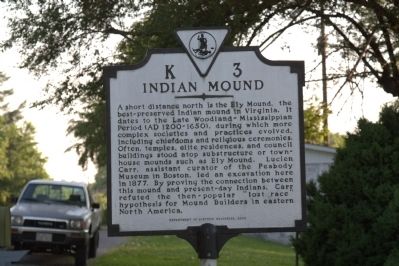
Indian Mound
Photographed by J. J. Prats, May 29, 2011
1. Indian Mound Marker
Erected 2000 by Department of Historic Resources. (Marker Number K-3.)
Topics and series. This historical marker is listed in these topic lists: Anthropology & Archaeology • Indigenous Peoples and Communities • Landmarks. In addition, it is included in the Virginia Department of Historic Resources (DHR)
this page online
Location. 36° 39.22′ N, 83° 24.043′ W. Marker is in Ewing, Virginia, in Lee County. It is on Daniel Boone Trail (Business U.S. 58) just west of Smith Hollow Road, on the right when traveling west. Touch for map. Marker is in this post office area: Ewing VA 24248, United States of America. Touch for directions.

Regionally, this marker is in Southwest Virginia. It is also in the American South, specifically in the Upper South, in Appalachia, and specifically in Southern Appalachia. Globally, it is in North America, the Western Hemisphere, the Western World, and the Anglosphere. Historically, it finds itself in what was once the original Cherokee Nation, the territory of the Mississippian Culture, one of the original Thirteen Colonies, one of the Confederate States of America, and the Antebellum South.
Other nearby markers. At least 8 other markers are within 6 miles
Photographed by J. J. Prats, May 29, 2011
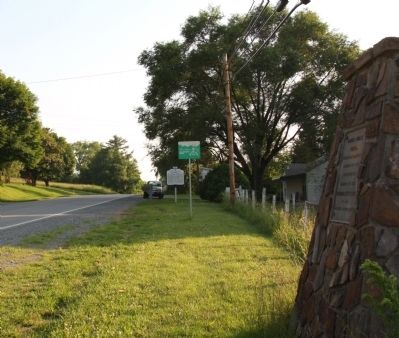
2. Indian Mound Marker in the Distance
The Daniel Boone Trail monument is in the foreground on the right.
More about this marker. This marker replaced an earlier marker with the same name and number which read, “the knoll a short distance to the north is an Indian burial mound. The Cherokees were the principal tribe inhabiting this region.”
1930s marker guidebooks list another marker with the same name and number at this location which read, “the two knolls a short distance to the north are Indian burial mounds.”
Also see . . . Woodland Indians in Virginia. Page
Photographed by J. J. Prats, May 29, 2011
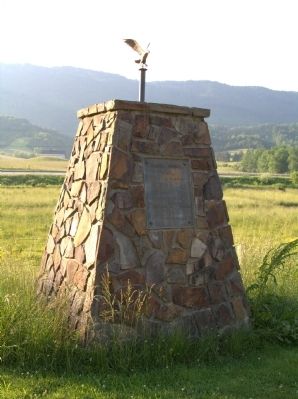
3. Daniel Boone Trail Monument
A number of these identical monuments can be found along the original route of U.S. 58. The plaque reads, “Daniel Boone Trail, from North Carolina to Kentucky. Marked by the Virginia Daughters of the American Revolution.”
Photographed by J. J. Prats, May 29, 2011
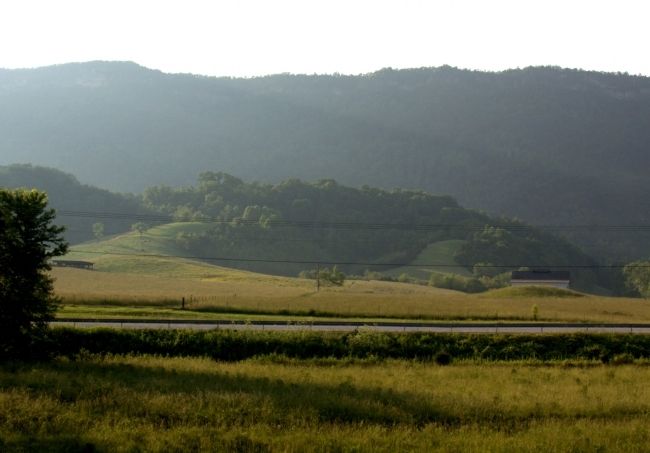
4. View of Indian Mound
This view is from the Daniel Boone Trail monument.
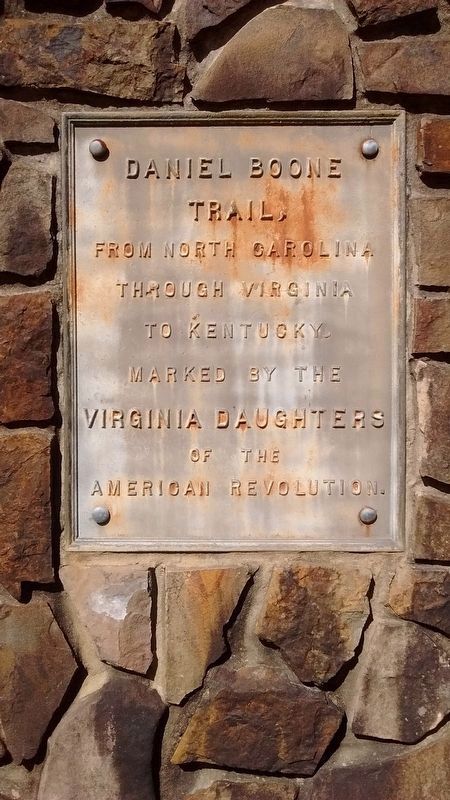
Photographed by Tom Bosse, March 16, 2019
5. Daniel Boone Trail Monument
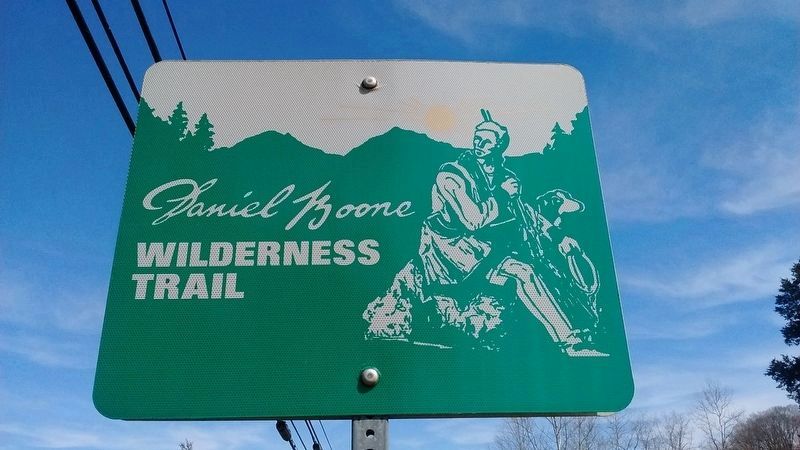
Photographed by Tom Bosse, March 16, 2019
6. Daniel Boone Wilderness Trail Sign
Credits. This page was last revised on July 7, 2021. It was originally submitted on July 7, 2011, by J. J. Prats of Powell, Ohio. This page has been viewed 3,314 times since then and 131 times this year. Photos: 1. submitted on July 7, 2011, by J. J. Prats of Powell, Ohio. 2, 3, 4. submitted on July 8, 2011, by J. J. Prats of Powell, Ohio. 5, 6. submitted on April 25, 2020, by Tom Bosse of Jefferson City, Tennessee.
