Port Orange in Volusia County, Florida — The American South (South Atlantic)
Florida Hammock Trail
Photographed by AGS Media, August 13, 2010
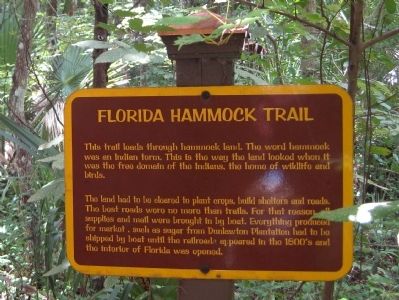
1. Florida Hammock Trail Marker
The land had to be cleared to plant crops, build shelters and roads. The best roads were no more than trails. For that reason, all supplies and mail were brought in by boat. Everything produced for market, such as sugar from Dunlawton Plantation had to be shipped by boat until the railroads appeared in the 1800's and the interior of Florida was opened.
Topics. This historical marker is listed in these topic lists: Indigenous Peoples and Communities • Industry & Commerce • Railroads & Streetcars • Settlements & Settlers • Waterways & Vessels.
Location. 29° 8.503′ N, 81° 0.464′ W. Marker is in Port Orange, Florida, in Volusia County. It can be reached from Old Sugar Mill Road east of Herbert Street, on the left when traveling east. The marker is on the grounds of the Dunlawton Sugar Mill Botanical Gardens. Touch for map. Marker is at or near this postal address: 950 Old Sugar
this page online

Regionally, this marker is in Florida’s First Coast. It is also in the American South and on the Eastern Seaboard. Globally, it is in the North Atlantic Region, North America, a Gulf of Mexico state, the Western Hemisphere, the Western World, and the Anglosphere. Historically, it finds itself in what was once New Spain, the territory of the Mississippian Culture, one of the Confederate States of America, and the Antebellum South.
Other nearby markers. At least 8 other markers are within walking distance of this marker: Historic Sugar Cane Machinery (within shouting distance of this marker); Bongoland (within shouting distance of this marker); Destruction of Dunlawton Plantation (about 400 feet away, measured in a direct line); Emathla (King Philip) (about 600 feet away); Battle of Dunlawton Plantation (about 600 feet away); Spanish Mills and Bongoland (about 600 feet away); Dunlawton's Building Blocks (about 600 feet away); Living on the Edge (about 600 feet away). Touch for a list and map of all markers in Port Orange.
Another
Photographed by AGS Media, August 13, 2010
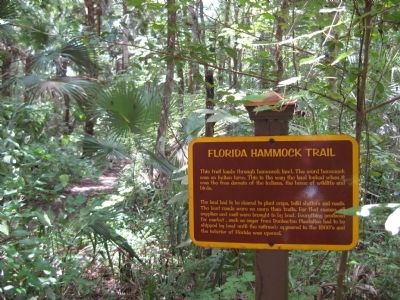
2. Florida Hammock Trail Marker
Photographed by AGS Media, August 13, 2010
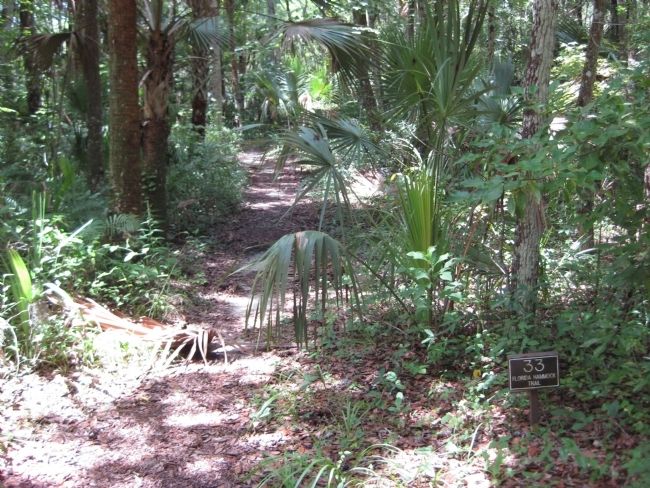
3. The Florida Hammock Trail at the Dunlawton Sugar Mill Botanical Gardens
Photographed by AGS Media, July 31, 2011
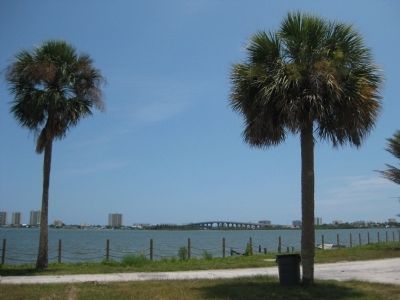
4. The Halifax River at Port Orange
Credits. This page was last revised on June 16, 2016. It was originally submitted on August 26, 2011, by Glenn Sheffield of Tampa, Florida. This page has been viewed 821 times since then and 42 times this year. Photos: 1. submitted on August 26, 2011, by Glenn Sheffield of Tampa, Florida. 2, 3, 4. submitted on August 27, 2011, by Glenn Sheffield of Tampa, Florida. • Bill Pfingsten was the editor who published this page.
