
Johnstown in Fulton County, New York — The American Northeast (Mid-Atlantic)
The Drumm House
Photographed by Howard C. Ohlhous, August 31, 2007
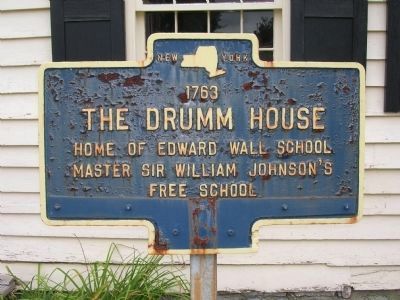
1. The 1763 Drumm House
The Drumm House
Home of Edward Wall School
Master Sir William Johnson's
Free School
Erected by New York State Education Department.
Topics. This historical marker is listed in these topic lists: Colonial Era • Education. A significant historical year for this entry is 1763.
Location. Marker has been reported missing. It was located near 43° 0.478′ N, 74° 22.458′ W. Marker was in Johnstown, New York, in Fulton County. It was at the intersection of West Green Street and West State Street (New York State Route 29), on the right when traveling west on West Green Street. The marker and Drumm House are located north of the three-way intersection of North William Street (Rt 29) and West State Street (Rt 29) and a side street, West Green Street. Touch for map. Marker was in this post office area: Johnstown NY 12095, United States of America. Touch for directions.

Regionally, this marker was in Upstate New York and in the Mohawk Valley. It was also in the American Northeast and in the Mid-Atlantic. Globally, it was in North America, the Great North Woods, the Western Hemisphere, the Western World, and
this page online
Other nearby markers. At least 8 other markers are within walking distance of this location: Site of First St John's Church (here, next to this marker); Colonial Cemetery (within shouting distance of this marker); General Lafayette (about 400 feet away, measured in a direct line); Suffrage Pioneer (about 400 feet away); Johnson Hall - 1763 (about 500 feet away); Colonial Court House (about 500 feet away); Tryon County Courthouse (about 500 feet away); Founder of Johnstown (about 600 feet away). Touch for a list and map of all markers in Johnstown.
Photographed by Howard C. Ohlhous, August 31, 2007
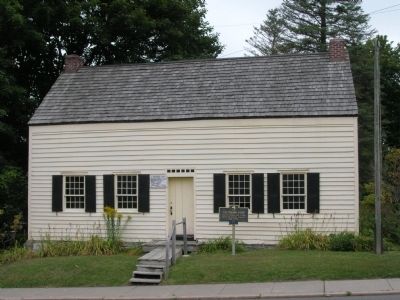
2. The Drumm House
This is the oldest dwelling in Johnstown. The only survivor of six similar structures built by Sir William for his staff. Here lived Edward Wall, schoolmaster of the first free school in the colony of New York.
Photographed by Joe Harness, July 19, 2011
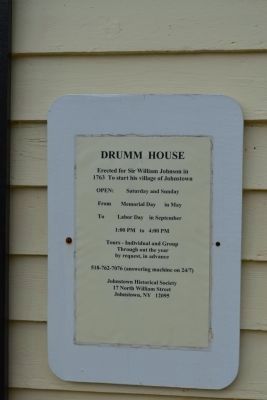
3. Additional Information on Drumm House
Erected for Sir William Johnson in 1763 to start his village of Johnstown
Photographed by Joe Harness, July 19, 2011
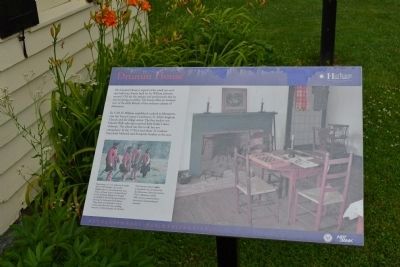
4. Drumm House Information Marker
The Drumm house is typical of the small one-an-one-half-story houses built by Sir William Johnson around 1763 for the artisans and professionals that he was recruiting as settlers. The house offers an intimate view of the daily lifestyle of the ordinary citizens of Johnstown.
By 1769 Sir William established a school at Johnstown near the Tryon County Courthouse. St. John's Anglican Church and the village center. The first teacher was Edward Wall, who later married John Butler's niece Deborah. The school was free to all, but not compulsory. In the 1770s it had about 45 students from both Mohawk and European families in the area.
Beginning in 1772, Johnson brought about 100 families of Scottish Highlanders to the Johnstown area. Many of these Scots remained loyal to the Johnson family and fought on behalf of the British Government during the American Revolution. They were not allowed to return to the area after the war, settling instead on British grants in Ontario. The Drumm House (right) is furnished and interpreted by the Johnstown Historical Society. Their collection includes 18th Century period artifacts, documents and genealogical materials.
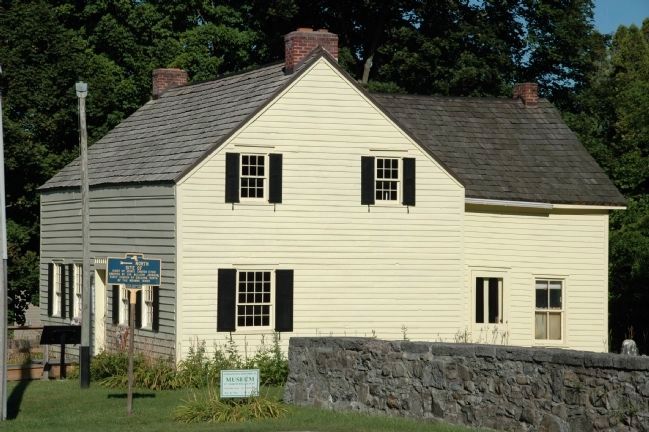
Photographed by Howard C. Ohlhous, August 29, 2012
5. The Drumm House
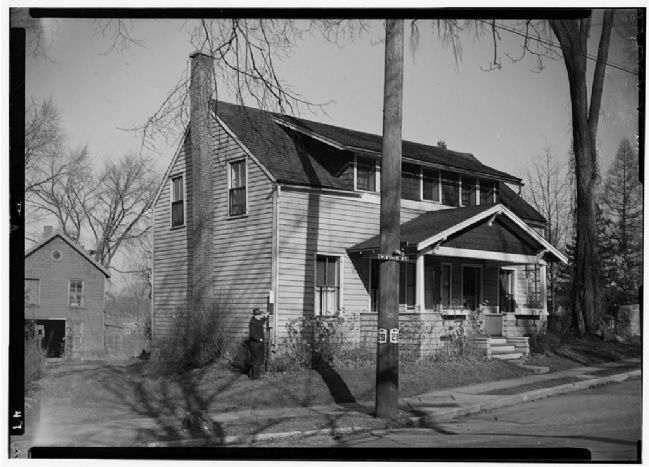
Historic American Buildings Survey, circa 1936
6. The Drumm Homestead, West State & Green Streets, Johnstown, Fulton County, NY
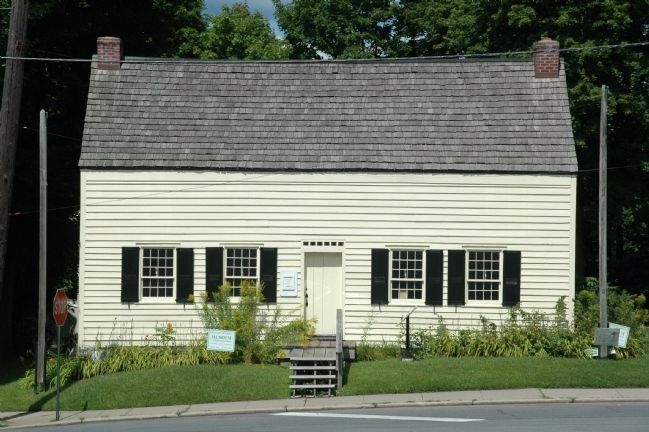
Photographed by Howard C. Ohlhous, August 24, 2014
7. The Drumm House
Credits. This page was last revised on November 27, 2019. It was originally submitted on February 24, 2008, by Howard C. Ohlhous of Duanesburg, New York. This page has been viewed 1,891 times since then and 23 times this year. Last updated on December 19, 2011, by Joe Harness of Little Egg Harbor, New Jersey. Photos: 1, 2. submitted on February 24, 2008, by Howard C. Ohlhous of Duanesburg, New York. 3, 4. submitted on December 19, 2011, by Joe Harness of Little Egg Harbor, New Jersey. 5. submitted on August 29, 2012, by Howard C. Ohlhous of Duanesburg, New York. 6. submitted on September 12, 2013, by Howard C. Ohlhous of Duanesburg, New York. 7. submitted on August 29, 2014, by Howard C. Ohlhous of Duanesburg, New York. • Bill Pfingsten was the editor who published this page.
