Wilson-Conococheague in Washington County, Maryland — The American Northeast (Mid-Atlantic)
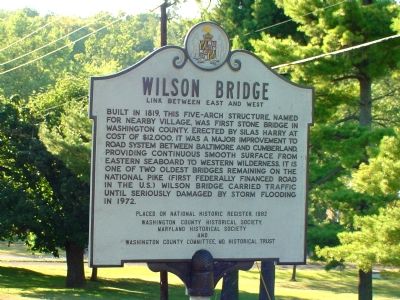
Wilson Bridge
Link Between East and West
Photographed by J. J. Prats, August 5, 2006
1. Wilson Bridge Marker
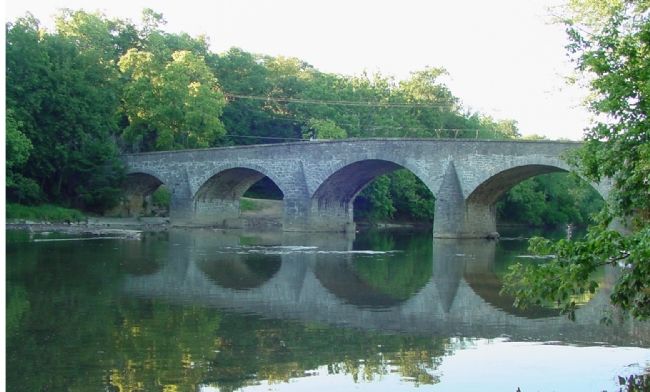
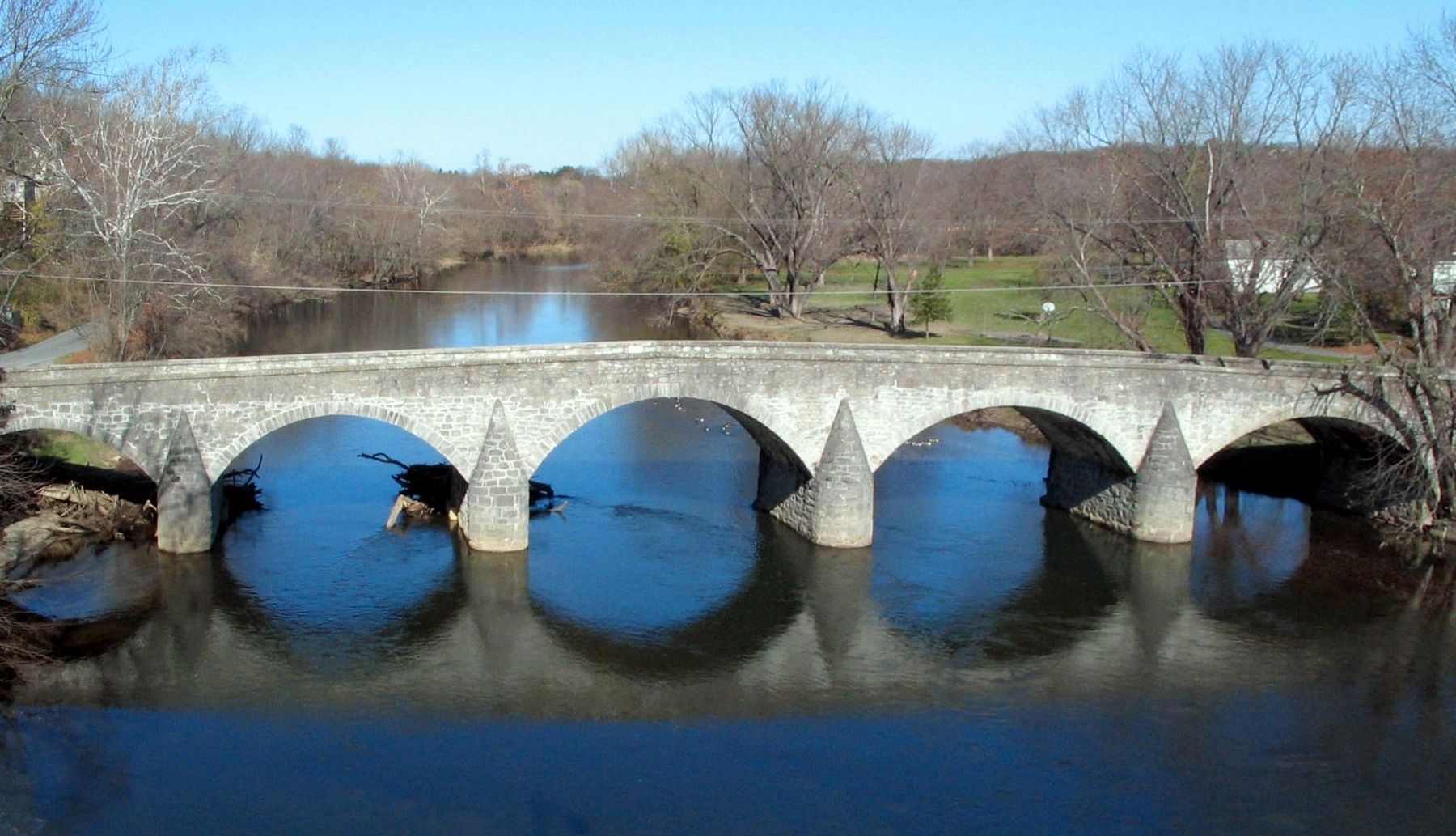
Built in 1819, this five-arch structure, named for nearby village, was first stone bridge in Washington County. Erected by Silas Harry at cost of $12,000, it was a major improvement to road system between Baltimore and Cumberland, providing continuous smooth surface from Eastern Seaboard to western wilderness. It is one of two oldest bridges remaining on the National Pike (first federally financed road in the U.S.). Wilson Bridge carried traffic until seriously damaged by storm flooding in 1972.
Placed on National Historic Register, 1982.
Erected by the Washington County Historical Society; the Maryland Historical Society; and the Washington County Committee, Maryland Historical Trust.
Topics and series. This historical marker is listed in these topic lists: Bridges & Viaducts • Roads & Vehicles. In addition, it is included in the Maryland Historical Trust,
this page online
Location. 39° 39.449′ N, 77° 50.763′ W. Marker is in Wilson-Conococheague, Maryland, in Washington County. It is at the intersection of Baltimore National Pike (U.S. 40) and Stone Bridge Drive, on the right when traveling west on Baltimore National Pike. Marker is just east of the current U.S. 40 Conococheague Bridge. Touch for map. Marker is at or near this postal address: 15112 Wilson Bridge Park Ln, Hagerstown MD 21740, United States of America. Touch for directions.

Regionally, this marker is in Western Maryland. It is also in the American Mid-Atlantic, in Appalachia, and specifically in Northern Appalachia. Globally, it is in North America, the Western Hemisphere, the Western World, and the Anglosphere. Historically, it finds itself in what was once one of the original Thirteen Colonies.
Photographed by J. J. Prats, August 5, 2006
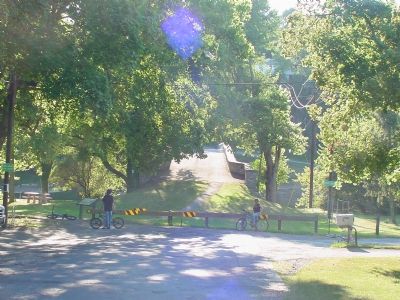
2. Wilson Bridge as Viewed From the Marker
Other nearby markers. At least 5 other markers are within 2 miles of this marker, measured as the crow flies: A different marker also named Wilson Bridge (about 300 feet away, measured in a direct line); Gettysburg Campaign (approx. 0.3 miles away); Wilson’s Store (approx. 0.3 miles away); “The Bank Road” (approx. 0.3 miles away); a different marker also named Gettysburg Campaign (approx. 1.2 miles away).
Other markers no longer nearby. Miller's Tavern & Spickler's Buggy Factory (was approx. 1.1 miles away but has been replaced with another marker now near it); a different marker also named Gettysburg Campaign (was approx. 1.1 miles away but has been replaced with another marker now near it).
More about this marker. One of the few Maryland roadside markers of this style with only one face. Back of marker is blank.
Regarding Wilson Bridge. Just beyond the marker is Wilson
Photographed by J. J. Prats, August 5, 2006
3. Wilson Bridge Carried the National Pike Across the Conococheague Creek
Also see . . .
1. Wilson Bridge. (Submitted on November 18, 2006.)
2. Wilson's Bridge. (PDF) WA-V-001, National Register Form. (Submitted on October 30, 2016, by Allen C. Browne of Silver Spring, Maryland.)
3. Wilson Bridge. Route 40 Net. (Submitted on October 30, 2016, by Allen C. Browne of Silver Spring, Maryland.)
Photographed by Allen C. Browne, November 14, 2004
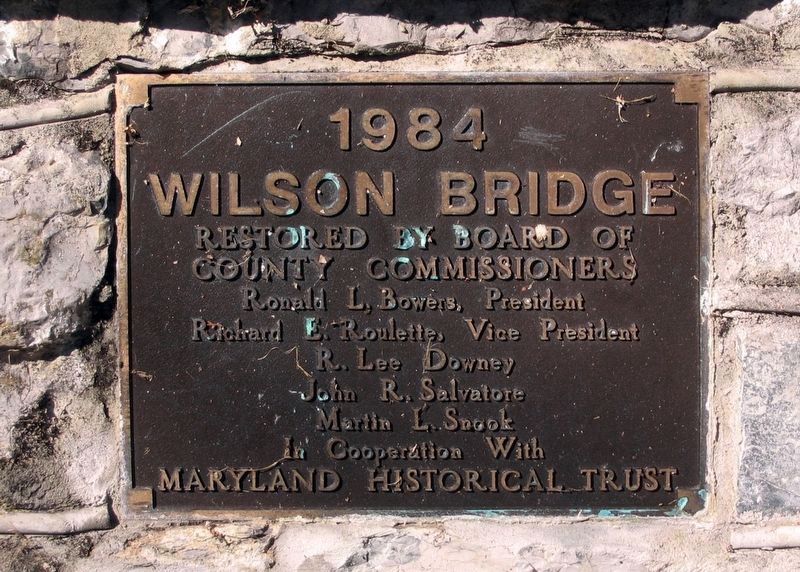
4. 1984
Wilson Bridge
Wilson Bridge
County Commissioners
Ronald L. Bowers, President
Richard E. Roulette, Vice President
R. Lee Downey
John R. Salvatore
Martin Snook
In Cooperation with
Maryland Historical Trust
Photographed by Allen C. Browne, November 14, 2004
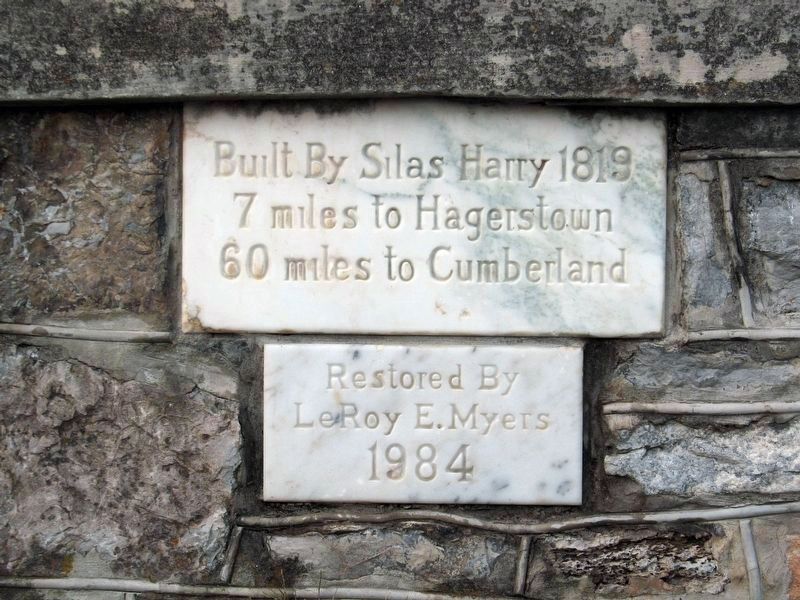
5. Built By Silas Harry 1819
60 miles to Cumberland
Restored by
LeRoy E. Myers
1984
Photographed by Allen C. Browne, November 14, 2004
6. Wilson Bridge
HABS - Library of Congress
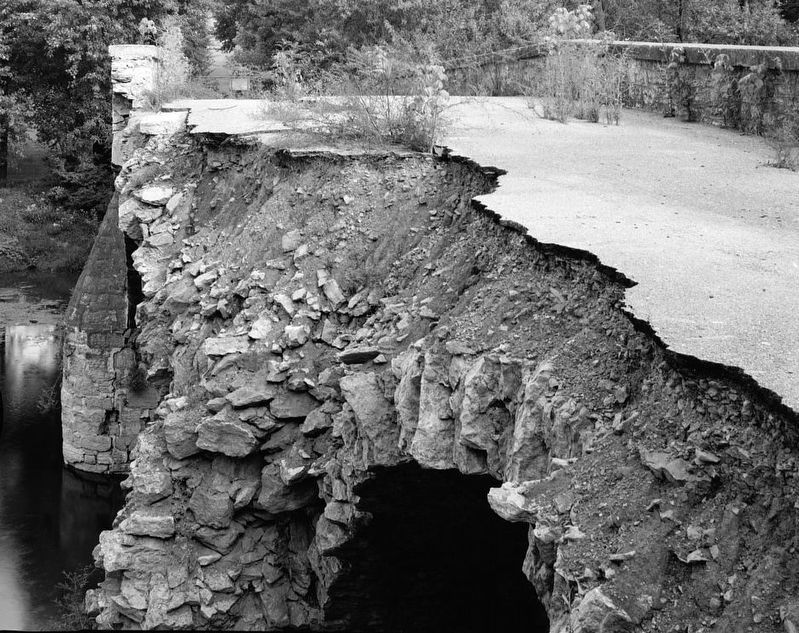
7. Collapsed Roadway, 1983
HABS - Library of Congress
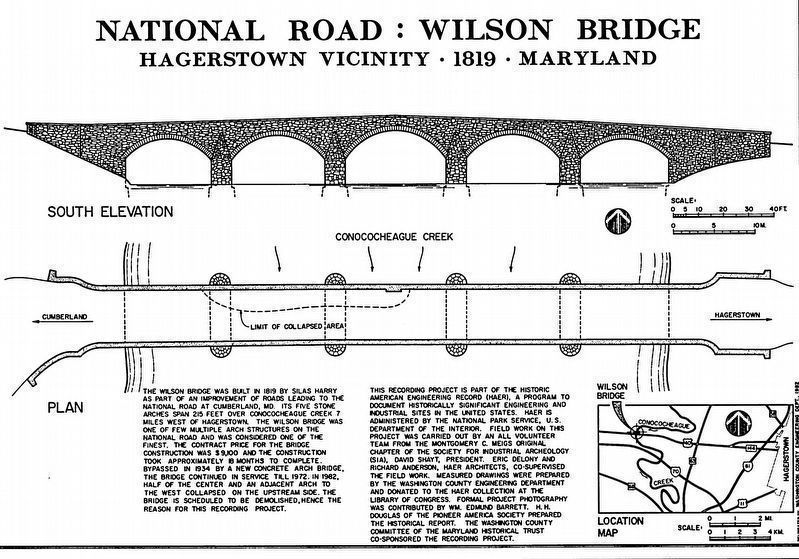
8. Wilson Bridge
South Elevation & Plan view, showing collapsed roadway
South Elevation & Plan view, showing collapsed roadway
“The Wilson Bridge was built in 1819 by Silas Harry as part of an improvement of roads leading to the National Road at Cumberland, MD. Its five stone arches span 215 feet over Conococheaque Creek 7 miles west of Hagerstown. The Wilson Bridge was one of a few multiple arch structures on the National Road and was considered one of the finest. The contract price for the bridge was $9,100 and the construction took approximately 18 months to complete. Bypassed in 1934 by a new concrete arch bridge, the bridge continued in service until 1972. In 1982, half of the center and an adjacent arch to the west collapsed on the upstream side. The bridge is {1983} scheduled to be demolished, hence the reason for this recording project.”HABS Wilson Bridge Recording Project
Credits. This page was last revised on September 20, 2021. It was originally submitted on November 18, 2006, by J. J. Prats of Powell, Ohio. This page has been viewed 3,442 times since then and 40 times this year. Photos: 1, 2, 3. submitted on November 18, 2006, by J. J. Prats of Powell, Ohio. 4, 5, 6. submitted on October 30, 2016, by Allen C. Browne of Silver Spring, Maryland. 7, 8. submitted on November 1, 2016, by Allen C. Browne of Silver Spring, Maryland.
