Darnestown in Montgomery County, Maryland — The American Northeast (Mid-Atlantic)
Disease, Death, and Medical Discoveries During the Civil War
The Graveyard
| — | Darnestown | — |
Photographed by Allen C. Browne, October 22, 2013
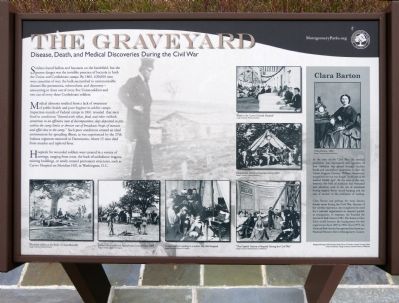
1. Disease, Death, and Medical Discoveries During the Civil War Marker
Medical ailments resulted from a lack of awareness of public health and poor hygiene in soldier camps. Inspection records of Federal camps in 1861 revealed that men lived in conditions "littered with refuse, food, and other rubbish, sometimes in an offensive state of decomposition; slops deposited in pits within camp limits or thrown out of broadcast; heaps of manure and offal close to the camp." Such poor conditions created an ideal environment for spreading illness, as was experienced by the 27th Indiana regiment stationed at Darnestown, where 15 men died of measles and typhoid.
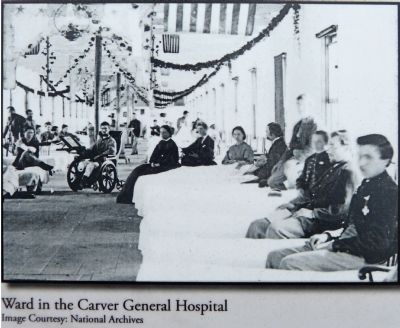
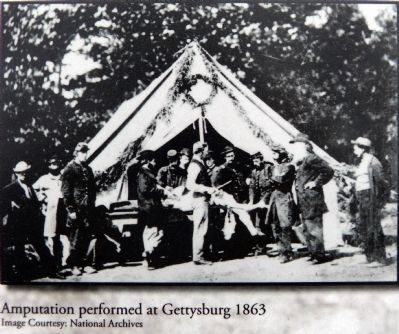
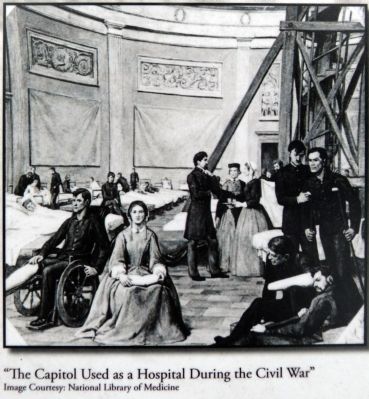
Hospitals for wounded soldiers were created in a variety of settings, ranging from tents, the back of ambulance wagons, existing buildings, or newly
this page online
(sidebar)
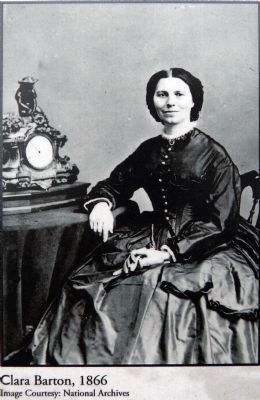
Clara Barton
At the start of the Civil War, the medical profession was unprepared and ignorant of how infection was spread through unclean hands and unsterilized equipment. In fact the Union Surgeon General, William Hammond, recognized the war was fought "at the end of the Medical Middle Ages". By the close of the war, however, the field of medicine had witnessed new advances, such as the use of anesthesia during surgery, better record keeping and the role of women in the profession of nursing.
Clara Barton was perhaps the most famous female nurse during the Civil War. Because of her combat experience, she recognized the need for a national organization to respond quickly to emergencies. In response, she founded the American Red Cross in 1881. Her home in Glen Echo would become the headquarters for this organization from 1897 to 1904. Since 1975, the National Park Service has operated her home as a National Historic Site in Montgomery County.
Erected 2012 by Montgomery Parks.
Topics and series. This historical marker
Photographed by Allen C. Browne, October 22, 2013
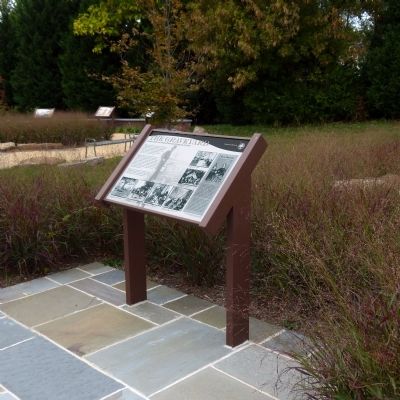
2. Disease, Death, and Medical Discoveries During the Civil War Marker
Location. 39° 6.203′ N, 77° 17.455′ W. Marker is in Darnestown, Maryland, in Montgomery County. It can be reached from Darnestown Road (Maryland Route 28) east of Seneca Road ( Route 112), on the left when traveling east. Located in Darnestown Square Heritage Park. Touch for map. Marker is at or near this postal address: 14029 Darnestown Road, Gaithersburg MD 20878, United States of America. Touch for directions.

Regionally, this marker is in the Washington Metropolitan Area. It is also in the American Mid-Atlantic. Globally, it is in North America, the Western Hemisphere, the Western World, and the Anglosphere. Historically, it finds itself in what was once one of the original Thirteen Colonies and also the Antebellum South.
Other nearby markers. At least 8 other markers are within walking distance of this marker: Clues to the Past: Oral History and Archaeology (here, next to this marker); A 19th Century Crossroads
Photographed by Allen C. Browne, October 22, 2013
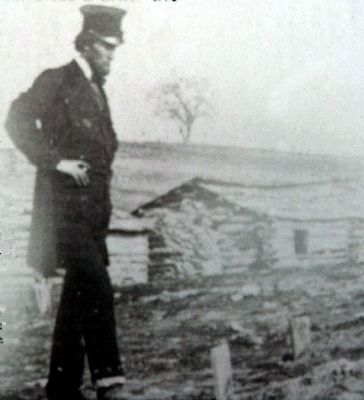
3. Abraham Lincoln views soldier graves at Bull Run, 1862
Matthew Brady Photo
National Library of Medicine
Photographed by Allen C. Browne, October 22, 2013
4. Ward in the Carver General Hospital
National Archives
Photographed by Allen C. Browne, October 22, 2013
5. Amputation performed at Gettyburg 1863
National Archives
Photographed by Allen C. Browne, October 22, 2013
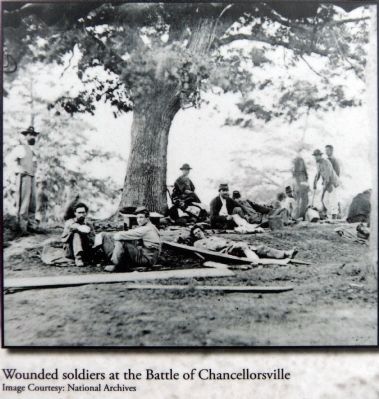
6. Wounded Soldiers at the Battle of Chancellorsville
National Archives
Photographed by Allen C. Browne, October 22, 2013
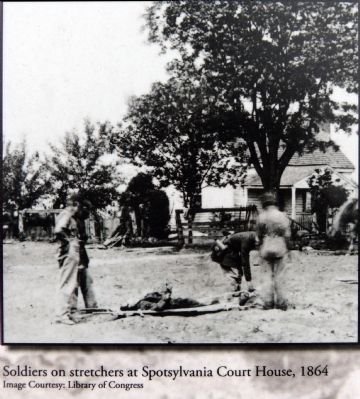
7. Soldiers on stretchers at Spotsylvania Court House, 1864
Library of Congress
Photographed by Allen C. Browne, October 22, 2013
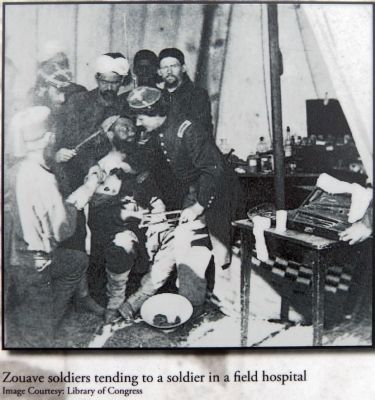
8. Zouave soldiers tending to a soldier in a field hospital
Library of Congress
Photographed by Allen C. Browne, October 22, 2013
9. "The Capitol Used as a Hospital During the Civil War"
National Library of Medicine
Photographed by Allen C. Browne, October 22, 2013
10. Clara Barton, 1866
National Archives
Credits. This page was last revised on June 16, 2016. It was originally submitted on October 29, 2013, by Allen C. Browne of Silver Spring, Maryland. This page has been viewed 1,089 times since then and 31 times this year. Photos: 1, 2, 3, 4, 5, 6, 7, 8, 9, 10. submitted on October 29, 2013, by Allen C. Browne of Silver Spring, Maryland. • Bernard Fisher was the editor who published this page.
