Fort Story in Virginia Beach, Virginia — The American South (Mid-Atlantic)
The Guns of Fort Story
⎯⎯⎯
Fort Story Rises from the Dunes
Welcome to Fort Story
Photographed by Kevin W., September 27, 2014
1. The Guns of Fort Story side of the marker
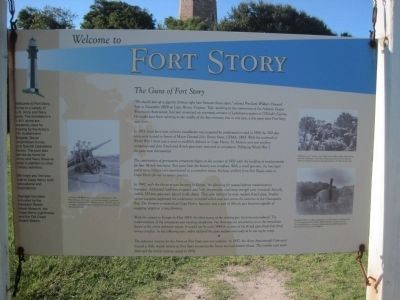
The Guns of Fort Story
"We should put up a gigantic fortress right here between these capes," uttered President William Howard Taft in November 1909 at Cape Henry, Virginia. Taft, speaking to the convention of the Atlantic Deeper Waterways Association, had just consumed an enormous amount of Lynnhaven oysters at O'Keefe's Casino. He might have been referring to the middle of the bay entrance, but in any case, a few years later Fort Story was born.
In 1914, land for a new military installation was acquired by condemnation and in 1916 the 300 plus acres were named in honor of Major General John Patten Story, USMA, 1865. With the outbreak of World War I there was a need to establish defenses at Cape Henry. Fr. Monroe sent two artillery companies and four 5-inch and 6-inch guns were mounted as armament. Following World War I, the guns were dismounted.
The construction of permanent armament began in the summer of 1921 with the building of emplacement for four 16-inch howitzers. Two years later the battery was complete. With a small garrison, the howitzers and a mine battery were maintained in a caretaker status. Railway
this page online
In 1940, with the threat of war looming in Europe, the planning for coastal defense modernization increased. Additional land was acquired, and both construction and troop strength were increased. Initially, mobile 155-mm guns were placed in the dunes. They were replaced by more modern 6-inch guns. Smaller caliber weapons supported the underater minefiled which was laid across the entrance to the Chesapeake Bay. The primary armament at Cape Henry, however, was a pair of 16-inch gun batteries capable of engagin targets at a long distance.
With the victory in Europe in May 1945, the alert status of the existing gun batteries was reduced. The modernization of the armament was nearing completion, but there was an uncertainty as to the immediate future of the entire defensive system. It would not be until 1948 that some of the 6-inch guns fired their final service practice. In the following year, orders declared the guns surplus and ready to be cut up for scrap.
The defensive mission for the Army at Fort Story was not complete. In 1957, the Army Anti-aircraft
Photographed by Kevin W., September 27, 2014
2. Fort Story Rises from the Dunes side of the marker
[Captions:]
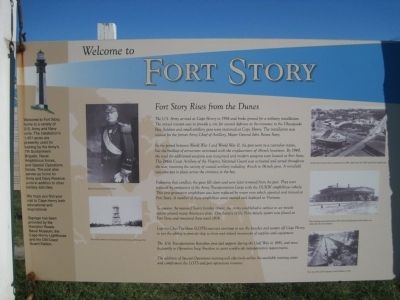
A 155-mm GPF Model 17 gun and crew on the beach in 1936. When the guns were ready to fire they were moved to reinforced platforms commonly called "Panama mounts." By 1944, they were no longer considered modern armament and were removed from the active status list.
"We'll show 'em." Soldiers of the 246th Coast Artillery heckle Adolph Hitler with their scribblings on the huge 2,100-pound projectiles before they were fired from 16-inch howitzers during target practice at Ft. Story in June 1941.
Howitzer Number 1 of Battery Alexander C. M. Pennington in 1948 just prior to the scraping of all four M1920 16-inch howitzers. In addition to the battery plotting room, a number of former powder and shell magazines for the howitzers remain on the installation.
Fort Story Rises from the Dunes
The U.S. Army arrived at Cape Henry in 1916 and broke ground for a military installation. The initial mission was to provide a site for coastal defenses at the entrance

Photographed by Devry Becker Jones (CC0), June 13, 2025
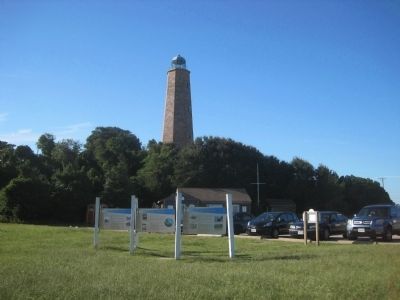
3. The three markers for Welcome to Fort Story
in the period between World War I and World War II, the post went to a caretaker status, but the buildup of armament continued with the emplacement of 16-inch howitzers. By 1940, the need for additional weapons was recognized and modern weapons were located at Fort Story. The 246th Coast Artillery of the Virginia National Guard was activated and served throughout the war, manning the variety of coastal artillery including 6-inch to 16-inch guns. A minefield was also put in place across the entrance to the bay.
Following that conflict, the guns fell silent and were later removed from the post. They were replaced by companies of the Army Transportation Corps with the DUKW amphibious vehicle. This first generation amphibian was later replaced by newer ones which operated and trained at Fort Story. A number of these amphibian units trained and deployed to Vietnam.
To counter the manned Soviet bomber threat, the Army established a surface to air missile
Photographed by Kevin W., September 27, 2014
4. Fort Story Marker
Logistics-Over-The-Shore (LOTS) exercises continue to use the beaches and waters off Cape Henry to test the ability to provide ship to shore and inland movement of supplies and equipment.
The 11th Transportation Battalion provided support during the Gulf War in 1991, and more frequently in Operation Iraqi Freedom to assist world-wide transportation requirements.
The addition of Special Operations training will effectively utilize the available training areas and complement the LOTS and port operations missions.
[Sidebar on each side of the marker:]
Welcome to Fort Story, home to a variety of U.S. Army and Navy units. The installation's 1,451 acres are presently used for training by the Army's 7th Sustainment Brigade, Naval Amphibious forces and Special Operations forces. The post also serves as home for Army and Navy Reserve units in addition to other military activities.
We hope you find your visit to Cape Henry both educational and inspirational.
Erected by the Hampton Roads Naval Museum,
Photographed by Kevin W., September 27, 2014
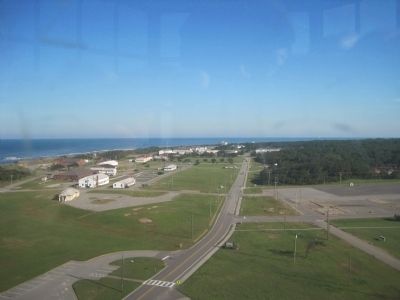
5. Roughly the same view today.
Topics and series. This historical marker is listed in these topic lists: Forts and Castles • Roads & Vehicles • War, 1st Iraq & Desert Storm • War, Vietnam • Waterways & Vessels. In addition, it is included in the Civilian Conservation Corps (CCC), the Former U.S. Presidents: #27 William Howard Taft, and the Lighthouses series lists. A significant historical month for this entry is May 1945.
Location. 36° 55.51′ N, 76° 0.458′ W. Marker is in Virginia Beach, Virginia. It is in Fort Story. It is at the intersection of Antic Avenue and Attu Road, on the right when traveling east on Antic Avenue. Touch for map. Marker is at or near this postal address: 583 Sicily Rd, Virginia Beach VA 23459, United States of America. Touch for directions.

Regionally, this marker is in Hampton Roads, specifically in Coastal Virginia, and in the Hampton Roads Metropolitan Area. It is also in the American South, specifically in the Upper South, in the Tidewater, and on the Eastern Seaboard. Globally, it is in the North Atlantic Region, North America, the Western Hemisphere,
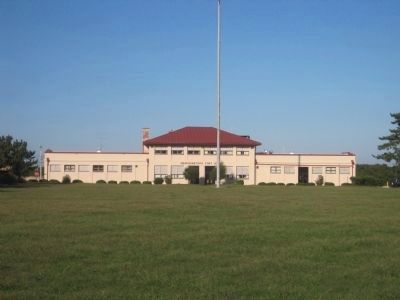
Photographed by Kevin W., September 27, 2014
6. Fort Story Post Headquarters today
Other nearby markers. At least 8 other markers are within walking distance of this marker: Into the 21st Century / The Amphibians Arrive (here, next to this marker); The Emerging Community / Defending the Chesapeake Bay (here, next to this marker); "A picturesque spot which impresses all who see it" (a few steps from this marker); Expanding Military Operations at Fort Story (a few steps from this marker); The Cottages of Cape Henry at Fort Story (a few steps from this marker); Movement and Display of the USS Iowa Battleship Barrel at Cape Henry/Fort Story (a few steps from this marker); WW2 16-inch/50 Coast Defense Batteries at Fort Story (within shouting distance of this marker); Cape Henry Railroads (within shouting distance of this marker). Touch for a list and map of all markers in Virginia Beach.
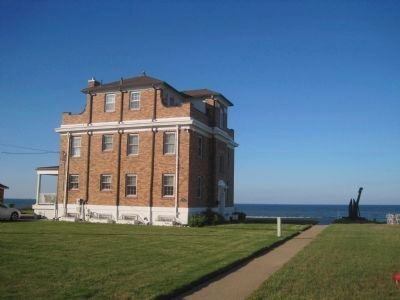
Photographed by Kevin W., September 27, 2014
7. The former Observatory Building, currently used as officers quarters
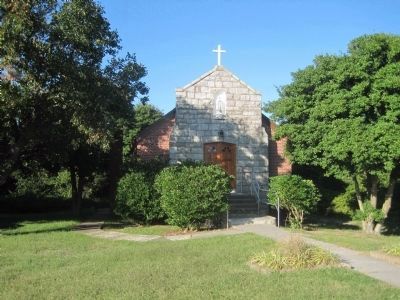
Photographed by Kevin W., September 27, 2014
8. St. Theresa's Chapel today
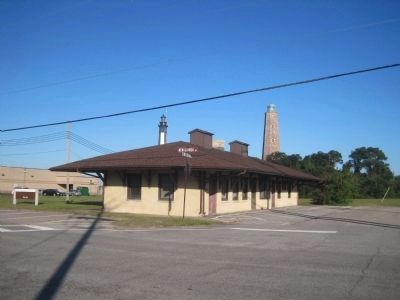
Photographed by Kevin W., September 27, 2014
9. Cape Henry train station today.
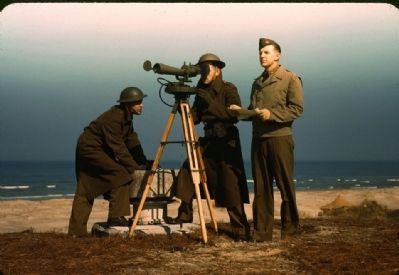
Photographed by Alfred T. Palmer, 1942
10. Men of Fort Story operate an azimuth instrument, to measure the angle of splash…
Men of Fort Story operate an azimuth instrument, to measure the angle of splash in sea-target practice, Fort Story, Va. - Farm Security Administration - Office of War Information Collection
Credits. This page was last revised on June 21, 2025. It was originally submitted on November 28, 2014, by Kevin W. of Stafford, Virginia. This page has been viewed 3,195 times since then and 116 times this year. Photos: 1, 2. submitted on November 28, 2014, by Kevin W. of Stafford, Virginia. 3. submitted on June 21, 2025, by Devry Becker Jones of Washington, District of Columbia. 4. submitted on November 28, 2014, by Kevin W. of Stafford, Virginia. 5, 6, 7, 8, 9. submitted on November 29, 2014, by Kevin W. of Stafford, Virginia. 10. submitted on November 29, 2014.
