Seneca Falls in Seneca County, New York — The American Northeast (Mid-Atlantic)
The Great Lighthouse
Women's Rights National Historical Park
Photographed by Bryan Olson, May 24, 2008
1. The Great Lighthouse Marker
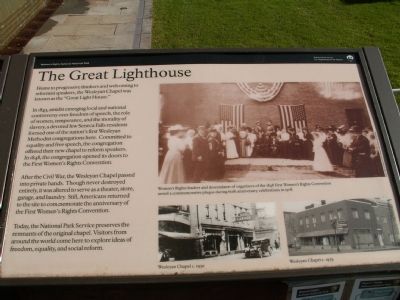
In 1843, amidst emerging local and national controversy over freedom of speech, the role of women, temperance, and the morality of slavery, a devoted few Seneca Falls residents formed one of the nation’s first Wesleyan Methodist congregations here. Committed to equality and free speech, the congregation offered their new chapel to reform speakers. In 1848, the congregation opened its doors to the First Women’s Rights Convention.
After the Civil War, the Wesleyan Chapel passed into private hands. Though never destroyed entirely, it was altered to serve as a theater, store, garage, and laundry. Still, Americans returned to the site to commemorate the anniversary of the First Women’s Rights Convention.
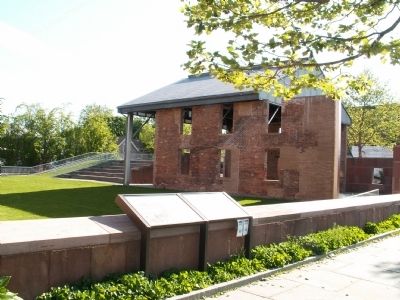
Today, the National Park Service preserves the remnants of the original chapel. Visitors from around the world come here to explore ideas of freedom, equality, and social reform.
Erected by National Park Service.
Topics and series. This historical marker is listed in these topic
this page online
Location. 42° 54.64′ N, 76° 47.998′ W. Marker is in Seneca Falls, New York, in Seneca County. It is on Fall Street (U.S. 20) 0.1 miles west of Mynderse Street, on the right when traveling west. Touch for map. Marker is at or near this postal address: 136 Fall St, Seneca Falls NY 13148, United States of America. Touch for directions.

Regionally, this marker is in Upstate New York, specifically in Western New York, and in the Finger Lakes. It is also in the American Northeast and in the Mid-Atlantic. Globally, it is in North America, the Western Hemisphere, the Western World, and the Anglosphere. Historically, it finds itself in what was once the Haudenosaunee (Iroquois) Confederacy, New Netherland, and one of the original Thirteen Colonies.
Other nearby markers. At least 8 other markers are within walking distance of this marker: A Courageous Call for Equal Rights (here, next to this marker); The Wesleyan Chapel: 1843 to 1871 (a few steps from
Photographed by Bryan Olson, May 24, 2008
2. The Great Lighthouse Marker
More about this marker. The upper right portion of the marker has a photo captioned: Women’s Rights leaders and descendants of organizers of the 1848 First Woman’s Rights Convention unveil a commemorative plaque during 60th anniversary celebrations in 1908.
The lower right portion of this marker displays two photographs of the Wesleyan Chapel in 1930 and 1979.
Also see . . . Woman's Rights National Historical Park. (Submitted on June 7, 2008, by Bryan Olson of Syracuse, New York.)
Photographed by Bryan Olson, May 24, 2008
3. Wesleyan Chapel
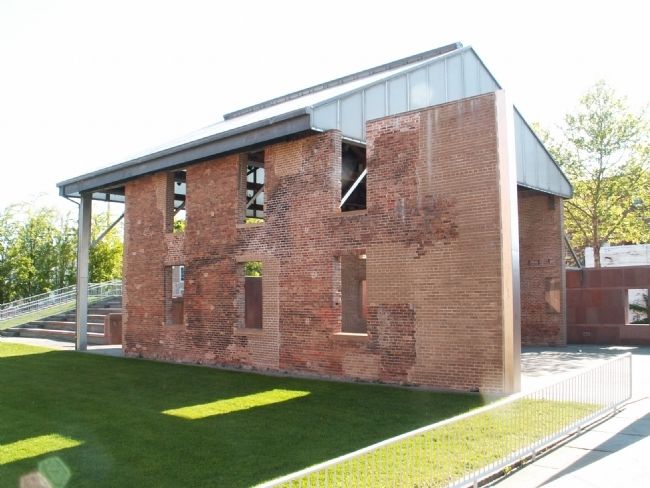
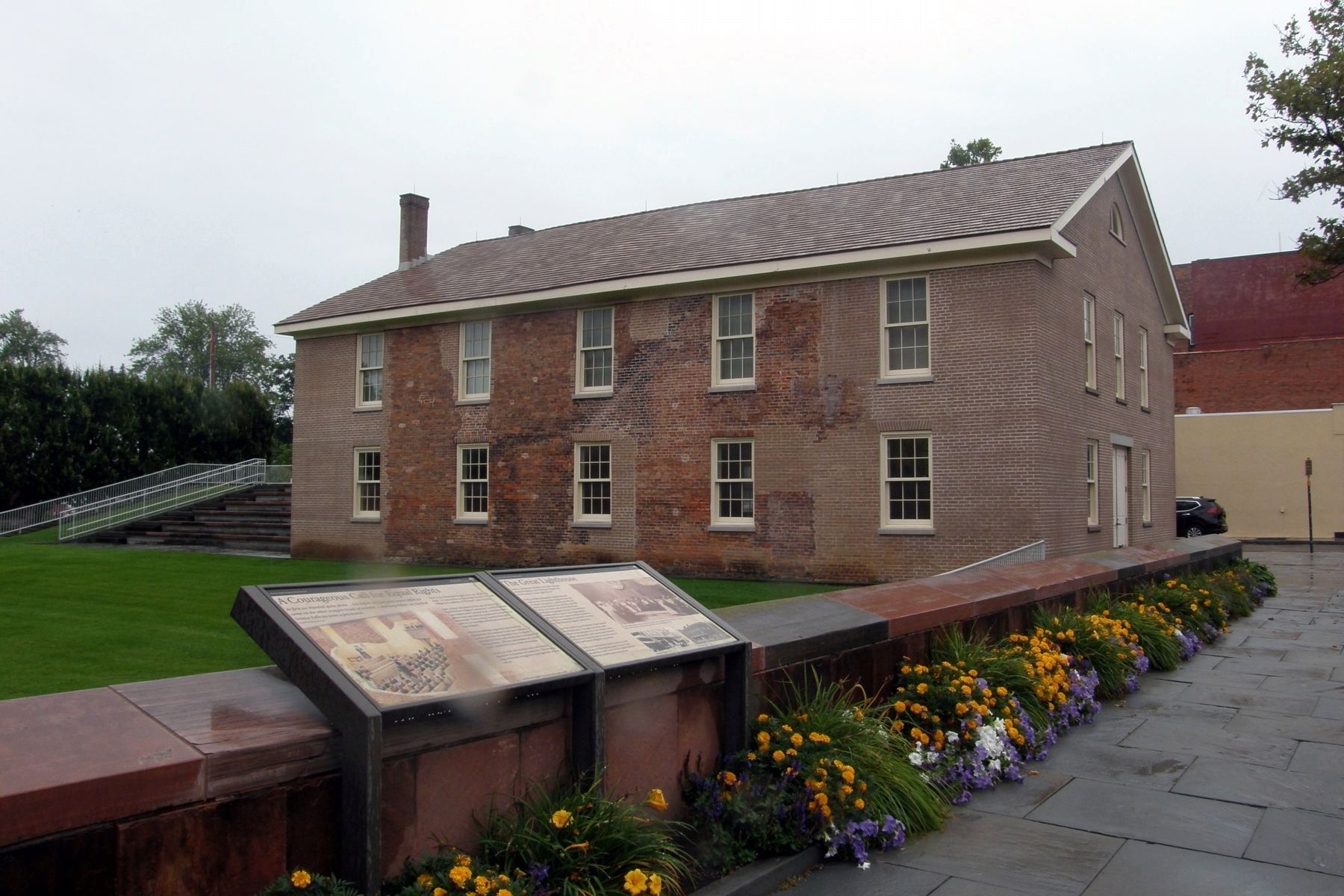
The Wesleyan Chapel was built in 1843. On July 19 and 20, 1848, the First Women's Rights Convention was held here. Even though Elizabeth Cady Stanton was the only one of the five organizers to live in Seneca Falls, the Wesleyan Chapel was well known to them all. The church was a local haven for antislavery activity, political rallies, and free speech events.
The original red brick Wesleyan Methodist Church was sold by the congregation in 1871 and extensively altered by subsequent owners. When the site was purchased by the National Park Service in 1985, very little original fabric remained. The site today offers a unique display of the highlighted historic fabric of the original building.(NPS)
Photographed by Larry Gertner, August 28, 2019
4. The reconstructed Wesleyan Chapel
Credits. This page was last revised on June 23, 2023. It was originally submitted on June 7, 2008, by Bryan Olson of Syracuse, New York. This page has been viewed 1,376 times since then and 27 times this year. Photos: 1, 2, 3. submitted on June 7, 2008, by Bryan Olson of Syracuse, New York. 4. submitted on December 18, 2019, by Larry Gertner of New York, New York. • Kevin W. was the editor who published this page.
