Near Hancock in Washington County, Maryland — The American Northeast (Mid-Atlantic)
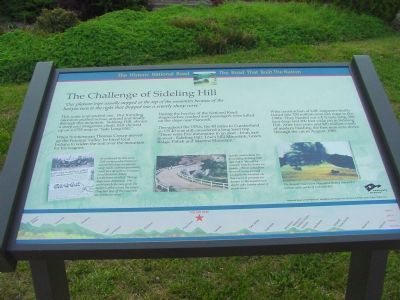
The Challenge of Sideling Hill
| — | The Historic National Road - The Road That Built The Nation | — |
Photographed by J. J. Prats, August 13, 2006
1. The Challenge of Sideling Hill Marker
“Our pleasure trips usually stopped at the top of the mountain because of the hairpin turn to the right that dropped into a severely sharp curve.”
This route is an ancient one. Our traveling ancestors pushed across, around and finally through this mountain. Sideling Hill, always a steep and dangerous climb, first showed up on a 1755 map as “Side Long Hill.”
When frontiersman Thomas Cresap moved up the Potomac Valley, he hired local Indians to widen the trail over the mountain for his wagons.
During the heyday of the National Road, stagecoaches crashed and passengers were killed on the slope near Hancock.
Throughout the 1930s, the 40 miles to Cumberland on US 40 was still considered a long hard trip. “There were five mountains to go over - from east to west - Sideling
this page online
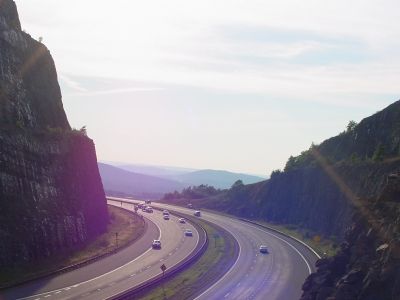
With construction of I-68, engineers finally tamed this 350 million-year-old ridge in the 1980s. They blasted out a 4½ mile long, 380 foot deep and 200 foot wide cut in Sideling Hill. After two years and $20 million worth of modern blasting, the first motorists drove through the cut in August, 1985.
[Sidebars:]
As evidenced by this early 20th century advertisement, automobile trips on narrow, steep roads without guardrails, could be a dangerous business. Local historian Emily Leatherman recalled, “Rainy days were disastrous. We could watch the cars go to the doctor’s office across the street. They had slid off the road into the ditches or trees.”
The deepest road cut in Maryland history moved 4.5 million cubic yards of rock and dirt.
Erected by America's
Photographed by J. J. Prats, August 13, 2006
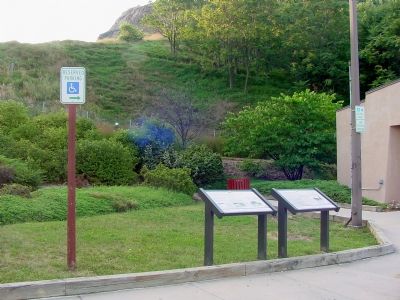
2. National Road and Sideling Hill Markers
Topics and series. This historical marker is listed in these topic lists: Indigenous Peoples and Communities • Roads & Vehicles • Settlements & Settlers. In addition, it is included in the The Historic National Road series list. A significant historical year for this entry is 1755.
Location. This marker has been replaced by another marker nearby. It was located near 39° 43.128′ N, 78° 16.838′ W. Marker was near Hancock, Maryland, in Washington County. It was on the westbound Sideling Hill Visitors Center (Interstate 68 at milepost 75) west of Exit 77 (Maryland Route 144), on the right when traveling west. Touch for map. Marker was in this post office area: Hancock MD 21750, United States of America. Touch for directions.

Regionally, this marker was in Western Maryland.
Photographed by William Fischer, Jr., August 1, 2026
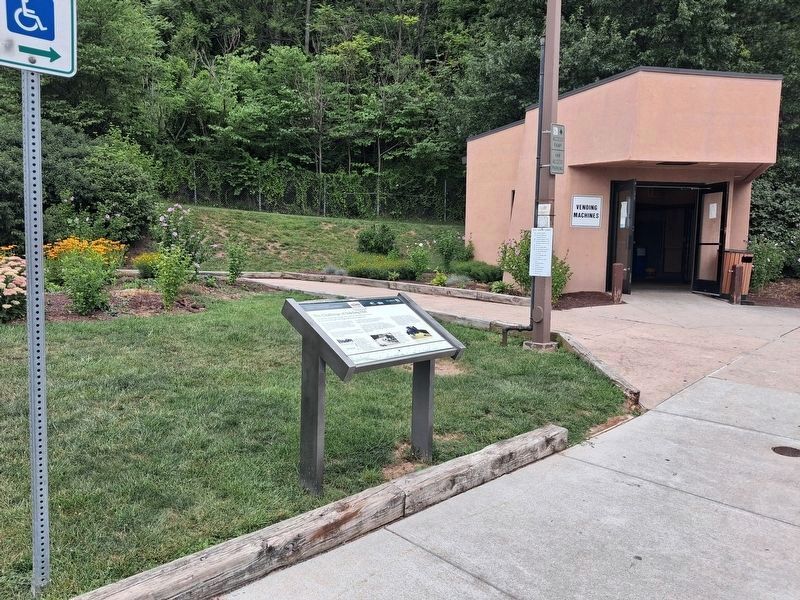
3. The Challenge of Sideling Hill Marker
Shows only one marker now in place
Other nearby markers. At least 4 other markers are within walking distance of this location: A different marker also named The Challenge of Sideling Hill (here, next to this marker); Explore Maryland Civil War Trails (a few steps from this marker); Sideling Hill Cut South Bench (within shouting distance of this marker); Interstate 68 Maryland Vietnam Memorial (about 400 feet away). Touch for a list and map of all markers in Hancock.
Other markers no longer nearby. The Challenge of Sideling Hill (has
Photographed by J. J. Prats, August 13, 2006
4. The Western End of the Sideling Hill Cut
Related marker. Click here for another marker that is related to this marker. This marker has been replaced with the linked marker. There are differences in subtitles and erecting organizations.
Also see . . . Sideling Hill.
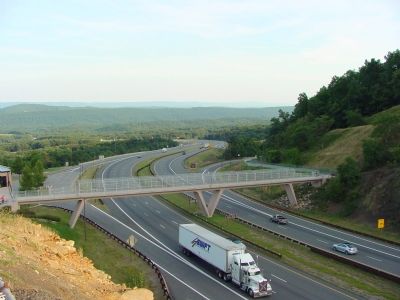
Photographed by J. J. Prats, August 13, 2006
5. Eastern Approach to the Sideling Hill Cut
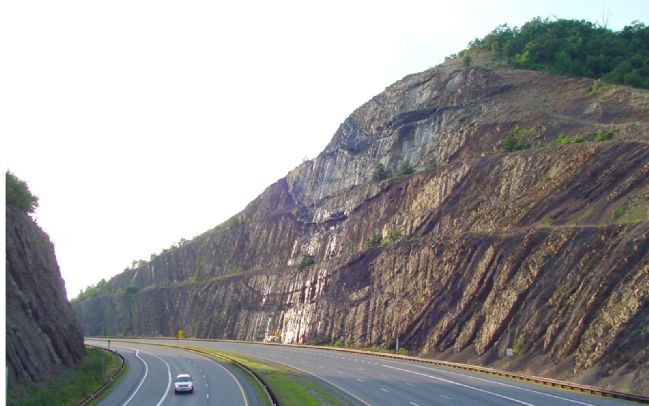
Photographed by J. J. Prats, August 13, 2006
6. Interstate 68 Cut Through Sideling Hill Mountain
![<i>[Former] U.S. Route 40 At Martin Mountain</i> image. Click for full size.](Photos/2/Photo2334.jpg?714202094500PM "<i>[Former] U.S. Route 40 At Martin Mountain</i>. Click for full size.")
Photographed by J. J. Prats, August 13, 2006
7. [Former] U.S. Route 40 At Martin Mountain
This 1957 plaque on present-day Maryland Route 144 at an abandoned overlook at the crest of Martin Mountain commemorates a previous attempt to tame the National Road between Hancock and Cumberland. The inscription continues: Theodore R. McKeldin, Governor. State Roads Commission — Robert O. Bonnell–Chairman, Edgar T. Bennett, John J. McMullen. Norman M. Pritchett–Chief Engineer.
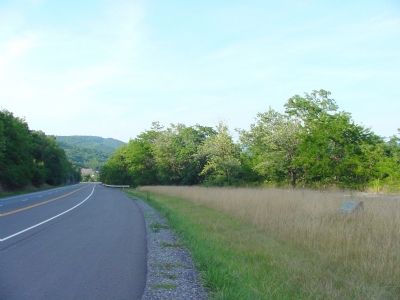
Photographed by J. J. Prats, August 13, 2006
8. Abandoned Overlook at Martin Mountain
Parking area, now off limits, is to the right of the brass tablet, barely visible in the overgrown grass. Today, U.S. 40 officially shares the pavement with Interstate 70 and then Interstate 68 on most of its way west from Baltimore to Keyser’s Ridge, the last crest in Maryland. State Route 144, Scenic U.S. 40 or Alternate U.S. 40 weave in and out of the Interstates, tracing the old path across the mountains.
Credits. This page was last revised on August 20, 2026. It was originally submitted on January 20, 2007, by J. J. Prats of Powell, Ohio. This page has been viewed 78,630 times since then and 805 times this year. Photos: 1, 2. submitted on January 20, 2007, by J. J. Prats of Powell, Ohio. 3. submitted on August 20, 2026, by William Fischer, Jr. of Reynoldsburg, Ohio. 4, 5, 6, 7, 8. submitted on January 20, 2007, by J. J. Prats of Powell, Ohio.
