
Northshore in Chattanooga in Hamilton County, Tennessee — The American South (East South Central)
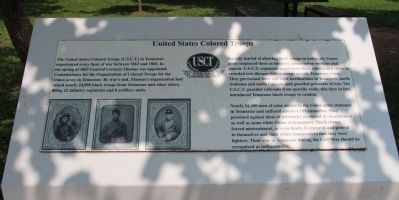
United States Colored Troops
Photographed by Dale K. Benington, August 6, 2014
1. United States Colored Troops Marker
Initially fearful of allowing black troops in battle, the Union army employed them as laborers, construction workers and guards. U.S.C.T. regiments supervised black women and children crowded into disease-ridden camps outside Tennessee cities. They garrisoned forts and built fortifications in Tennessee, north Alabama and north Georgia, and guarded prisoners of war. The U.S.C.T. guarded railroads from guerrilla raids; this duty in fact, introduced Tennessee black troops to combat.
Nearly 24,000 men of color served in the Union army stationed in Tennessee and suffered almost 4,500 casualties. They persisted against ideas of inferiority professed by Southerners as well as some white Union commanders. Black troops
this page online
Topics. This historical marker is listed in these topic lists: African Americans • War, US Civil. A significant historical year for this entry is 1863.
Location. 35° 3.614′ N, 85° 18.62′ W. Marker is in Chattanooga, Tennessee, in Hamilton County. It is in Northshore. It can be reached from River Street west of Tremont Street, on the left when traveling west. This historic marker is located along the north side of the river, in Renaissance Park, along a park walking trail that runs east and west, near the north bank of the Tennessee River. Touch for map. Marker is in this post office area: Chattanooga TN 37405, United States of America. Touch for directions.

Regionally, this marker is in the American South, specifically in the Upper South, in Appalachia, and specifically in Southern Appalachia. Globally, it is in North America, the Western Hemisphere, the Western World, and the Anglosphere. Historically, it finds itself
Photographed by Dale K. Benington, August 6, 2014
2. United States Colored Troops Marker
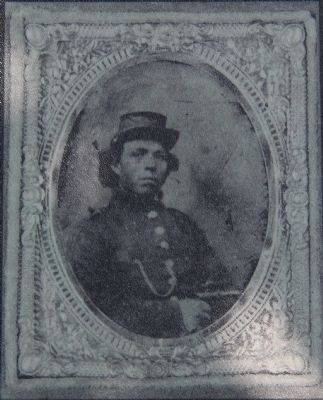
Close-up view, that is displayed on the marker, of a Civil War era photograph showing a member of the United States Colored Troops.
Other nearby markers. At least 8 other markers are within walking distance of this marker: Camp Contraband (here, next to this marker); Union Block House (about 300 feet away, measured in a direct line); Occupied Chattanooga (about 300 feet away); 1838 Cherokee Removal & Trail of Tears (about 400 feet away); 1864 Military Bridge (about 400 feet away); Hill Overlooks & Industrial Past (about 800 feet away); Chattanooga's Changing Riverfront (approx. 0.2 miles away); Electrical Power and the TVA (approx. 0.2 miles away). Touch for a list and map of all markers in Chattanooga.
Photographed by Dale K. Benington, August 6, 2014
3. United States Colored Troops Marker
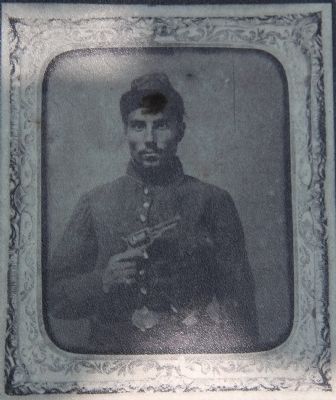
Close-up view, that is displayed on the marker, of a Civil War era photograph showing a member of the United States Colored Troops.
Photographed by Dale K. Benington, August 6, 2014
4. United States Colored Troops Marker
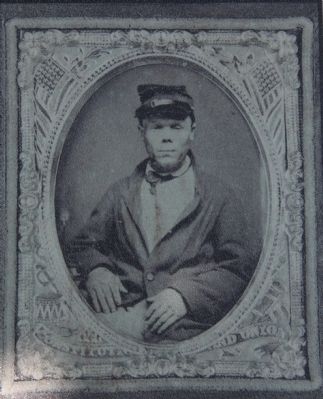
Close-up view, that is displayed on the marker, of a Civil War era photograph showing a member of the United States Colored Troops.
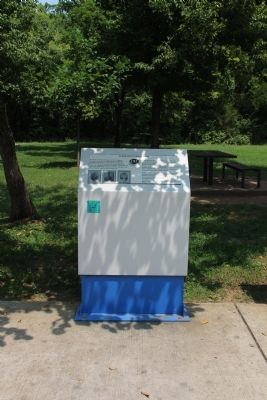
Photographed by Dale K. Benington, August 6, 2014
5. United States Colored Troops Marker
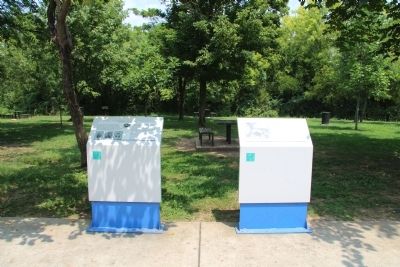
Photographed by Dale K. Benington, August 6, 2014
6. United States Colored Troops Marker
View, looking north, of the featured marker, seen to the left of the two markers being viewed.
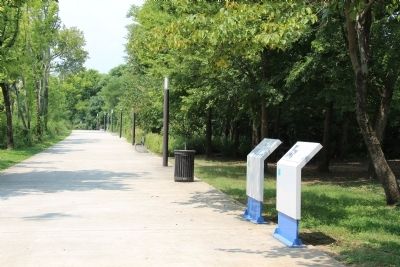
Photographed by Dale K. Benington, August 6, 2014
7. United States Colored Troops Marker
View of the marker, looking west, along a park walkway.
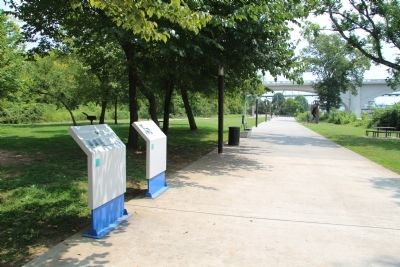
Photographed by Dale K. Benington, August 6, 2014
8. United States Colored Troops Marker
View of the marker, looking east, along a park walkway.
Credits. This page was last revised on February 7, 2023. It was originally submitted on June 11, 2015, by Dale K. Benington of Toledo, Ohio. This page has been viewed 797 times since then and 17 times this year. Last updated on June 17, 2015, by J. Makali Bruton of Washington, District of Columbia. Photos: 1, 2, 3, 4, 5, 6, 7, 8. submitted on June 15, 2015, by Dale K. Benington of Toledo, Ohio. • Bill Pfingsten was the editor who published this page.
