Susquehanna Township near Harrisburg in Dauphin County, Pennsylvania — The American Northeast (Mid-Atlantic)
Fort Hunter
Photographed by Don Morfe, July 6, 2015
1. Fort Hunter History Marker
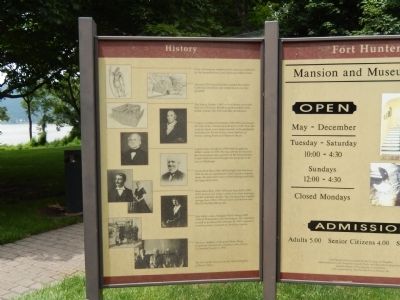
History
Prior to European settlement this land was inhabited by the Susquehannock and Delaware Indian tribes.
Around 1750 Samuel Hunter married the widow Catherine Chambers and settled here to run her gristmill.
The Fort at Hunter’s Mill or Fort Hunter was built here in 1755 by the British to protect settlers from Indian attacks. The Fort was later abandoned.
Captain Archibald McAllister (1756-1831) purchased the land of the old mill and old fort in 1787. Over the years he made many improvements to his plantation including the Tavern House, Stone Stables, ice houses, spring house and Mansion House.
Captain John McAllister (1790-1866) bought his father’s estate in 1833. He was actively involved in the construction and operation of the Pennsylvania Canal which traveled through this property on its way to Pittsburgh.
Daniel Dick Boas (1816-1878) bought Fort Hunter in 1870 for use as a gentleman’s farm and as a summer home. He renovated many of the buildings and built the large dairy barn.
Helen Boas Reily (1861-1932) and John Reily (1860-1927) lived on her father’s estate from their marriage in 1887 until
this page online
Mrs. Reily’s niece, Margaret Wister Meigs (1882-1958) of Philadelphia and Washington DC inherited as well as purchased Fort Hunter in 1933 to preserve it and to create a museum of American History.
The four children of Margaret Wister Meigs generously donated the property to the citizens of Dauphin County in 1980.
The Fort Hunter District is on the National Register of Historic Places.
Erected by Dauphin County Parks and Recreation.
Topics and series. This historical marker is listed in these topic lists: Colonial Era • Forts and Castles • Industry & Commerce • War, French and Indian. In addition, it is included in the Pennsylvania Canal series list. A significant historical year for this entry is 1750.
Location. This marker has been replaced by another marker nearby. It was located near 40° 20.516′ N, 76° 54.585′ W. Marker was near Harrisburg, Pennsylvania, in Dauphin County. It was in Susquehanna Township. It was on North Front Street south of Fort Hunter Road, on the left when traveling
Photographed by Don Morfe, July 6, 2015
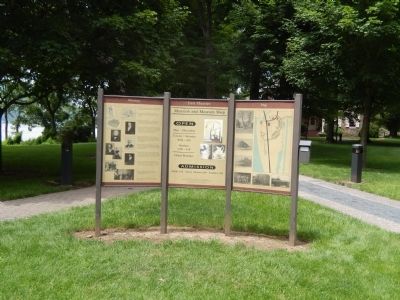
2. Fort Hunter History Marker

Regionally, this marker was in South-Central Pennsylvania, specifically in Pennsylvania Dutch Country, and in the Susquehanna Valley. It was also in the American Northeast and in the Mid-Atlantic. Globally, it was in North America, the Western Hemisphere, the Western World, and the Anglosphere. Historically, it found itself in what was once the Haudenosaunee (Iroquois) Confederacy and also one of the original Thirteen Colonies.
Other nearby markers. At least 8 other markers are within walking distance of this location: A different marker also named Fort Hunter (a few steps from this marker); Slavery at Fort Hunter (a few steps from this marker); United States Slavery (within shouting distance of this marker); Pennsylvania Slavery (within shouting distance of this marker); a different marker also named Fort Hunter (within shouting distance of this marker); Simon Girty (1741–1818) (within shouting distance of this marker);
Photographed by Don Morfe, July 6, 2015
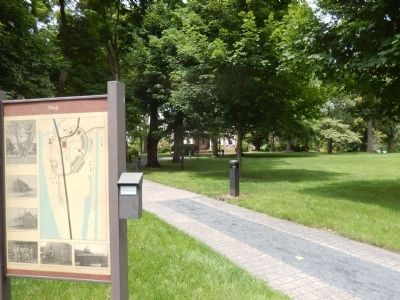
3. Fort Hunter History Marker-Map
Related marker. Click here for another marker that is related to this marker. This marker has been replaced with the linked marker. There are differences in the inscription.
Photographed by Don Morfe, July 6, 2015
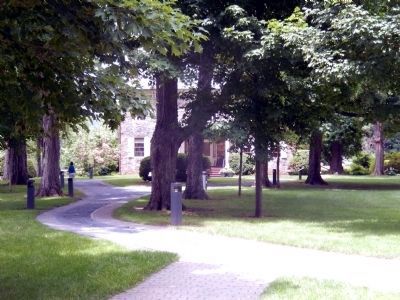
4. Fort Hunter Mansion
Photographed by Don Morfe, July 6, 2015
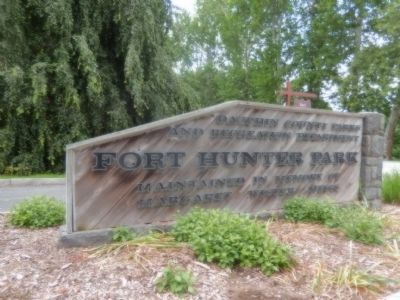
5. Fort Hunter Park-Entrance sign
Photographed by Don Morfe, July 6, 2015
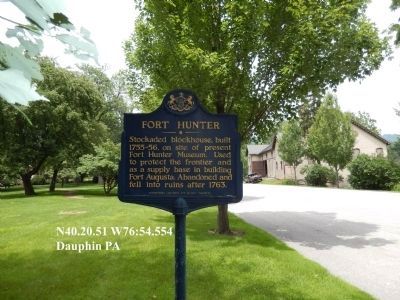
6. Fort Hunter Marker
Credits. This page was last revised on August 4, 2024. It was originally submitted on July 22, 2015, by Don Morfe of Baltimore, Maryland. This page has been viewed 1,216 times since then and 59 times this year. Photos: 1, 2, 3, 4, 5, 6. submitted on July 22, 2015, by Don Morfe of Baltimore, Maryland. • Bill Pfingsten was the editor who published this page.
