Decatur in Morgan County, Alabama — The American South (East South Central)
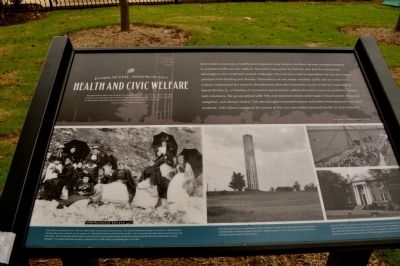
Health and Civic Welfare
Restoring the Vision ... Preserving the Legacy
Photographed by Sandra Hughes, October 13, 2009
1. Health and Civic Welfare Marker
Barrell C. Shelton in "The Decatur Story" 1949
Early leaders envisioned a healthy and prosperous New Decatur, and their city plan included elements to promote health and civic welfare. The town's easy access to both the river and the railroad was advantageous but would later present challenges. The river was a vital transportation link but also caused problems from flooding and disease. Dependence on one major employer (L&N) and one major crop (cotton) emphasized the need for diversification when the depression struck. Under the leadership of Barrett Shelton Sr., a Chamber of Commerce was formed to address the area's economic problems. Despite early reluctance, the group worked with TVA, and important strides were made in flood control, improved navigation, and disease control. TVA also brought inexpensive power and better farming practices to
this page online
Topics. This historical marker is listed in these topic lists: Agriculture • Environment • Industry & Commerce. A significant historical year for this entry is 1949.
Location. 34° 35.852′ N, 86° 58.647′ W. Marker is in Decatur, Alabama, in Morgan County. It is at the intersection of 8th Street and Prospect Drive, on the right when traveling north on 8th Street. Touch for map. Marker is in this post office area: Decatur AL 35601, United States of America. Touch for directions.

Regionally, this marker is in North Alabama. It is also in the American South, specifically in the Deep South, in Appalachia, and specifically in Southern Appalachia. Globally, it is in North America, a Gulf of Mexico state, the Western Hemisphere, the Western World, and the Anglosphere. Historically, it finds itself in what was once the original Cherokee Nation, the territory of the Mississippian Culture, one of the Confederate States of America, and the Antebellum South.
Other nearby markers. At least 8 other markers are within
Photographed by Sandra Hughes, October 13, 2009
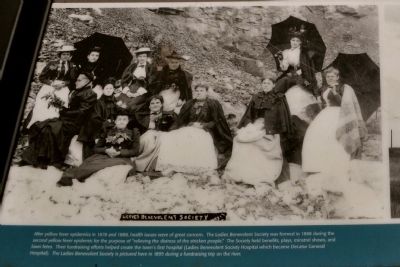
2. Ladies Benevolent Society
After yellow fever epidemics in 1878 and 1888, health issues were of great concern. The ladies Benevolent society was formed in 1888 during the second yellow fever epidemic for the purpose of "relieving the distress of the stricken people". The society held benefits, plays, minstrel shows, and lawn fetes.
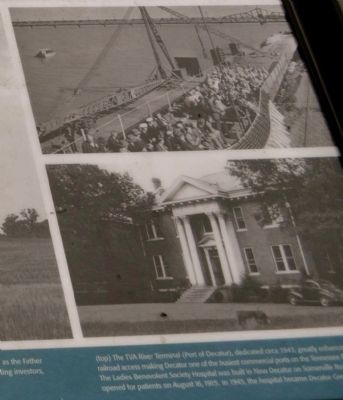
Their fundraising efforts helped create the town's first hospital (Ladies Benevolent society hospital which became Decatur General Hospital)
the ladies benevolent society is pictured here in 1895 during a fundraising trip on the river.
Photographed by Sandra Hughes, October 13, 2009
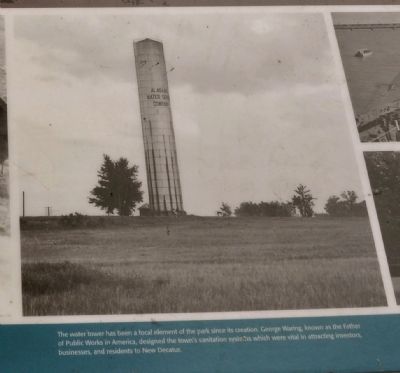
3. Health and Civic Welfare
The water tower has been a local element of the park since its creation. George Waring, known as the father of public works in America, designed the town's sanitation systems which were vital in attracting investors, businessess, and residents to New Decatur.
Photographed by Sandra Hughes, October 13, 2009
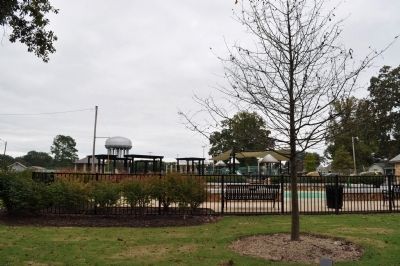
4. Watertower today
Photographed by Sandra Hughes, October 13, 2009
5. The TVA River Terminal (Port of Decatur)
dedicated cica 1942, greatly enhanced the railroad access making Decatur one of the business commercial ports on the Tennessee River. The Ladies Benevolent Society Hospital was built in New Decatur on Somerville Road and opened for patients on August 16 1915. In 1945 the hospital became Decatur General.
Photographed by Sandra Hughes, August 23, 2009
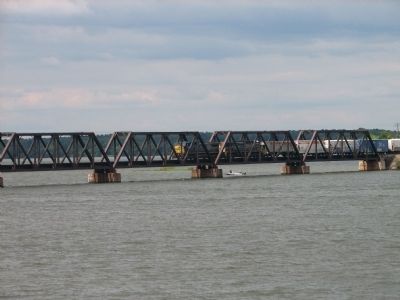
6. Tennessee River, Train and Industry
Photographed by Sandra Hughes, August 23, 2009
7. Train caring cargo to Decatur
Photographed by Sandra Hughes, August 23, 2009
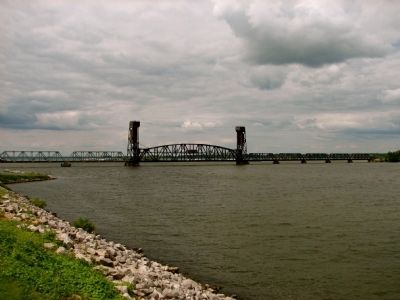
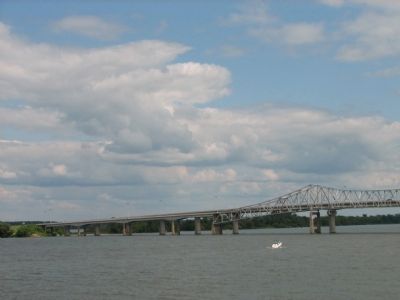
8. Bridges over the Tennessee River in Decatur
Credits. This page was last revised on June 16, 2016. It was originally submitted on March 19, 2012, by Sandra Hughes Tidwell of Killen, Alabama, USA. This page has been viewed 1,078 times since then and 27 times this year. Last updated on July 30, 2015, by J. Makali Bruton of Washington, District of Columbia. Photos: 1, 2, 3, 4, 5, 6, 7, 8. submitted on March 19, 2012, by Sandra Hughes Tidwell of Killen, Alabama, USA. • Bill Pfingsten was the editor who published this page.
