Belcher in Caddo Parish, Louisiana — The American South (West South Central)
Belcher Mound
Historic Site
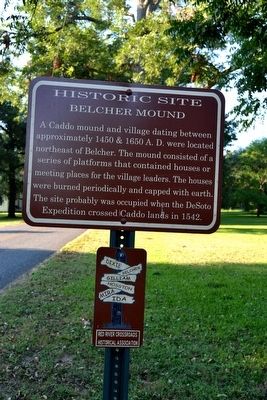
Photographed by Duane Hall, August 3, 2015
1. Belcher Mound Marker
Erected by Red River Crossroads Historical Association.
Topics. This historical marker is listed in these topic lists: Anthropology & Archaeology • Exploration • Indigenous Peoples and Communities • Settlements & Settlers. A significant historical year for this entry is 1450.
Location. 32° 45.058′ N, 93° 49.97′ W. Marker is in Belcher, Louisiana, in Caddo Parish. It is on Gray Street (State Highway 3049) north of Louisiana Street, on the right when traveling north. Touch for map. Marker is in this post office area: Belcher LA 71004, United States of America. Touch for directions.

Regionally, this marker is in North Louisiana. It is also in the American South, specifically in the Deep South, and in the Piney Woods. Globally, it is in North America, a Gulf of Mexico state, the Western Hemisphere, the Western World, and the Anglosphere. Historically, it finds itself in what was once the territory of the Mississippian Culture, the Louisiana Purchase, one of the Confederate States of America, and the Antebellum South.
Other nearby markers. At least 8 other markers are within walking distance of this marker: Belcher Presbyterian Church (within shouting distance of this marker); Ruben T. Glassell House (about 400 feet away, measured in a direct line); First State Bank of Belcher (about 400 feet away); Minnie Clyde Dixon Connell (about 800 feet away); Belcher Methodist Church (approx. 0.2 miles away); Horseshoe Bayou Bridge On LA. 530
this page online
Also see . . . Belcher Mound Site - Wikipedia entry. (Submitted on August 13, 2015.)
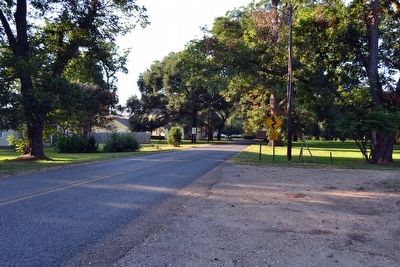
Photographed by Duane Hall, August 3, 2015
2. Belcher Mound Marker
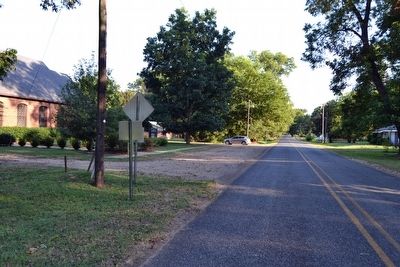
Photographed by Duane Hall, August 3, 2015
3. Back Side of Belcher Mound Marker
Credits. This page was last revised on September 22, 2020. It was originally submitted on August 13, 2015, by Duane Hall of Abilene, Texas. This page has been viewed 2,072 times since then and 156 times this year. Photos: 1, 2, 3. submitted on August 13, 2015, by Duane Hall of Abilene, Texas.
