Scotland in St. Mary's County, Maryland — The American Northeast (Mid-Atlantic)
Shipwreck!
Point Lookout State Park
| — | Maryland Park Service | — |
Photographed by Tom Fuchs, July 1, 2008
1. Shipwreck! Marker
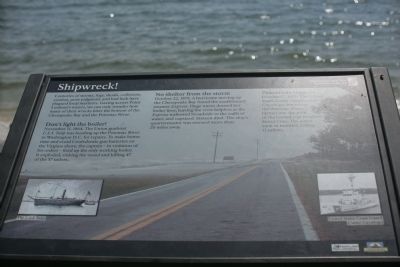
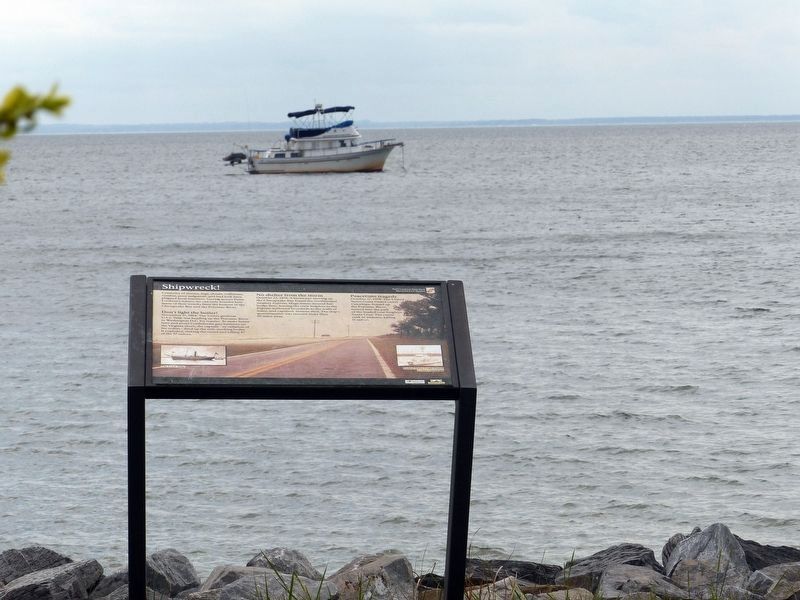
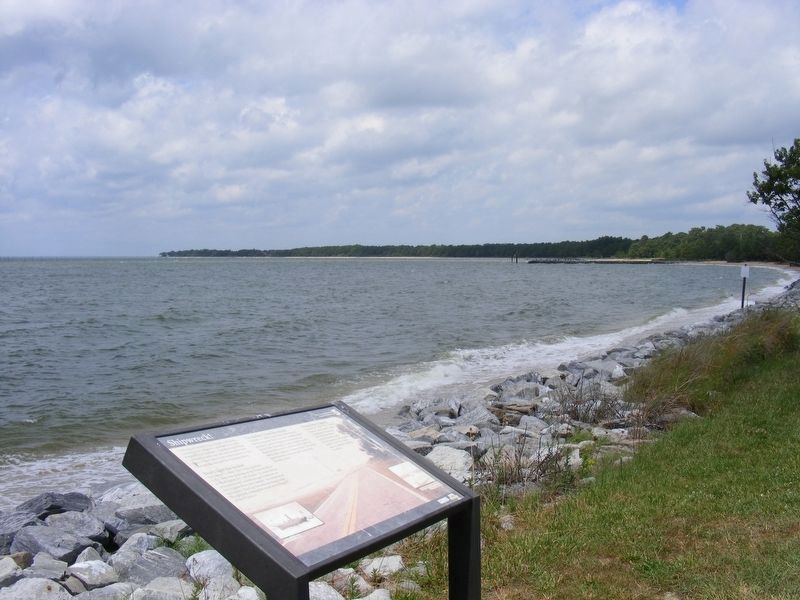
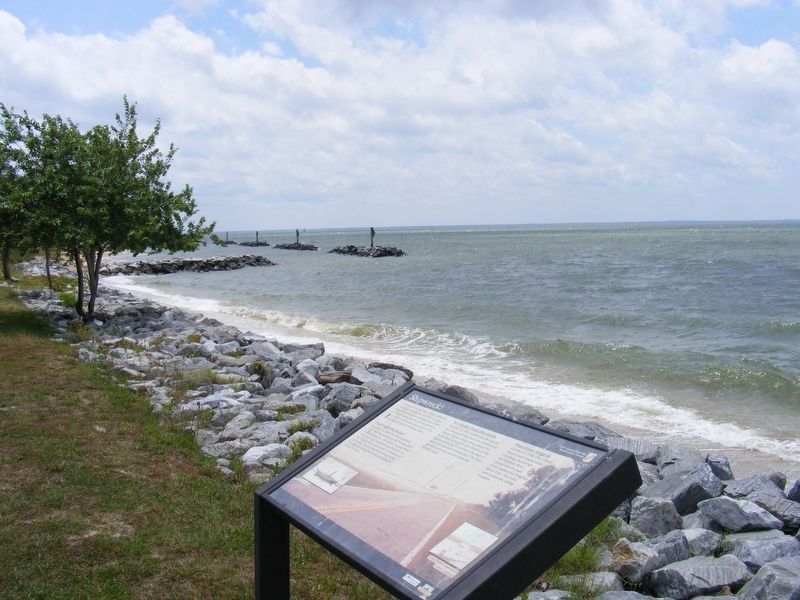
Centuries of storms, fogs, shoals, collisions, combat, poor judgement and bad luck have plagued local mariners. Gazing across Point Lookout's waters, we can only wonder how many of their wrecks litter the bottom of the Chesapeake Bay and the Potomac River.
Don't Light The Boiler
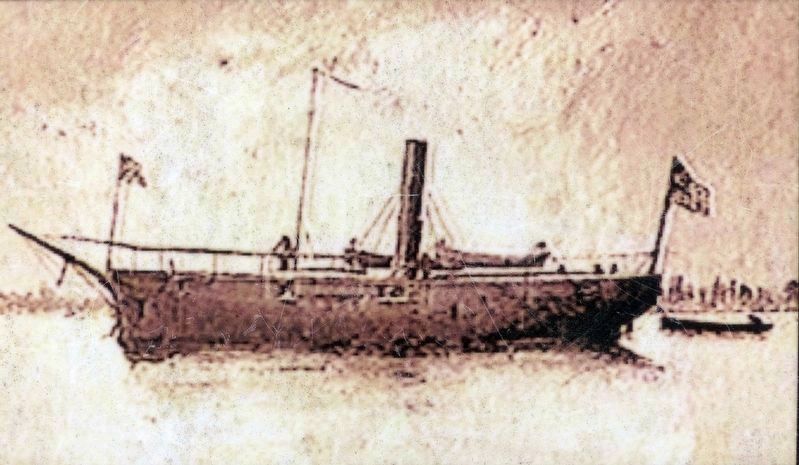
November 11, 1864: The Union gunboat U. S. S. Tulip was heading up the Potomac River to Washington D. C. for repairs. To make better time and avoid Confederate batteries on the Virginia shore, the captain - in violation of his orders - fired up the only working boiler. It exploded, sinking the vessel and killing 47 of the 57 sailors.
No Shelter From The Storm
October 22, 1878: A hurricane moving up the Chesapeake Bay foound the southbound steamer Express. Huge waves doused her boiler fires, leaving the crew helpless as the Express wallowed broadside to the walls of water, and capsized. Sixteen died. The ship's quartermaster was rescued more than 20 miles away.
Peacetime Tragedy
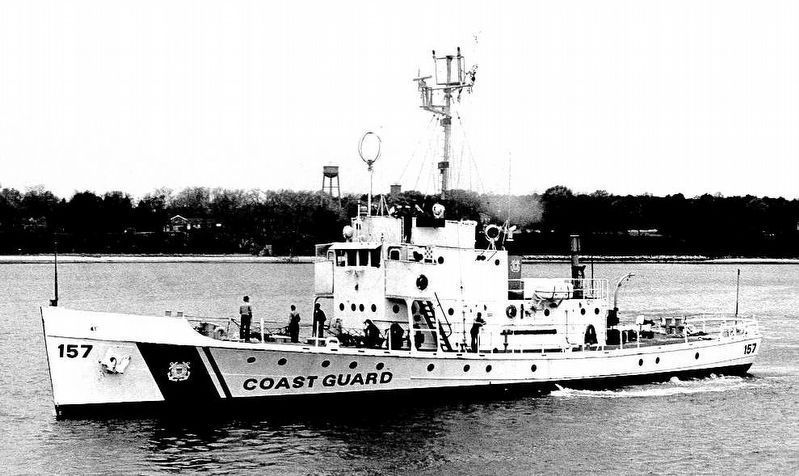
October 17, 1978: The United States Coast Guard Cutter Cuyahoga, bound up the Potomac River, turned into the path of the loaded coal freighter Santa Cruz. The
this page online
Erected by Maryland Park Service; Maryland Department of Natural Resources.
Topics. This historical marker is listed in these topic lists: Disasters • War, US Civil • Waterways & Vessels. A significant historical month for this entry is October 1865.
Location. Marker has been permanently removed. It was located near 38° 2.854′ N, 76° 19.538′ W. Marker was in Scotland, Maryland, in St. Mary's County. It was on Point Lookout Road (Maryland Route 5). Touch for map. Marker was in this post office area: Scotland MD 20687, United States of America.
We have been informed that this marker is no longer there and will not be replaced. This page is an archival view of what was.
Regionally, this marker was in Southern Maryland. It was also in the American South, specifically in the Upper South, in the Mid-Atlantic, in the Tidewater, in the Chesapeake Bay Region, and on the Eastern Seaboard. Globally, it was in the North Atlantic Region, North America, the Western Hemisphere, the Western World, and the Anglosphere. Historically, it found itself in what was once one of the original Thirteen

Photographed by Allen C. Browne, April 23, 2016
2. Shipwreck! Marker
Other nearby markers. At least 8 other markers are within walking distance of this location: A Crucial Point (within shouting distance of this marker); Storm Blocks the Road to Freedom (within shouting distance of this marker); Defense Strategies (within shouting distance of this marker); Civil War Fort #3 (within shouting distance of this marker); Redoubt #3 (about 300 feet away, measured in a direct line); The Veteran Reserve Corps (about 400 feet away); The 5th Massachusetts Colored Cavalry (about 400 feet away); United States Colored Troops (about 400 feet away). Touch for a list and map of all markers in Scotland.
Another marker is no longer nearby. Fort Lincoln (was within shouting distance of this marker but has been replaced with another marker now near it).
Also see . . .
1. Dreadful Disaster;. Explosion of the Boiler of the Steamer Tulip, of the Potomac Flotilla Fifty-five Lives Lost. Dispach To The Navy Department. The Explosion of the Tulip Further Particulars. New York Times, Washington, Monday Nov. 14, 1864 (Submitted on July 2, 2016, by Allen C. Browne of Silver Spring, Maryland.)
2. Cuyahoga, 1927 (WIX / WMEC / WSC-157).
Photographed by Pete Payette, June 19, 2017
3. Shipwreck! Marker
Photographed by Pete Payette, June 19, 2017
4. Shipwreck! Marker
Photographed by Allen C. Browne, April 23, 2016
5. U. S. S. Tulip
Photographed by Wikipedia
6. United States Coastguard Cutter Cuyahoga
Credits. This page was last revised on April 13, 2026. It was originally submitted on July 7, 2008, by Tom Fuchs of Greenbelt, Maryland. This page has been viewed 2,615 times since then and 56 times this year. Photos: 1. submitted on July 7, 2008, by Tom Fuchs of Greenbelt, Maryland. 2. submitted on July 2, 2016, by Allen C. Browne of Silver Spring, Maryland. 3, 4. submitted on June 26, 2017, by Pete Payette of Orange, Virginia. 5, 6. submitted on July 2, 2016, by Allen C. Browne of Silver Spring, Maryland.
