Winchester, Virginia — The American South (Mid-Atlantic)
Rouss City Hall Historical Tour
>>> Civil War Cannon, Stage Entrance, Arch & Cornerstone
Photographed by Allen C. Browne, October 18, 2015
1. Rouss City Hall Marker
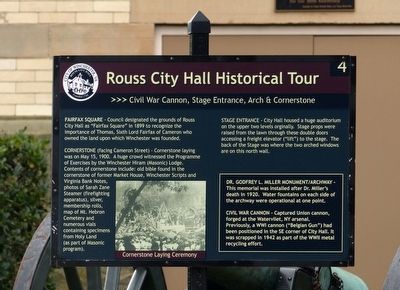
Fairfax Square — Council designated the grounds of Rouss City Hall as “Fairfax Square” in 1899 to recognize the importance of Thomas, Sixth Lord Fairfax of Cameron who owned the land upon which Winchester was founded.
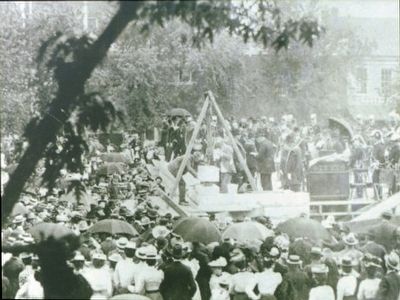
Cornerstone (facing Cameron Street) — Cornerstone laying was on May 15, 1900. A huge crowd witnessed the Programme of Exercises by the Winchester Hiram (Masonic) Lodge. Contents of cornerstone include: old bible found in the cornerstone of former Market House, Winchester Scripts and Virginia Bank Notes, photos of Sarah Zane Steamer (firefighting apparatus), silver, membership rolls, map of Mt. Hebron Cemetery and numerous vials containing specimens from Holy Land (as part of Masonic program).
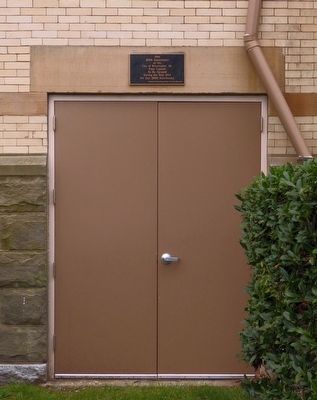
Stage Entrance — City Hall housed a huge auditorium on the upper two levels originally. Stage props were raised from the lawn through these double doors accessing a freight elevator ("lift") to the stage. The back of the Stage was where the two arched windows are on this north wall.
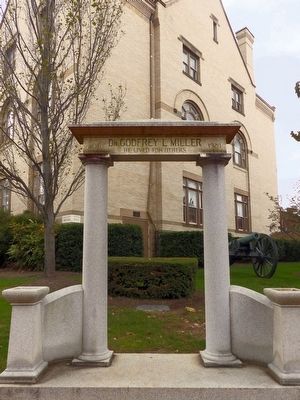
Dr. Godfrey L. Miller Monument/Archway — This memorial was installed after Dr. Miller's
this page online
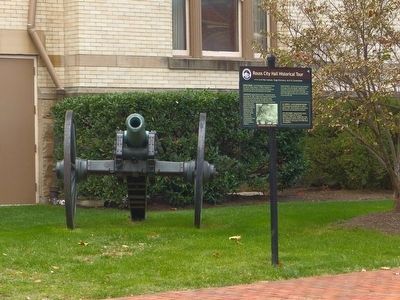
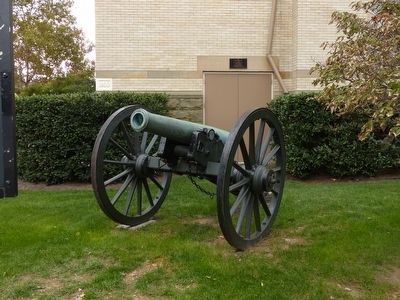
Civil War Cannon — Captured Union cannon, forged at the Watervliet, NY arsenal. Previously, a WWI cannon (“Belgian Gun”) had been positioned in the SE corner of City Hall. It was scrapped in 1942 as part of the WWII metal recycling effort.
Erected by City of Winchester. (Marker Number 4.)
Topics. This historical marker is listed in this topic list: Notable Events. A significant historical date for this entry is May 15, 1900.
Location. 39° 11.032′ N, 78° 9.853′ W. Marker is in Winchester, Virginia. It is at the intersection of North Cameron Street (U.S. 11/522) and Rouss Avenue, on the right when traveling south on North Cameron Street. Touch for map. Marker is at or near this postal address: 15 N Cameron St, Winchester VA 22601, United States of America. Touch for directions.

Regionally, this marker is in Virginia’s Shenandoah Valley. It is also in the American South, specifically in the Upper South, and in the Mid-Atlantic. Globally, it is in North America, the Western Hemisphere, the Western World, and the Anglosphere.
Photographed by Allen C. Browne, October 18, 2015
2. Rouss City Hall Marker
Other nearby markers. At least 8 other markers are within walking distance of this marker: The Winchester Star (within shouting distance of this marker); Winchester (within shouting distance of this marker); Second Battle of Winchester (within shouting distance of this marker); Winchester's U.S. Colored Troops (within shouting distance of this marker); Jacob H. Yost Building (within shouting distance of this marker); Admiral Richard Evelyn Byrd (within shouting distance of this marker); George Washington's Political Career Began on This Site (about 300 feet away, measured in a direct line); Winchester During the Civil War (about 300 feet away). Touch for a list and map of all markers in Winchester.
Photographed by Allen C. Browne, October 18, 2015
3. Laying the Cornerstone
Photographed by Allen C. Browne, October 18, 2015
4. The Stage Entrance
Photographed by Allen C. Browne, October 18, 2015
5. The Dr. Godfrey L. Miller Monument/Archway
1836 — 1920
He Lived for Others
Photographed by Allen C. Browne, October 18, 2015
6. The Civil War Cannon
Photographed by Allen C. Browne, October 18, 2015
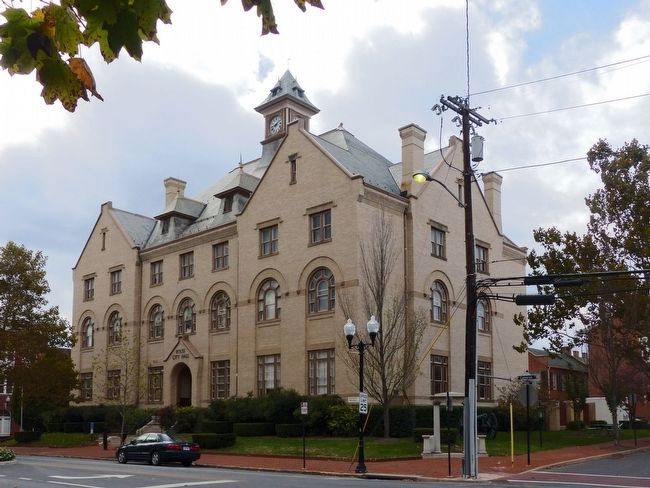
7. Rouss City Hall
Photographed by Allen C. Browne, October 18, 2015
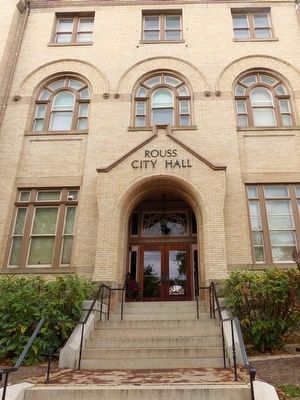
8. Rouss City Hall - Front Door
Photographed by Allen C. Browne, October 18, 2015
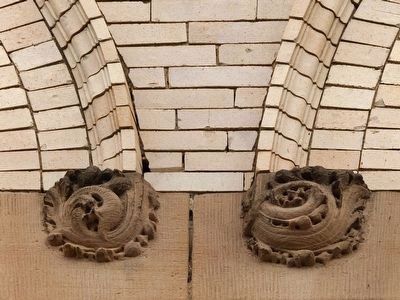
9. Architectural Detail
Photographed by Allen C. Browne, October 18, 2015
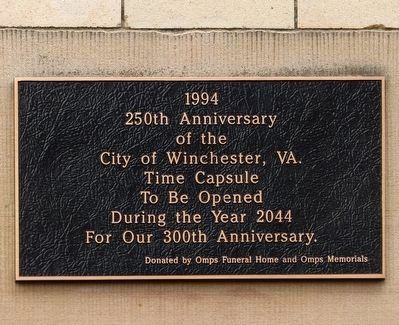
10. Time Capsule
250th Anniversary
City of Winchester, VA. Time Capsule
To Be Opened
During the Year 2044
For Our 300th Anniversary.
Donated by Omps Funeral Home and Omps Memorials
Photographed by Allen C. Browne, October 18, 2015
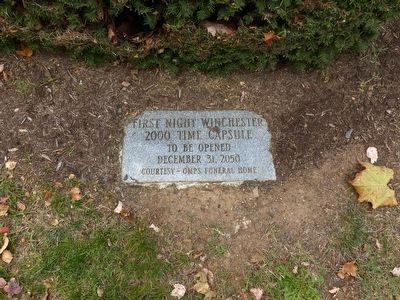
11. Time Capsule
2000 Time Capsule
To be Opened
December 31, 2050
Courtesy — Omps Funeral Home
Old Town Winchester
North Cameron Street and Rouss Avenue
Photographed by Allen C. Browne, October 18, 2015
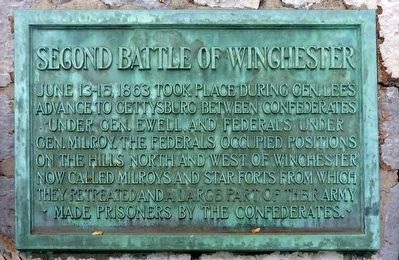
12. Second Battle of Winchester
The “Second Battle of Winchester” Monument can be found on the south lawn of City Hall.
June 13-15, 1863 took place during Gen. Lee’s advance to Gettysburg between Confederates under Gen. Ewell and Federals under Gen. Milroy. The Federals occupied positions on the hills north and west of Winchester now called Milroys and Star Forts from which they retreated and a large part of their army made prisoners by the Confederates.
June 13-15, 1863 took place during Gen. Lee’s advance to Gettysburg between Confederates under Gen. Ewell and Federals under Gen. Milroy. The Federals occupied positions on the hills north and west of Winchester now called Milroys and Star Forts from which they retreated and a large part of their army made prisoners by the Confederates.
Credits. This page was last revised on April 17, 2020. It was originally submitted on November 1, 2015, by Allen C. Browne of Silver Spring, Maryland. This page has been viewed 840 times since then and 44 times this year. Photos: 1, 2, 3, 4, 5, 6, 7, 8, 9, 10, 11, 12. submitted on November 1, 2015, by Allen C. Browne of Silver Spring, Maryland. • Bernard Fisher was the editor who published this page.
