Waterville in Lucas County, Ohio — The American Midwest (Great Lakes)
Site of Fort Deposit
⎯⎯⎯
Roche de Boeuf
Ohio Revolutionary Memorial Trail

Image courtesy of the Historical Marker Database
1. Site of Fort Deposit / Roche de Boeuf Marker
Built by General Wayne
on his march to Fallen
Timbers in 1794.
»»««
Roche de Boeuf
This particular rock island
was a famous landmark in
Indian and Pioneer days
Erected 1930 by Ohio Revolutionary Memorial Commission. (Marker Number C.)
Topics and series. This historical marker is listed in these topic lists: Indigenous Peoples and Communities • Landmarks • Wars, US Indian. In addition, it is included in the Ohio Revolutionary Memorial Commission series list. A significant historical year for this entry is 1794.
Location. Marker is missing. It was located near 41° 29.282′ N, 83° 43.882′ W. Marker was in Waterville, Ohio, in Lucas County. It was at the intersection of South River Road and Anthony Wayne Trail (Ohio Route 53), on the right when traveling south on South River Road. Back in 1930, the Ohio Revolutionary Memorial Commission created a military trail that they called "Wayne's Trail" and designated it as being their "Route Number 7." According to their 1931 report, from Defiance, Ohio, all the way to Fallen Timbers, this trail followed Route 24 (U.S. 24). Today U.S. 24 is no longer routed along any of General Wayne's trail from Defiance to Fallen Timbers, so we can't use the directions provided by the Ohio Revolutionary Memorial Commission. This historical marker use to be located along what is today River Road (which also use to be U.S. 24 back in 1930). Judging by the instructions provided I am situating this marker along the southeast side of the roadway, at the intersection of South River Road and the Anthony Wayne Trail (SR 53). Touch for map. Marker was in this post office area: Waterville OH 43566, United States of America. Touch for directions.

Regionally, this marker was on the Lake Erie Shore and in the Toledo Metropolitan Area. It was also in
this page online
Other nearby markers. At least 8 other markers are within walking distance of this location: Bowling Green Fault (a few steps from this marker); Ohio Electric Railroad Bridge / Roche De Bout, Roche De Boeuf (about 500 feet away, measured in a direct line); Fort Deposit / Roche de Bout (approx. 0.2 miles away); Roche de Bout (approx. ¼ mile away); The Towpath Trail (approx. ¼ mile away); Stitt Park (approx. ¾ mile away); Waterville Civil War Monument (approx. 0.8 miles away); Fort Miamis Reserve/Miltonville (approx. 0.9 miles away). Touch for a list and map of all markers in Waterville.
More about this marker. This historical marker is part of the Ohio Revolutionary Memorial Trail series (type C) which was put in place in 1930 to celebrate the 150th anniversary
Photographed by Dale K. Benington, March 21, 2016
2. Site of Fort Deposit / Roche de Boeuf Marker
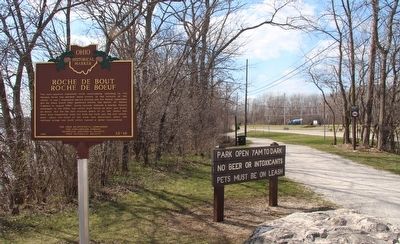
View of the nearby "Ohio Historical Marker," Roche de Bout/Roche de Boeuf, looking south along South River Road, towards the site of the missing "Ohio Revolutionary Memorial Commission" marker.
In order to accomplish this, in 1929 the state of Ohio created the Ohio Revolutionary Memorial Commission, and then in 1930 this commission created 22 military trails, throughout western Ohio, between Cincinnati, Ohio on the state's southern border and Toledo, Ohio on the state's northern border. Each of these military trails represented the routes, or trails, used by military leaders during either the Revolutionary War, the Indian Wars of 1790 to 1795, or the War of 1812. Each of these military routes connected various related historical sites, that were marked with Ohio Revolutionary Memorial Commission (type C) markers, along each of the military trails. This particular marker was a type C, Ohio Revolutionary Memorial Commission marker.
The routes of these military trails were in turn marked by type A and type B Ohio Revolutionary Memorial Commission markers that served as directional (type B) and distance (type A) markers.
Originally, back in 1930, there were erected 70 some of these Ohio Revolutionary Memorial Commission, type
Photographed by Dale K. Benington, March 21, 2016
3. Site of Fort Deposit / Roche de Boeuf Marker
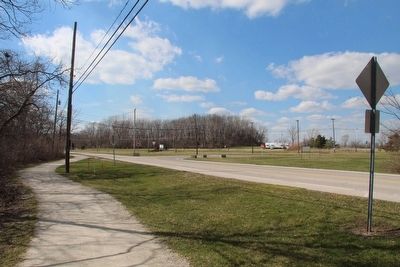
View, looking south, along South River Road, towards its intersection with the Anthony Wayne Trail (SR 53), and the location of the missing "Ohio Revolutionary Memorial Commission" marker.
Also see . . .
1. Farnsworth Metropark. Wipedia entry (Submitted on July 9, 2022, by Larry Gertner of New York, New York.)
2. Ohio Revolutionary Memorial Trail System. A description of the Revolutionary Memorial Trail System developed by the state of Ohio in 1929 - 1930. (Submitted on March 23, 2016, by Dale K. Benington of Toledo, Ohio.)
Photographed by Dale K. Benington, March 21, 2016
4. Site of Fort Deposit / Roche de Boeuf Marker
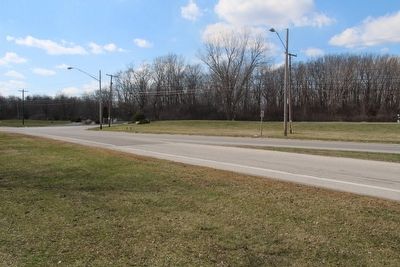
View, looking along South River Road, at its intersection with the Anthony Wayne Trail (SR 53), and the probable location of the missing "Ohio Revolutionary Memorial Commission" marker.
Photographed by Dale K. Benington, March 21, 2016
5. Site of Fort Deposit / Roche de Boeuf Marker
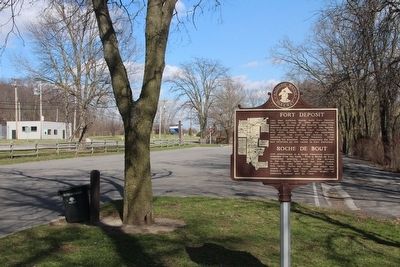
View of the "Anthony Wayne Parkway" marker for Fort Deposit / Roche de Boeuf that is located a short distance south of the missing "Ohio Revolutionary Memorial Commission" marker.
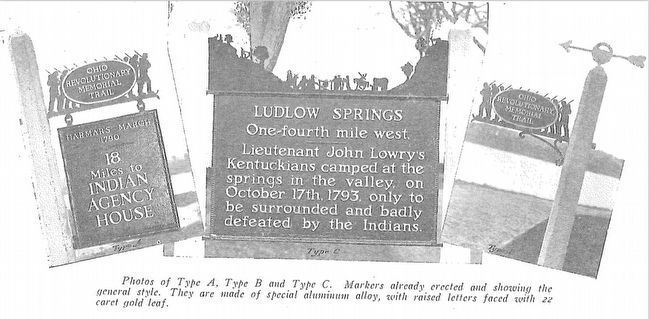
Image provided by Ohio Revolutionary Memorial Commission publication, dated 1931.
6. Ohio Revolutionary Memorial Commission Marker Types
View of the three types of markers used by the Ohio Revolutionary Memorial Commission. The marker on the left is a type A marker, the marker in the middle is a type C (just like our missing marker), and the marker on the right is a type B.
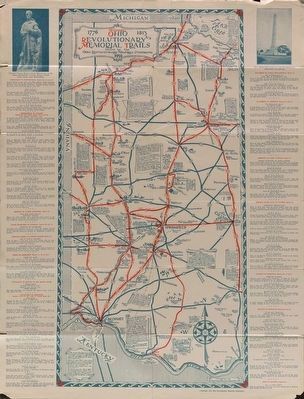
Image courtesy of the MidPointe Library System (www.MidPointeLibrary.org)
7. Ohio Revolutionary Memorial Trail Map
A view of an original Ohio Revolutionary Memorial Trail Map, from 1930. For a better view double click on this picture.
Credits. This page was last revised on July 9, 2022. It was originally submitted on March 23, 2016, by Dale K. Benington of Toledo, Ohio. This page has been viewed 1,243 times since then and 83 times this year. Photos: 1, 2, 3, 4, 5. submitted on March 23, 2016, by Dale K. Benington of Toledo, Ohio. 6. submitted on April 20, 2016, by Dale K. Benington of Toledo, Ohio. 7. submitted on March 23, 2016, by Dale K. Benington of Toledo, Ohio.
