French Quarter in Charleston in Charleston County, South Carolina — The American South (South Atlantic)
Robert Smalls
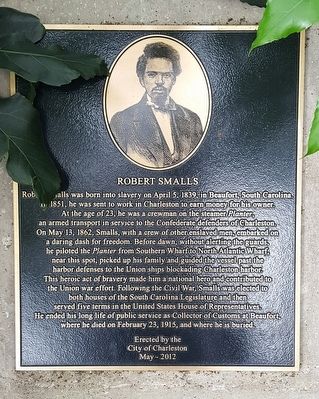
Photographed by Bernard Fisher, May 19, 2016
1. Robert Smalls Marker
Erected 2012 by City of Charleston.
Topics. This historical marker is listed in these topic lists:
this page online
Location. 32° 46.675′ N, 79° 55.527′ W. Marker is in Charleston, South Carolina, in Charleston County. It is in the French Quarter. It can be reached from the intersection of Vendue Range and Concord Street, on the right when traveling east. Located in Waterfront Park. Touch for map. Marker is at or near this postal address: 1 Vendue Range, Charleston SC 29401, United States of America. Touch for directions.

Regionally, this marker is in Historic Charleston and in the Lowcountry. It is also in the American South, specifically in the Deep South, and on the Eastern Seaboard. Globally, it is in the North Atlantic Region, North America, the Western Hemisphere, the Western World, and the Anglosphere. Historically, it finds itself in what was once the territory of the Mississippian Culture, one of the original Thirteen Colonies, one of the Confederate States of America, and the Antebellum South.
Other nearby markers. At least 8 other markers are within walking distance of this marker:
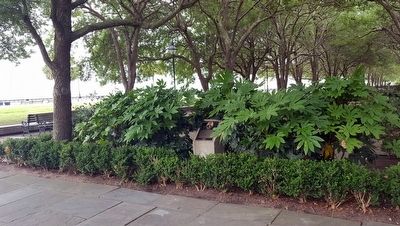
Photographed by Bernard Fisher, May 19, 2016
2. Robert Smalls Marker
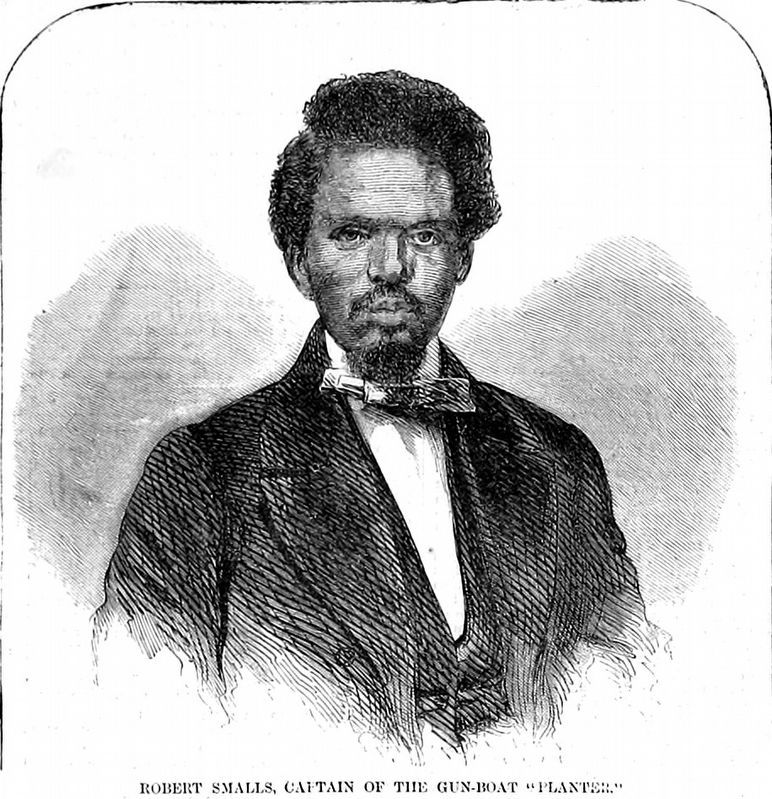
Internet Archive
3. Robert Smalls Captain of the Gun-Boat “Planter”
from Harper's Weekly, June 14, 1862.
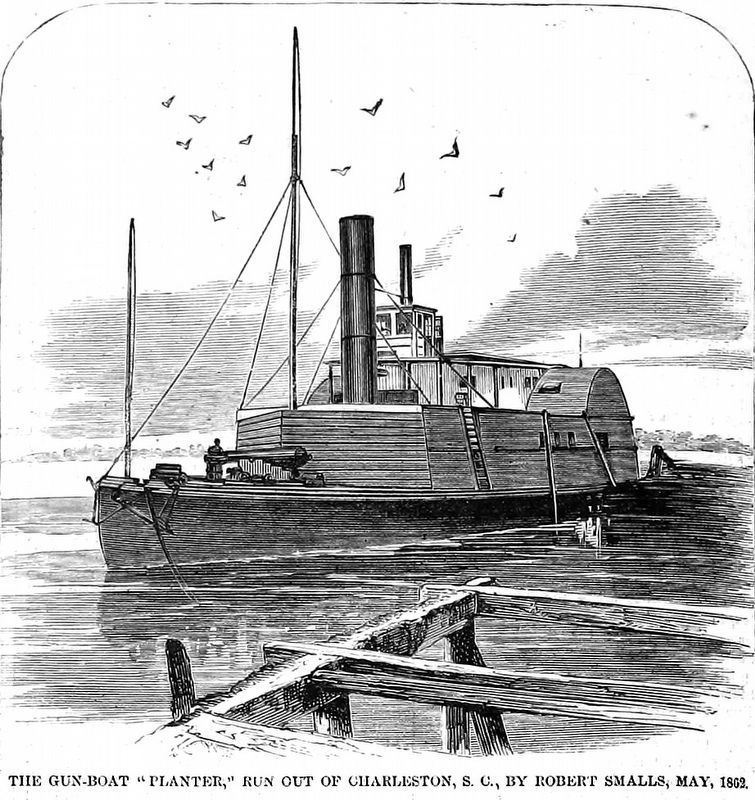
Internet Archive
4. The Gun-Boat “Planter” run out of Charleston, S.C., by Robert Smalls, May, 1862
from Harper's Weekly, June 14, 1862.
Credits. This page was last revised on February 16, 2023. It was originally submitted on May 21, 2016, by Bernard Fisher of Richmond, Virginia. This page has been viewed 1,969 times since then and 130 times this year. Photos: 1, 2. submitted on May 21, 2016, by Bernard Fisher of Richmond, Virginia. 3, 4. submitted on August 28, 2018, by Allen C. Browne of Silver Spring, Maryland.
