Leonardtown in St. Mary's County, Maryland — The American Northeast (Mid-Atlantic)
The Mural Story
Photographed by Tom Fuchs, March 31, 2007
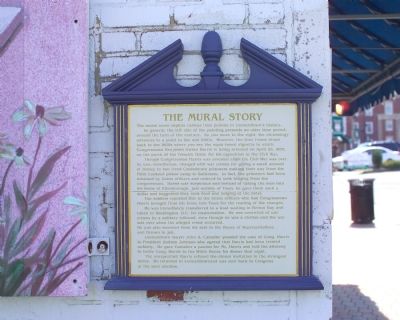
1. The Mural Story Marker
Though Congressman Harris was arrested after the Civil War was over, he was, nonetheless, charged with war crimes for giving a small amount of money to two freed Confederate prisoners making their way from the Point Lookout prison camp to Baltimore. In fact, the prisoners had been detained by Union officers and ordered to seek lodging from the congressman. Harris was suspicious and instead of taking the men into his home at
this page online
The soldiers reported this to the Union officers who had Congressman Harris brought from his home into Town for the reading of the charges.
He was immediately transferred to a boat waiting in Breton Bay and taken to Washington, D.C. for incarceration. He was convicted of war crimes by a military tribunal, even though he was a civilian and the war was over when the alleged crime occurred. He was also removed from his seat in the House of Representatives and thrown in jail.
Leonardtown lawyer John A. Camalier pleaded the case of Cong. Harris to President Andrew Johnson who agreed that Harris had been treated unfairly. He gave Camalier a pardon for Mr. Harris and told the attorney to invite Cong. Harris to the White House for dinner that night.
The unrepentant Harris refused the dinner invitation in the
Photographed by Tom Fuchs, March 31, 2007
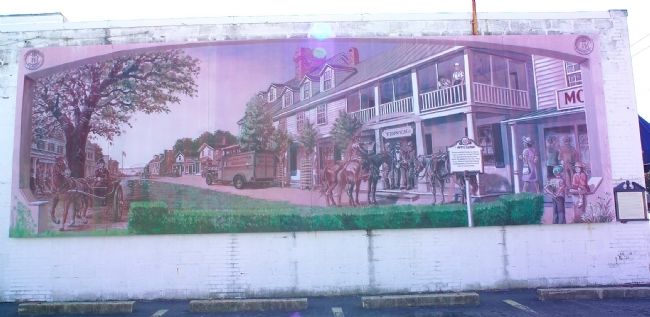
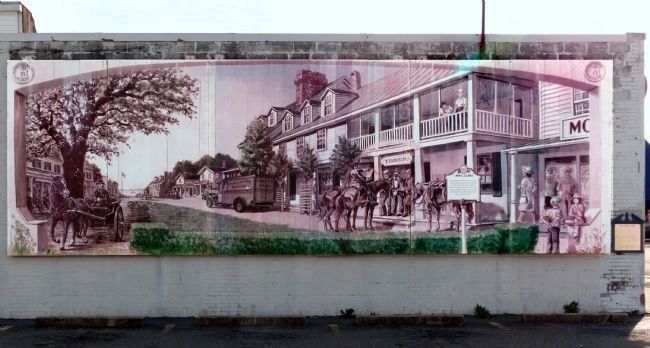
2. The Leonardtown Mural
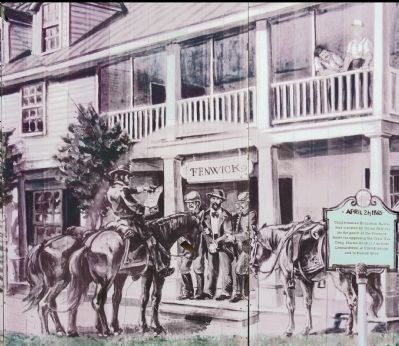
The historical marker depicted in the mural is titled “April 26, 1865” and reads, “Congressman Benjamin Harris was arrested by Union Officers on the porch of the Fenwick Hotel for opposing the Civil War. Cong. Harris lived just outside Leonardtown at Ellenborough and is buried there.”
Topics and series. This historical marker is listed in these topic lists: Colonial Era • War of 1812 • War, US Civil. In addition, it is included in the Former U.S. Presidents: #17 Andrew Johnson series list. A significant historical month for this entry is April 1634.
Location. 38° 17.49′ N, 76° 38.13′ W. Marker is in Leonardtown, Maryland, in St. Mary's County. It is on Washington Street (Business Maryland Route 5) near Leonardtown Road (Business Route 5), on the right when traveling north. Touch for map. Marker is in this post office area: Leonardtown MD 20650, United States of America. Touch for directions.

Regionally, this marker is in Southern Maryland. It is also in the American South, specifically in the Upper South, in the Mid-Atlantic, in the Tidewater, in the Chesapeake Bay Region, and on the Eastern Seaboard. Globally,
Photographed by Tom Fuchs, March 31, 2007
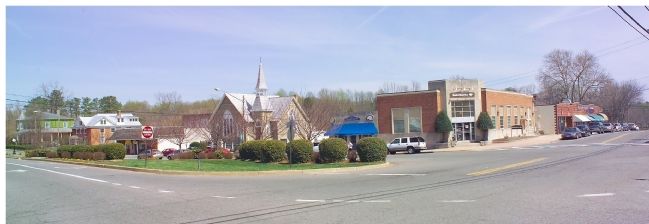
3. Washington Street in Leonardtown
Washington Street is in the foreground. Leonardtown Road returns to the highway on the right. The Town Square park is out of frame on the lower right. The mural is on the side of the building with the blue awning. The Gothic-style church in the center of the photo was originally St. Paul United Methodist Church and is now the Leonardtown Nazarene Church.
Other nearby markers. At least 5 other markers are within walking distance of this marker: Leonardtown (within shouting distance of this marker); World War I Monument -- Leonardtown (about 300 feet away, measured in a direct line); Site of the Methodist Episcopal Meeting House (c.1847) (about 300 feet away); Veterans Memorial (about 300 feet away); "The Sterling House" (about 400 feet away). Touch for a list and map of all markers in Leonardtown.
Another marker is no longer nearby. Center of Citizenship (was within shouting distance of this marker but has been confirmed missing).
Also see . . . Visit Historic Leonardtown MD. City website (Submitted on January 24, 2021, by Larry Gertner of New York, New York.)
Photographed by Allen C. Browne, January 5, 2013
4. The Arrest of Congressman Harris
Photographed by Allen C. Browne, January 5, 2013
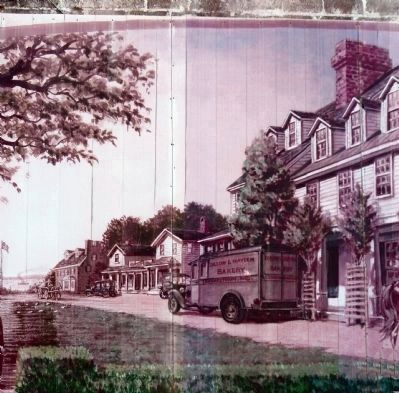
5. Dillow & Hayden Bakery
Photographed by Allen C. Browne, January 5, 2013
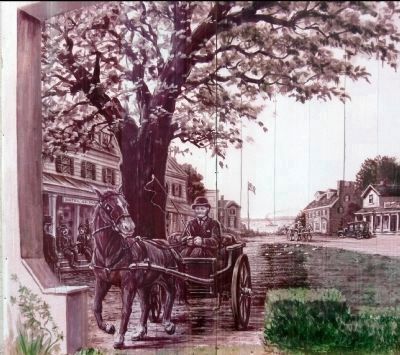
6. St. Mary's Hotel
Photographed by Allen C. Browne, January 5, 2013
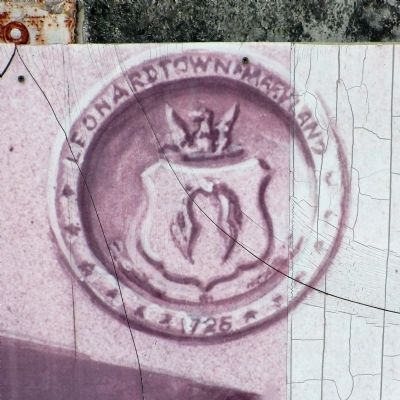
7. Leonardtown Seal
Photographed by Allen C. Browne, January 5, 2013
8. The Leonardtown Mural
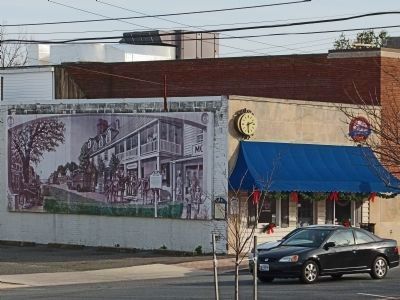
Photographed by Allen C. Browne, January 5, 2013
9. The Leonardtown Mural
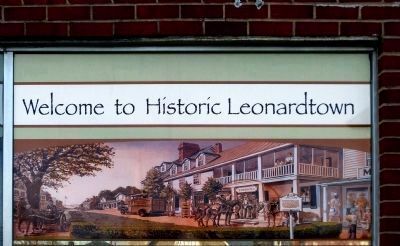
Photographed by Allen C. Browne, January 5, 2013
10. Photo of Mural
at Heritage Printing and Graphics
at Heritage Printing and Graphics
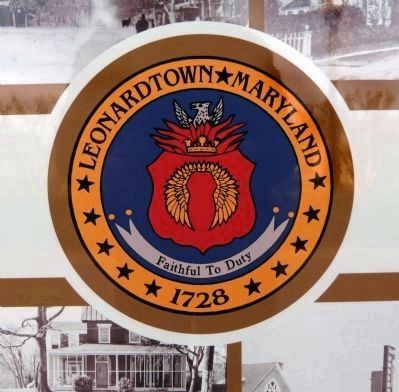
Photographed by Allen C. Browne, January 5, 2013
11. Leonardtown Seal
At Heritage Printing and Graphics
At Heritage Printing and Graphics
Credits. This page was last revised on January 24, 2021. It was originally submitted on April 19, 2007, by Tom Fuchs of Greenbelt, Maryland. This page has been viewed 2,753 times since then and 48 times this year. Photos: 1, 2, 3. submitted on April 19, 2007, by Tom Fuchs of Greenbelt, Maryland. 4, 5, 6, 7, 8, 9, 10, 11. submitted on September 20, 2013, by Allen C. Browne of Silver Spring, Maryland. • J. J. Prats was the editor who published this page.
