Near New Albany in Union County, Mississippi — The American South (East South Central)
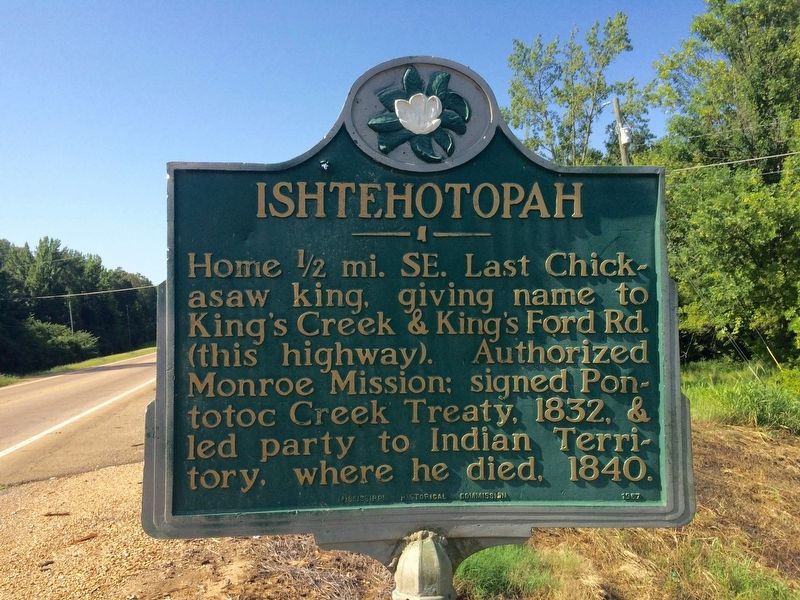
Ishtehotopah
Photographed by Mark Hilton, August 4, 2016
1. Ishtehotopah Marker
Erected 1957 by Mississippi Historical Commission.
Topics and series. This historical marker is listed in these topic lists: Indigenous Peoples and Communities • Roads & Vehicles • Waterways & Vessels. In addition, it is included in the Mississippi State Historical Marker Program series list. A significant historical year for this entry is 1832.
Location. 34° 27.081′ N, 89° 0.863′ W. Marker is near New Albany, Mississippi, in Union County. It is on State Highway 15 0.3 miles south of South Central Avenue, on the right when traveling south. Located just south of King Creek. Touch for map. Marker is in this post office area: New Albany MS 38652, United States of America. Touch for directions.

Regionally, this marker is in the North Mississippi Hills. It is also in the American South and specifically in the Deep South. Globally, it is in North America, a Gulf of Mexico state, the Western Hemisphere,
this page online
Other nearby markers. At least 8 other markers are within 5 miles of this marker, measured as the crow flies: B.F. Ford School (approx. 2.4 miles away); Elder Roma Wilson & Rev. Leon Pinson (approx. 2½ miles away); Union County, Mississippi (approx. 2.9 miles away); New Albany, Mississippi (approx. 3 miles away); William Faulkner (approx. 3.1 miles away); Mosley and Johnson (approx. 3.1 miles away); Glenfield Baptist Church (approx. 4.4 miles away); Stratford Company (approx. 4.7 miles away). Touch for a list and map of all markers in New Albany.
Regarding Ishtehotopah. On June 9th 1838, the last Chickasaw King, Ishtehotopah, and 129 of his followers left Pontotoc, Mississippi, with A. M. M. Upshaw for Indian Territory. The Chickasaws that remained east of the Mississippi were concerned about moving west because of the epidemic of smallpox raging in Indian Territory. During the trek west, Ishtahotapah's wife would die. It would
Photographed by Mark Hilton, August 4, 2016
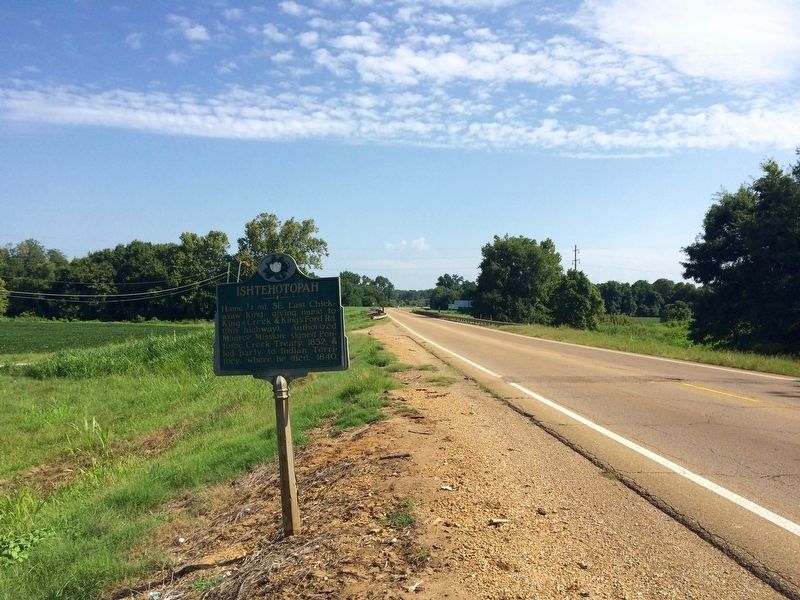
2. View looking north towards New Albany - King Creek just a few yards north
Also see . . . The Removal of the Chickasaw Indians. (Submitted on August 12, 2016, by Mark Hilton of Montgomery, Alabama.)
Photographed by Mark Hilton, August 4, 2016
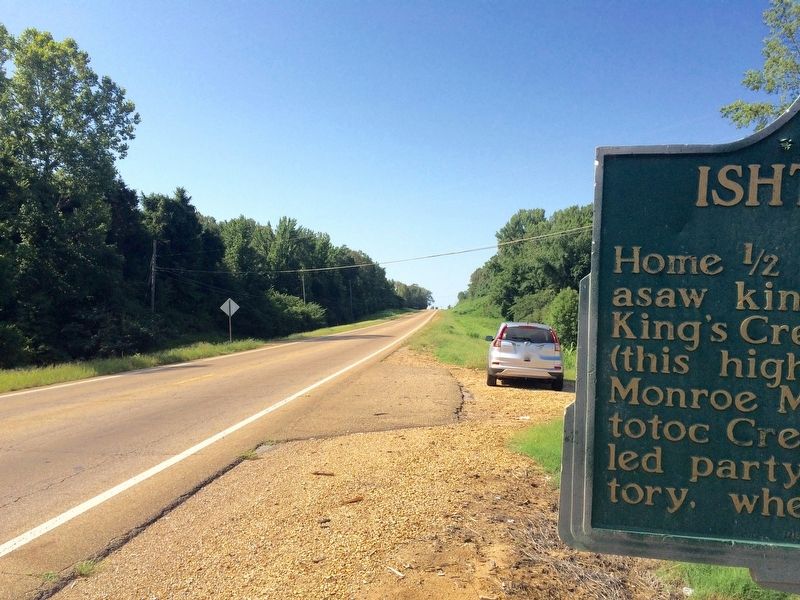
3. Looking south on MS-15 to Ecru.
Credits. This page was last revised on November 23, 2019. It was originally submitted on August 12, 2016, by Mark Hilton of Montgomery, Alabama. This page has been viewed 1,951 times since then and 87 times this year. Photos: 1, 2, 3. submitted on August 12, 2016, by Mark Hilton of Montgomery, Alabama.
