Byrd Park Court Historic District in Richmond, Virginia — The American South (Mid-Atlantic)
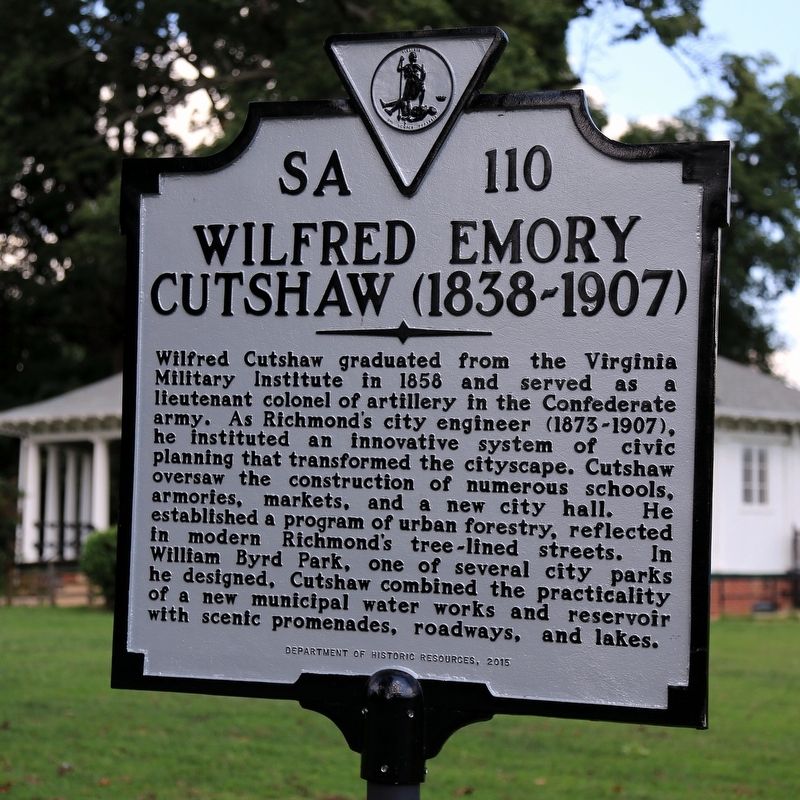
Wilfred Emory Cutshaw
(1838–1907)
Photographed by J. J. Prats, September 3, 2017
1. Wilfred Emory Cutshaw Marker
Erected 2015 by Department of Historic Resources. (Marker Number SA-110.)
Topics and series. This historical marker is listed in these topic lists: Architecture • Horticulture & Forestry • Man-Made Features. In addition, it is included in the Virginia Department of Historic Resources (DHR) series list. A significant historical year for this entry is 1873.
Location. 37° 32.682′ N, 77° 28.556′ W. Marker is in Richmond, Virginia. It is in the Byrd Park Court Historic
this page online

Regionally, this marker is in Central Virginia. It is also in the American South and specifically in the Upper South. Globally, it is in North America, the Western Hemisphere, the Western World, and the Anglosphere. Historically, it finds itself in what was once the territory of the Mississippian Culture, one of the original Thirteen Colonies, one of the Confederate States of America, and the Antebellum South.
Other nearby markers. At least 8 other markers are within walking distance of this marker: WCTU of Richmond Fountain (within shouting distance of this marker); "For God And Country" (approx. 0.3 miles away); The Carillon (approx. 0.4 miles away); 201 South Boulevard (approx. 0.4 miles away); 115 South Boulevard (approx. 0.4 miles away); Southland (approx. 0.4 miles away); 103 South Boulevard
Photographed by J. J. Prats, September 3, 2017
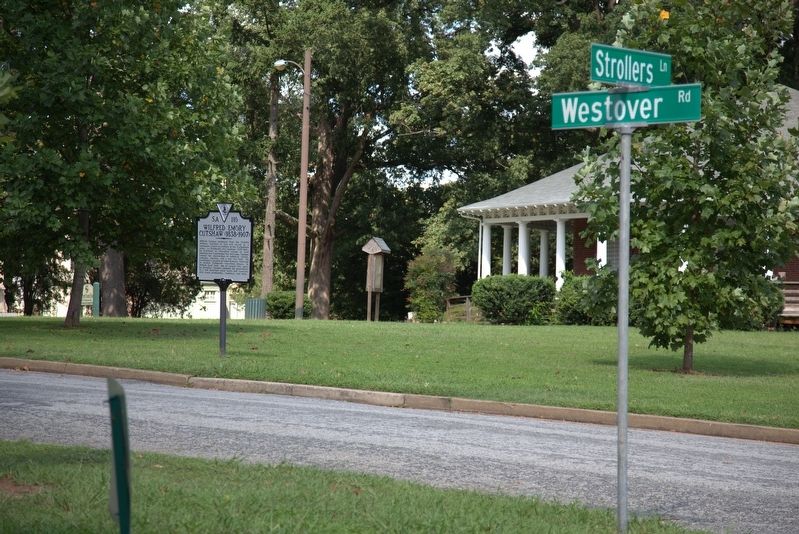
2. Wilfred Emory Cutshaw Marker
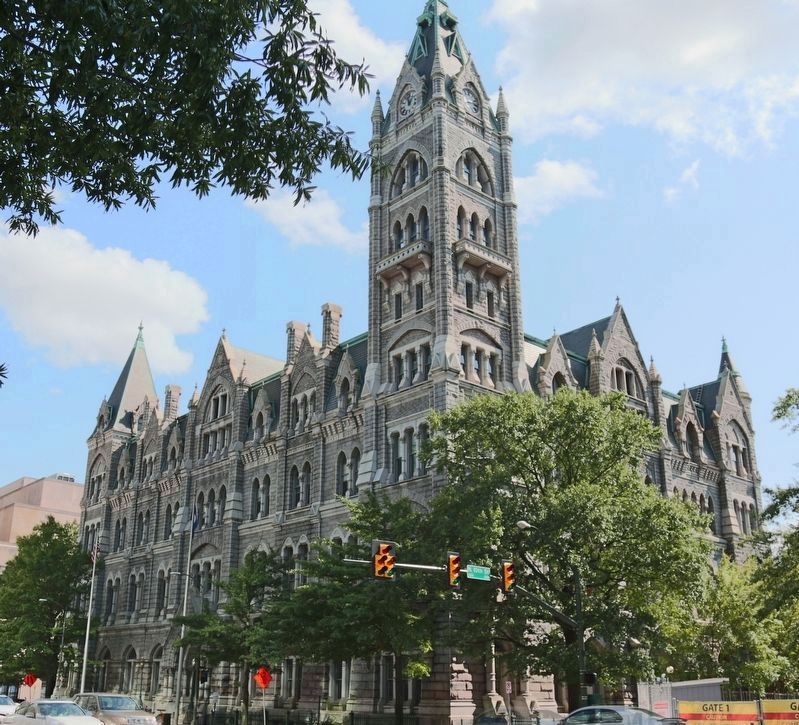
Also see . . . Wikipedia Entry. “Cutshaw oversaw projects of multiple scales; not only was he responsible for the creation of the city’s grid and waterworks system, but significant architectural achievements as well. Among these was the Old City Hall in 1886, an example of high Gothic architecture built from locally quarried granite and constructed by day laborers overseen by Cutshaw. Additionally, the Byrd Park Pump House of 1883 is an example of Cutshaw’s hallmark combination of utility and social life in his projects. Built to pump water from the James River and Kanawha Canal into the Byrd Park Reservoir, Cutshaw integrated an open-air dance floor on the second floor of this stone Gothic building, to which the city’s elite would arrive via boat for social events. Numerous public works including fire stations, markets, schools, and armories were also erected during Cutshaw’s tenure, exhibiting a range of architectural styles.” (Submitted on September 5, 2017.)
Photographed by J. J. Prats, September 3, 2017
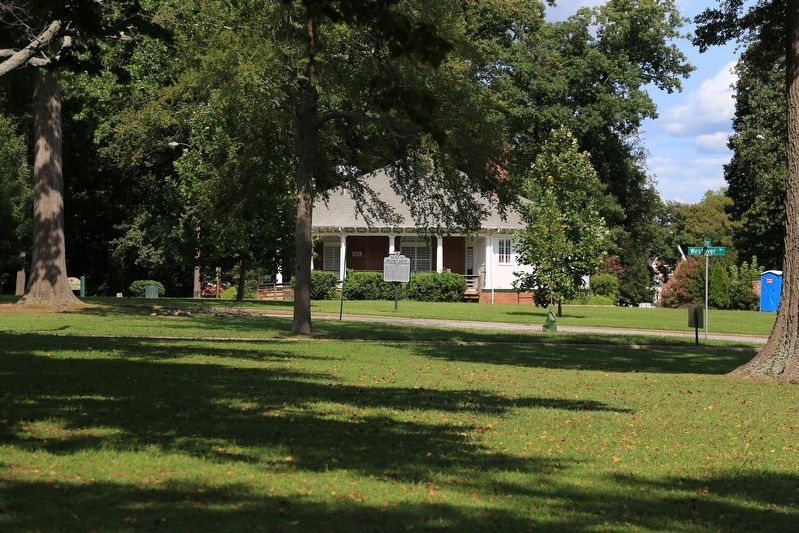
3. Wilfred Emory Cutshaw Marker at The Round House
Photographed by J. J. Prats, September 3, 2017
4. Old City Hall (1886)
Credits. This page was last revised on February 1, 2023. It was originally submitted on September 5, 2017, by J. J. Prats of Powell, Ohio. This page has been viewed 906 times since then and 56 times this year. Photos: 1, 2, 3, 4. submitted on September 5, 2017, by J. J. Prats of Powell, Ohio.
Editor’s want-list for this marker. Photos of other examples of his work • Can you help?
