Monroe in Orange County, New York — The American Northeast (Mid-Atlantic)
First Church
American Presbyterian and Reformed Historical Site
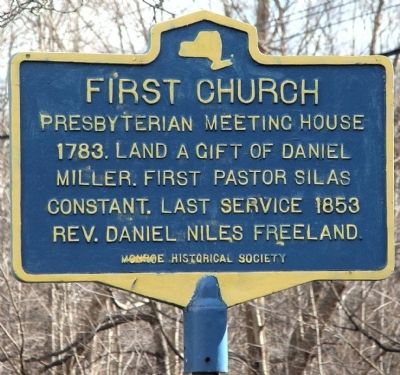
Photographed by Clifton Patrick, November 28, 2009
1. First Church Marker
Erected by Monroe Historical Society. (Marker Number 231.)
Topics and series. This historical marker is listed in these topic lists: Cemeteries & Burial Sites • Colonial Era • Religion & Religious Structures. In addition, it is included in the American Presbyterian and Reformed Historic Sites series list. A significant historical year for this entry is 1783.
Location. 41° 19.518′ N, 74° 10.44′ W. Marker is in Monroe, New York, in Orange County. It is on Spring Street (County Route 105) 0.2 miles Freeland Street (County Route 40), on the right when traveling west. Touch for map. Marker is at or near this postal address: 404 Spring Street, Monroe NY 10950, United States of America. Touch for directions.

Regionally, this marker is in Upstate New York and in the Hudson Valley. It is also in the American Northeast, in the Mid-Atlantic, and on the Eastern Seaboard. Globally, it is in the North Atlantic Region, North America, the Western Hemisphere, the Western World, and
this page online
Other nearby markers. At least 8 other markers are within walking distance of this marker: American Heroes (approx. 0.6 miles away); Monroe Race Track (approx. 0.6 miles away); Methodist Church (approx. 0.6 miles away); McGarrah’s Inn (approx. 0.7 miles away); Village of Monroe Historic District (approx. 0.7 miles away); Monroe Cheese Co. (approx. ¾ mile away); Village of Monroe (approx. 0.8 miles away); Monroe School (approx. 0.9 miles away). Touch for a list and map of all markers in Monroe.
Another marker is no longer nearby. First Settler (was approx. 0.7 miles away but has been confirmed missing).
Regarding First Church. Seamanville Cemetery is one of 445 American Presbyterian and Reformed Historical Sites registered between 1973 and 2003 by the Presbyterian Historical Society (PHS), headquartered in Philadelphia. Approved sites received a metal plaque featuring John Calvin’s seal and the site’s registry number (PHS marker location unknown).
The following text is taken from the Presbyterian
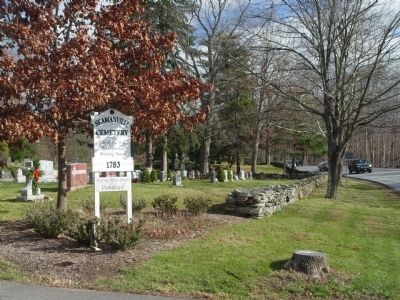
Photographed by Clifton Patrick, November 28, 2009
2. Seamanville Cemetery entrance.
The cemetery was the site of the first Presbyterian service in Monroe, held under a tree by Rev. Silas Constant in 1783. A meeting house was constructed on the site in the same year. The original building featured square pews, a gallery, and an octagonal pulpit. Members of the First Presbyterian Church of Monroe worshiped in the frame structure until 1853, when a new church was built at another location.
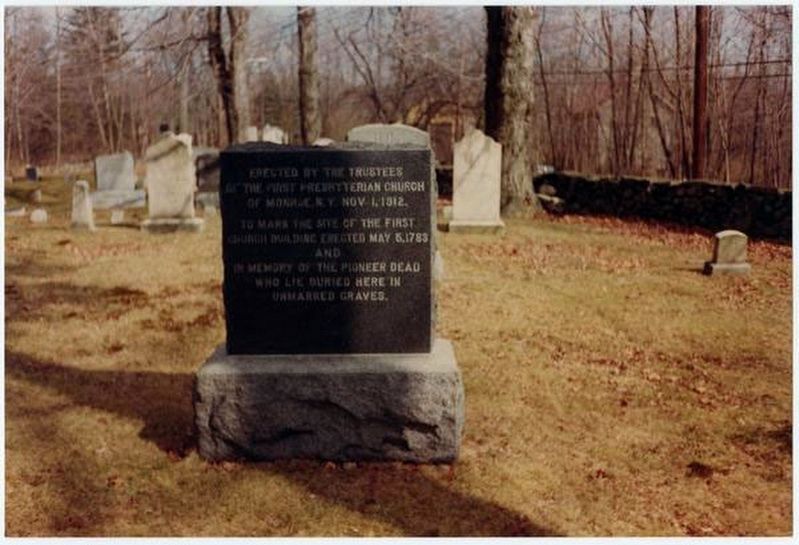
Presbyterian Historical Society
3. First Church Marker
Another monument is located in Seamanville Cemetery and reads:
Erected by the Trustees
of the First Presbyterian Church
of Monroe N.Y. Nov 1, 1912
To Mark the Site of the First
Church Building Erected May 5, 1783
and
In Memory of the Pioneer Dead
Who Lie Buried Here in
Unmarked Graves.
of the First Presbyterian Church
of Monroe N.Y. Nov 1, 1912
To Mark the Site of the First
Church Building Erected May 5, 1783
and
In Memory of the Pioneer Dead
Who Lie Buried Here in
Unmarked Graves.
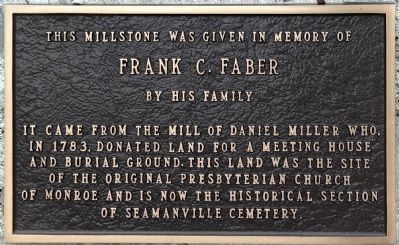
Photographed by Clifton Patrick, November 28, 2009
4. Millstone
This millstone was given in Memory of Frank C. Faber by his Family
It came from the mill of Daniel Miller who, in 1783, danated land for a meeting house and burial ground. This land was the site of the original Presbyterian Church of Monroe and is now the Historical Section of Seamanville Cemetery.
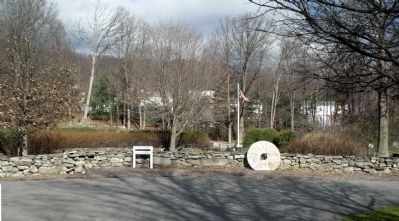
Photographed by Clifton Patrick, November 28, 2009
5. Central plaza in Seamanville Cemetery, site of 1783 Presbyterian Meeting House.
Credits. This page was last revised on September 6, 2018. It was originally submitted on November 29, 2009, by Clifton Patrick of Chester, NY, United States. This page has been viewed 1,431 times since then and 57 times this year. Last updated on August 22, 2018, by Douglass Halvorsen of Klamath Falls, Oregon. Photos: 1, 2. submitted on November 29, 2009, by Clifton Patrick of Chester, NY, United States. 3. submitted on August 22, 2018, by Douglass Halvorsen of Klamath Falls, Oregon. 4, 5. submitted on November 29, 2009, by Clifton Patrick of Chester, NY, United States. • Bill Pfingsten was the editor who published this page.
