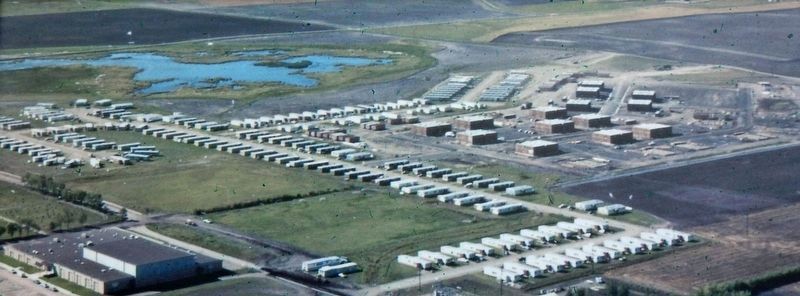
In a 1974 North Dakota State University interview-poll of long-time residents, newcomers, and local officials, four out of five respondents indicated that the overall effect of the Safeguard project had been beneficial in terms of the . . . — — Map (db m214104) HM
1738 • The first known white, non-native men to have set foot in Cavalier County were those in the Verendrye expedition. Through researching journals, it is believed that the expedition passed through Cavalier County in November of 1738 and . . . — — Map (db m214094) HM
Located along the northeastern edge of North Dakota, just south of the US-Canadian border, Cavalier County is a vibrant, thriving place to live, work, and visit. As of 2020, population was estimated at 3,800. Agriculture drives the local economy . . . — — Map (db m214098) HM
On this day we honor the memory of those who lost their lives in the Cyclone of May 29, 1909 Mrs. J.B. (Gertrude) Boyd Mrs. F.W. (Rebecca) Bleakley Donalda Sheehan Agnes Bain Joseph Power, Jr. and give thanks for those who persevered to rebuild . . . — — Map (db m206431) HM
When Cavalier County was being settled in the 1880s, spring wheat and durum were the primary crops. Other crops produced were barley, flax, and oats. Major changes in farming operations took place in the 1910s. On-farm grain storage became . . . — — Map (db m214097) HM
Not much is known of the very early history of Cavalier County. The Sioux are believed to have been the earliest residents. The first known white men to have set foot in Cavalier County were those in the Verendrye expedition, which camped in the . . . — — Map (db m214095) HM
Thin black lines indicate changes in relevance. Between each pair of lines entries are ordered geographically but all have the same relevance.
* Inflectional forms of words are their plurals, singulars, and possessives as well as gramatical tenses and similar variations.