Tulum, Quintana Roo, Mexico — The Yucatan Peninsula (The Southeast)
Temple of the Descending God
El Templo del Dios Descendente
Photographed by J. Makali Bruton, January 16, 2017
1. Temple of the Descending God Marker
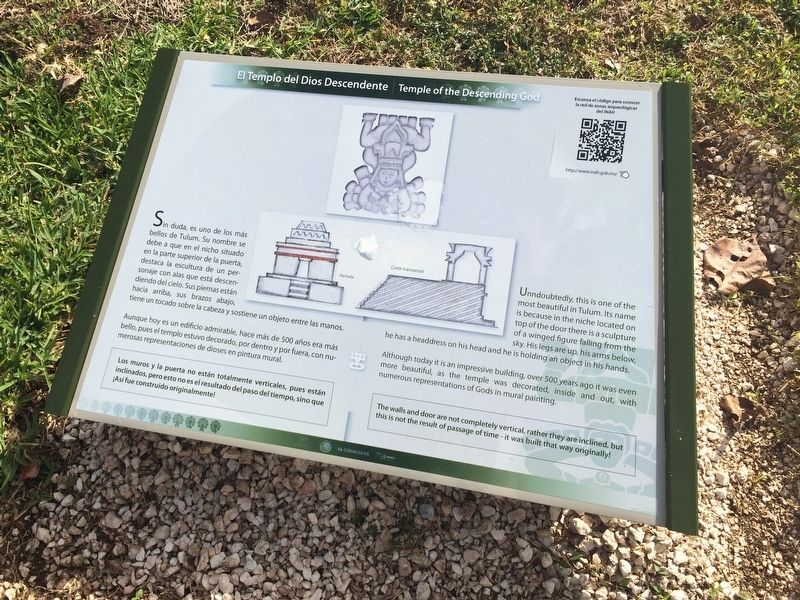
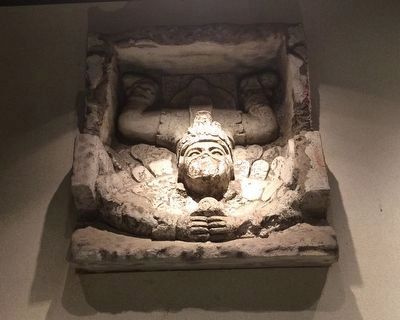
Sin duda, es uno de los más bellos de Tulum. Su nombre se debe a que en el nicho situado en la parte superior de la puerta, destaca la escultura de un personaje con alas que está descendiendo del cielo. Sus piernas están hacia arriba, sus brazos abajo, tiene un tocado sobre la cabeza y sostiene un objeto entre las manos.
Aunque hoy es un edificio admirable, hace más de 500 años era más bello, pues el templo estuvo decorado, por dentro y por fuera con numerosas representaciones de dioses en pintura mural.
Los muros y la puerta no están totalmente verticales, pues están inclinados, pero esto no es el resultado del paso del tiempo, sino que ¡Así fue construido originalmente!
English:
Unndoubtedly, this is one of the most beautiful in Tulum. Its name is because in the niche located on top of the door there is a sculpture of a winged figure falling from the sky. His legs are up, his arms below, he has a headdress on his head and he is holding an object in his hands.
Although today it is an impressive building, over 500 years ago it was even more beautiful, as the temple was decorated, inside and out, with numerous representations
this page online
The walls and doors are not completely vertical, rather they are inclined, but this is not the result of the passage of time – it was built that way originally!
Erected by Consejo Nacional para la Cultura y las Artes de México (CONACULTA).
Topics. This historical marker is listed in these topic lists: Indigenous Peoples and Communities • Man-Made Features.
Location. 20° 12.9′ N, 87° 25.752′ W. Marker is in Tulum, Quintana Roo. It can be reached from Carretera Cancún - Tulum (Route 307). The marker is west of the Temple of the Descending God at the Tulum Archaeological Site near the town of Tulum. Touch for map. Marker is in this post office area: Tulum QR 77700, Mexico. Touch for directions.

Regionally, this marker is in the Mexican Maya Heartland and on the Yucatán Peninsula. Globally, it is on the Caribbean Sea, in North America, in Mesoamerica, in a Gulf of Mexico state, and in the Western Hemisphere. Historically, it finds itself in what was once New Spain and also a Spanish colony.
Other nearby markers. At least 6 other markers
Photographed by J. Makali Bruton, January 16, 2017
2. Nearby "Mural painting" additional marker
This additional marker is just to the right of the featured marker. It reads:
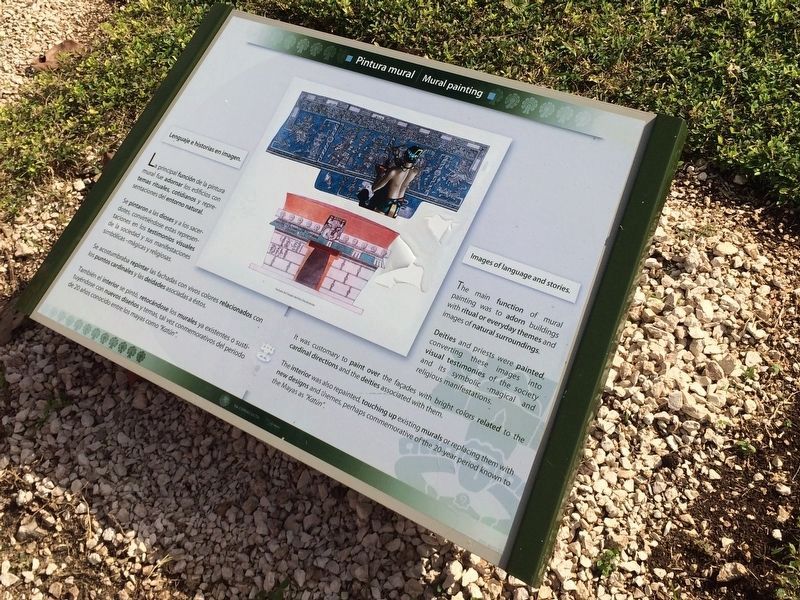
Pintura mural - Lenguaje e historias en imagen.
La principal función de la pintura mural fue adornar los edificios con temas rituales, cotidianos y representaciones del entorno natural.
Se pintaron a las dioses y a los sacerdotes, convirtiéndose estas representaciones en los testimonios visuales de la sociedad y sus manifestaciones simbólicas-mágicas religiosas.
Se acostumbraba repintar las fachadas con vivos colores relacionados con los puntos cardinales y las deidades asociados a éstos.
También el interior se pintó, retocándose los murales ya existentes o sustituyéndose con nuevos diseños y temas, tal vez conmemorativos del periodo de 20 años conocido entre los mayas como “Katún”.
English:
Mural painting – Images of language and stories.
The main function of mural painting was to adorn buildings with ritual or everyday themes and images of natural surroundings.
Deities and priests were painted, converting these images into visual testimonies of the society and its symbolic-magical religious manifestations.
It was customary to paint ovef the facades with bright colors related to the cardinal directions and the deities associated with them.
The interior was also repainted, touching up existing murals or replacing them with new designs and themes, perhaps commemorative of the 20-year period known to the Mayas as ”Katún”.
Pintura mural - Lenguaje e historias en imagen.
La principal función de la pintura mural fue adornar los edificios con temas rituales, cotidianos y representaciones del entorno natural.
Se pintaron a las dioses y a los sacerdotes, convirtiéndose estas representaciones en los testimonios visuales de la sociedad y sus manifestaciones simbólicas-mágicas religiosas.
Se acostumbraba repintar las fachadas con vivos colores relacionados con los puntos cardinales y las deidades asociados a éstos.
También el interior se pintó, retocándose los murales ya existentes o sustituyéndose con nuevos diseños y temas, tal vez conmemorativos del periodo de 20 años conocido entre los mayas como “Katún”.
English:
Mural painting – Images of language and stories.
The main function of mural painting was to adorn buildings with ritual or everyday themes and images of natural surroundings.
Deities and priests were painted, converting these images into visual testimonies of the society and its symbolic-magical religious manifestations.
It was customary to paint ovef the facades with bright colors related to the cardinal directions and the deities associated with them.
The interior was also repainted, touching up existing murals or replacing them with new designs and themes, perhaps commemorative of the 20-year period known to the Mayas as ”Katún”.
Photographed by J. Makali Bruton, January 16, 2017
3. Temple of the Descending God Marker
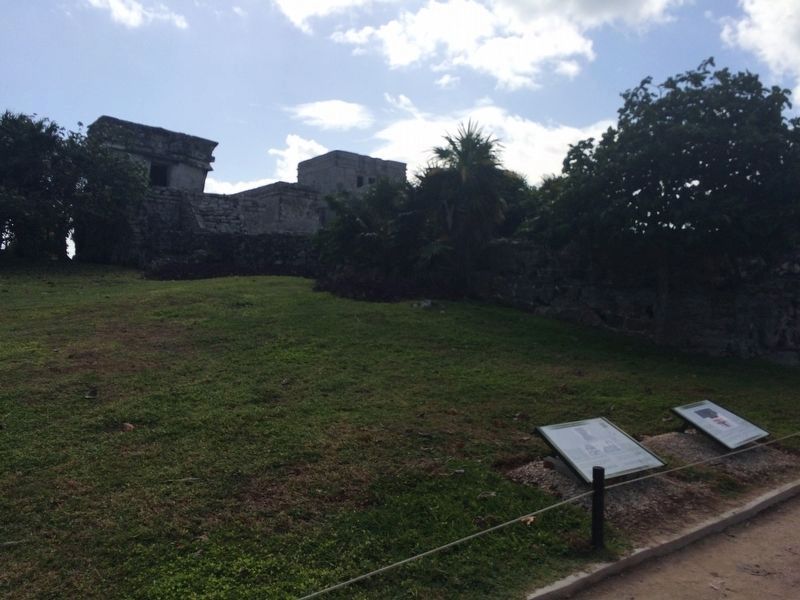
The temple can be seen in the background towards the east. The additional marker to the right is "Mural Painting."
Photographed by J. Makali Bruton, January 25, 2017
4. The "Descending God" at the National Museum of Anthropology in Mexico City.
This image was removed from the temple in Tulum and can be found in the Maya exhibition at the National Museum of Anthropology of Mexico in Mexico City. Note the wings, headdress and the object held by the god mentioned in the marker text.
Credits. This page was last revised on March 3, 2017. It was originally submitted on March 2, 2017, by J. Makali Bruton of Washington, District of Columbia. This page has been viewed 848 times since then and 30 times this year. Photos: 1. submitted on March 2, 2017, by J. Makali Bruton of Washington, District of Columbia. 2. submitted on March 3, 2017, by J. Makali Bruton of Washington, District of Columbia. 3, 4. submitted on March 2, 2017, by J. Makali Bruton of Washington, District of Columbia.
