Mt. Olivet Heights in Frederick in Frederick County, Maryland — The American Northeast (Mid-Atlantic)
United States Army General Hospital #1
Civil War Period
Photographed by Allen C. Browne, May 9, 2017
1. United States Army General Hospital #1 Marker
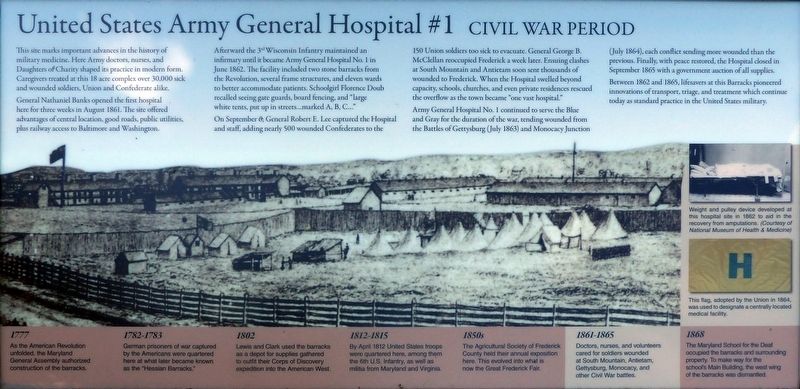
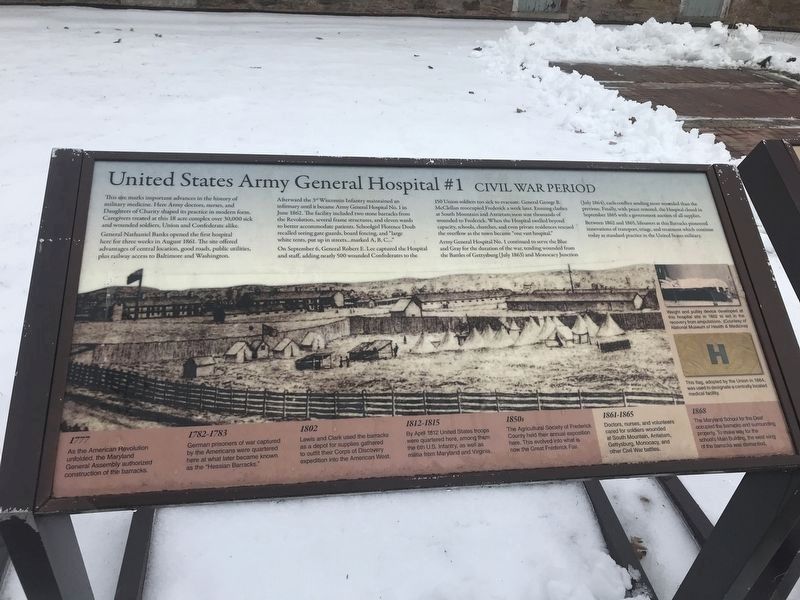
General Nathaniel Banks opened the first hospital here for three weeks in August 1861. The site offered advantages of central location, good roads, public utilities, plus railway access to Baltimore and Washington.
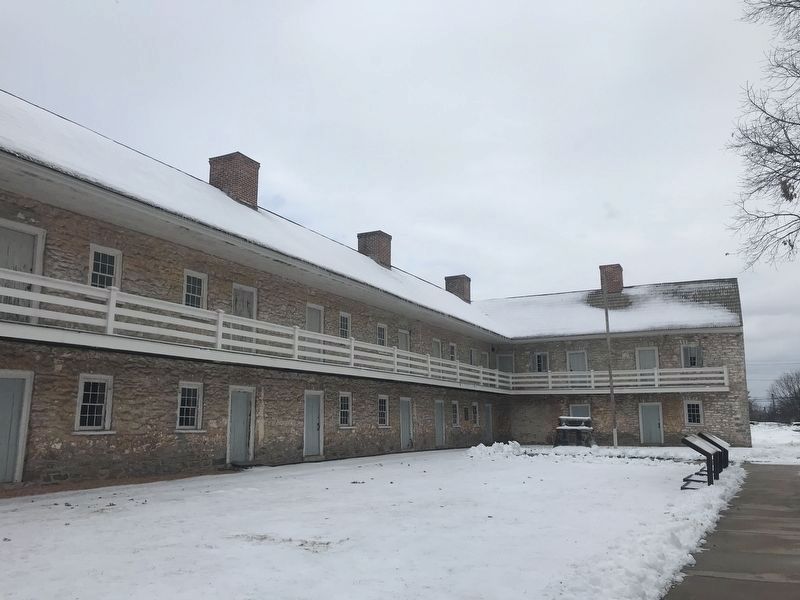
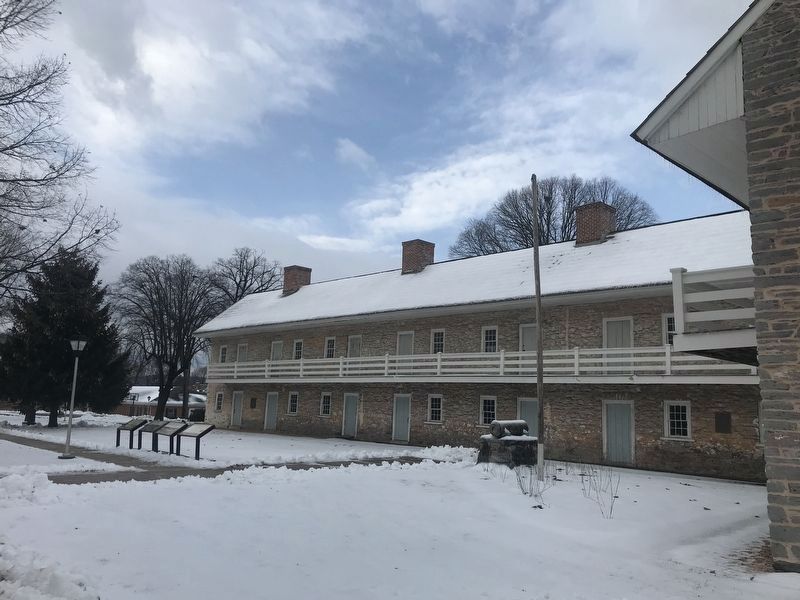
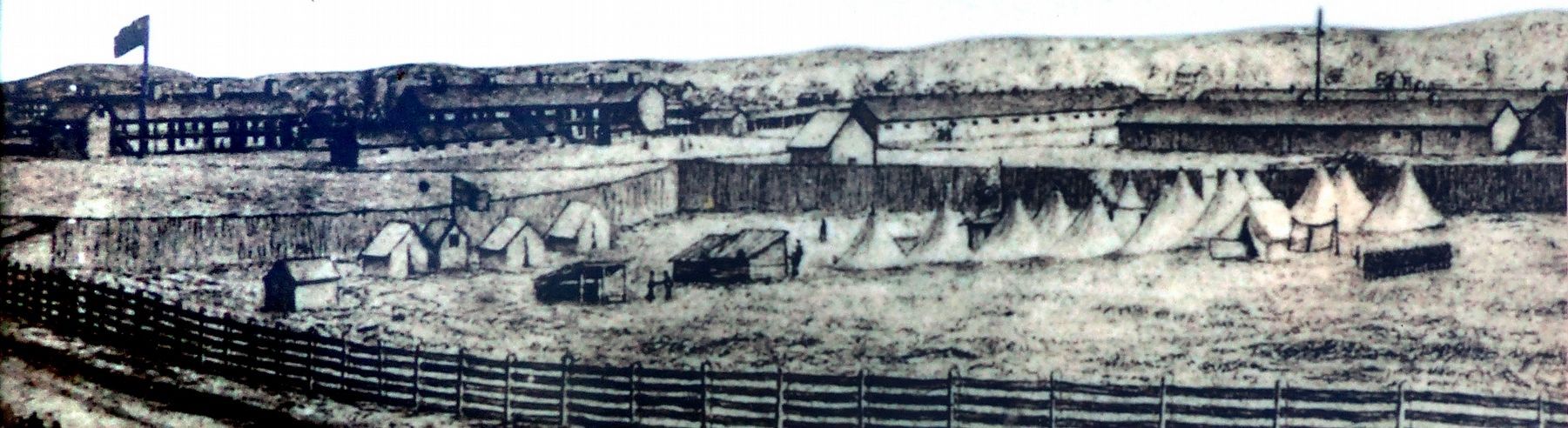
Afterward the 3rd Wisconsin Infantry maintained an infirmary until it became Army General Hospital No. 1 in June 1862. The facility included two stone barracks from the Revolution, several frame structures, and eleven wards to better accommodate patients. Schoolgirl Florence Doub recalled seeing gate guards, board fencing and “large white tents, put up in streets … marked A, B, C…”
On September 6, General Robert E. Lee captured the Hospital and staff, adding nearly 500 wounded Confederates to the 150 Union soldiers to sick to evacuate. General George B. McClellan reoccupied Frederick a week later. Ensuing clashes at South Mountain and
this page online
Army General Hospital No. 1 continued to serve the Blue and Gray for the duration of the war, tending wounded from the Battles of Gettysburg (July 1863) and Monocacy Junction (July 1864), each conflict sending more wounded than the previous. Finally, with peace restored, the Hospital closed in September 1865 with a government auction of all supplies.
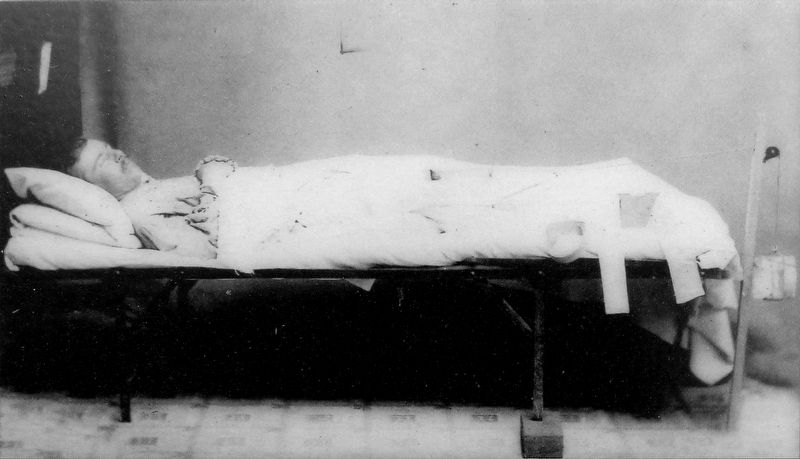
Between 1862 and 1865, lifesavers at this Barracks pioneered innovations of transport, triage, and treatment which continue today as standard practice in the United States military.
1777 — As the American Revolution unfolded, the Maryland General Assembly authorized construction of the Barracks.
1782 - 1783 — German prisoners of war captured by the Americans were quartered here at what later became known as the “Hessian Barracks.”
1802 — Lewis and Clark used the barracks as a depot for supplies gathered to outfit their Corps of Discovery expedition to the American
Photographed by Adam Margolis, January 17, 2022
2. United States Army General Hospital #1 Marker
1812 - 1815 — By April 1812 United States troops were quartered here, among them the 6th U.S. Infantry, as well as militia from Maryland and Virginia.
1850s — The Agricultural Society of Frederick County held their annual exposition here. This evolved into what is now the Great Frederick Fair.
1861 - 1865 — Doctors nurses and volunteers cared for soldiers wounded at South Mountain, Antietam, Gettysburg, Monocacy, and other Civil War battles.
1868 — The Maryland School for the Deaf occupied the barracks and surrounding property. To make way for the school's Main Building, the west wing of the barracks were dismantled.
Topics. This historical marker is listed in these topic lists: Science & Medicine • War, US Civil. A significant historical month for this entry is April 1812.
Location. 39° 24.533′ N, 77° 24.581′ W. Marker is in Frederick, Maryland, in Frederick County. It is in Mt. Olivet Heights. It can be reached from Clarke Place. At the Maryland School for the Deaf. Touch for map. Marker is at or near this postal address: 101 Clarke Place, Frederick MD 21701, United States of America. Touch for directions.

Regionally,
Photographed by Allen C. Browne, May 9, 2017
3. United States Army General Hospital #1 Marker
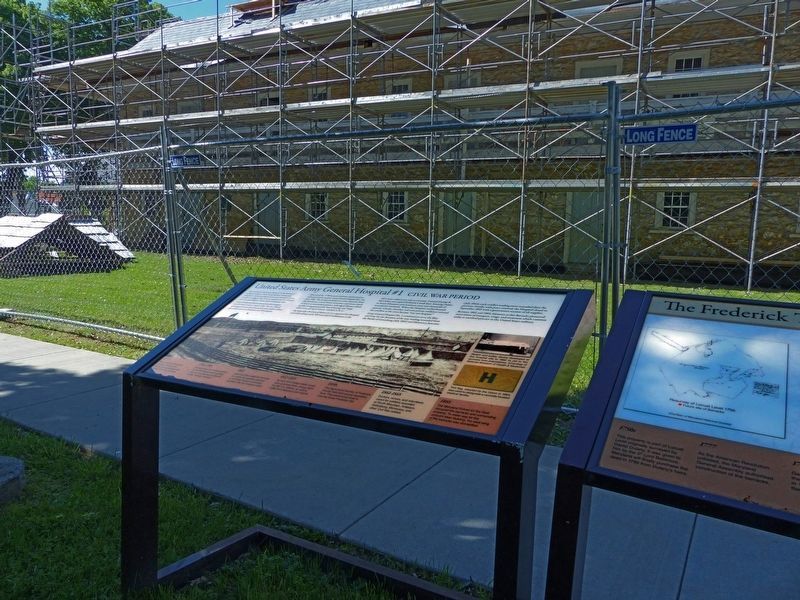
The Barracks are currently (May 2017) undergoing renovation.
Other nearby markers. At least 8 other markers are within walking distance of this marker: The Frederick Town Barracks (here, next to this marker); Historic Frederick Barracks (here, next to this marker); “The Great Baby Waker” (a few steps from this marker); Hessian Barracks - Witness to History (a few steps from this marker); These Barracks (a few steps from this marker); a different marker also named Frederick Town Barracks (within shouting distance of this marker); Lewis & Clark Trail Marker (within shouting distance of this marker); The Frederick Brick Works (approx. 0.2 miles away). Touch for a list and map of all markers in Frederick.
Regarding United States Army General Hospital #1. “Coming from my music lesson one morning when I was about ten years old, I met my cousin, Fannie, several
Photographed by Adam Margolis, January 17, 2022
4. United States Army General Hospital #1 Marker
Photographed by Adam Margolis, January 17, 2022
5. United States Army General Hospital #1 Marker
— Florence ‘Floy’ Doub (1851-1932) quoted in the Maryland Bulletin, Vol CXII, No. 2 November 1991. Florence Doub was the founder of the Frederick Art Club and teacher at the School for the Deaf.
Photographed by Allen C. Browne, May 9, 2017
6. Innovation
Weight and pulley device developed as this hospital site in 1862 to aid in the recovery from amputations. Close-up of NMHM photo on marker
Photographed by Allen C. Browne, May 9, 2017
7. Hospital Flag
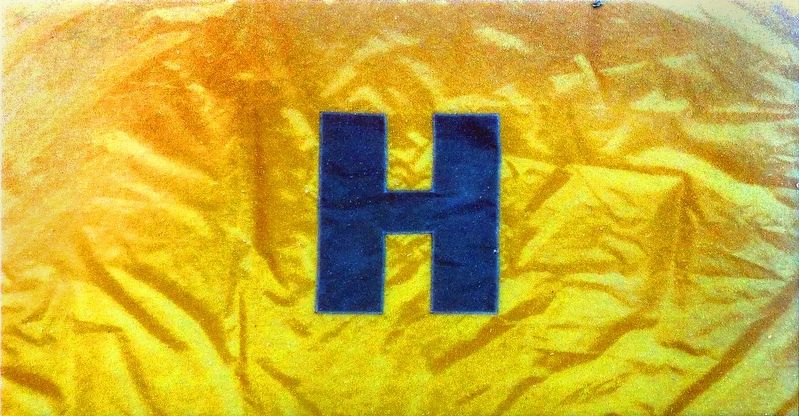
This flag, adopted by the Union in 1864 was used to designate a centrally located medical facility. Close-up of photo on marker
Photographed by Allen C. Browne, May 9, 2017
8. United States Army General Hospital #1
Credits. This page was last revised on June 28, 2024. It was originally submitted on May 12, 2017, by Allen C. Browne of Silver Spring, Maryland. This page has been viewed 841 times since then and 72 times this year. Last updated on May 14, 2017, by Allen C. Browne of Silver Spring, Maryland. Photos: 1. submitted on May 12, 2017, by Allen C. Browne of Silver Spring, Maryland. 2. submitted on January 17, 2022, by Adam Margolis of Mission Viejo, California. 3. submitted on May 12, 2017, by Allen C. Browne of Silver Spring, Maryland. 4, 5. submitted on January 17, 2022, by Adam Margolis of Mission Viejo, California. 6, 7, 8. submitted on May 12, 2017, by Allen C. Browne of Silver Spring, Maryland. • Bill Pfingsten was the editor who published this page.
