
Cahaba in Dallas County, Alabama — The American South (East South Central)
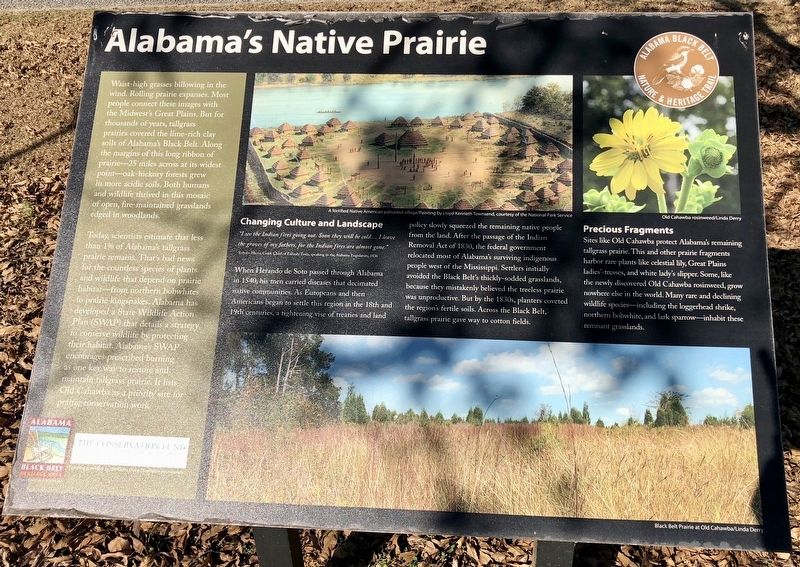
Alabama's Native Prairie
Photographed by Mark Hilton, January 6, 2018
1. Alabama's Native Prairie Marker
Today, scientists estimate that less than 1% of Alabama's tallgrass prairie remains. That's bad news for the countless species of plants and wildlife that depend on prairie—habitat from northern bobwhites to prairie kingsnakes. Alabama has developed a State Wildlife Action Plan (SWAP) that details a strategy to conserve wildlife by protecting their habitat. Alabama's SWAP encourages prescribed burning as one key way to restore and maintain tallgrass prairie. It lists Old Cahawba as a priority site for prairie conservation work.
Changing Culture and Landscape
"I see the Indian fires going out. Soon they will be cold.... I leave the graves of my fathers, for the Indian fires are almost gone."
-Yoholo-Micco Chief of Eufaula Town, speaking to the Alabama Legislature, 1836
When
this page online
Precious Fragments
Sites like Old Cahawba protect Alabama's remaining tallgrass prairie. This and other prairie fragments harbor rare plants like celestial lily, Great Plains ladies'-tresses, and white lady's slipper. Some, like the newly discovered Old Cahawba rosinweed, grow nowhere else in the world. Many rare and declining wildlife species—including the loggerhead shrike, northern bobwhite,
Photographed by Mark Hilton, January 6, 2018
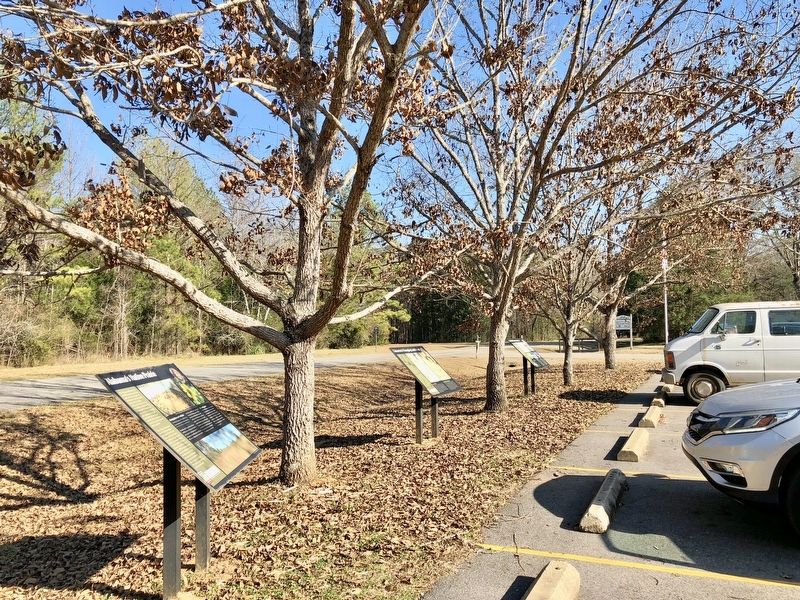
2. The view east on Capitol Avenue with the marker on left.
Erected 2013 by the Alabama Black Belt Nature & Heritage Trail.
Topics. This historical marker is listed in these topic lists: Agriculture • Environment • Exploration • Indigenous Peoples and Communities. A significant historical year for this entry is 1836.
Location. Marker has been permanently removed. It was located near 32° 19.185′ N, 87° 6.274′ W. Marker was in Cahaba, Alabama, in Dallas County. It was at the intersection of Capitol Street and Cahaba Road, on the right when traveling east on Capitol Street. Located within the Old Cahawba Archaeological Park. Touch for map. Marker was in this post office area: Orrville AL 36767, United States of America.
We have been informed that this marker is no longer there and will not be replaced. This page is an archival view of what was.
Regionally, this marker was in the American South, specifically in the Deep South, and in the Black Belt. Globally, it was in North America, a Gulf of Mexico state, the Western Hemisphere, the Western World, and the Anglosphere. Historically, it found itself in what was once

Photographed by Mark Hilton, January 6, 2018
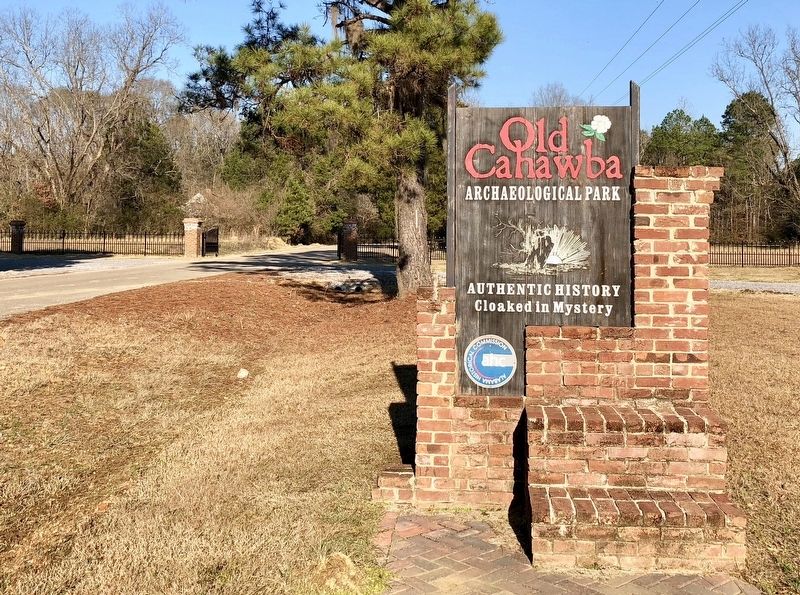
3. Entrance sign to the Cahawba Archaeological Park.
Other nearby markers. At least 8 other markers are within walking distance of this location: Cahawba’s Current Residents (here, next to this marker); Cahawba's Changing Landscape (a few steps from this marker); Black Belt Transformations (a few steps from this marker); What Happened to Cahaba (within shouting distance of this marker); Alabama's First Gothic Revival Church (within shouting distance of this marker); C.C. Pegues & His Most Unusual Home (approx. 0.2 miles away); Who Lived Here? (approx. 0.3 miles away); Anna Gayle Fry House (approx. 0.3 miles away). Touch for a list and map of all markers in Cahaba.
Another marker is no longer nearby. Missing Pieces (was within shouting distance of this marker but has been permanently removed).
Additional keywords. forced relocation
Credits. This page was last revised on April 21, 2024. It was originally submitted on January 14, 2018, by Mark Hilton of Montgomery, Alabama. This page has been viewed 1,300 times since then and 46 times this year. Photos: 1, 2, 3. submitted on January 14, 2018, by Mark Hilton of Montgomery, Alabama.
