The National Mall in Southwest Washington in Washington, District of Columbia — The American Northeast (Mid-Atlantic)
Wetlands
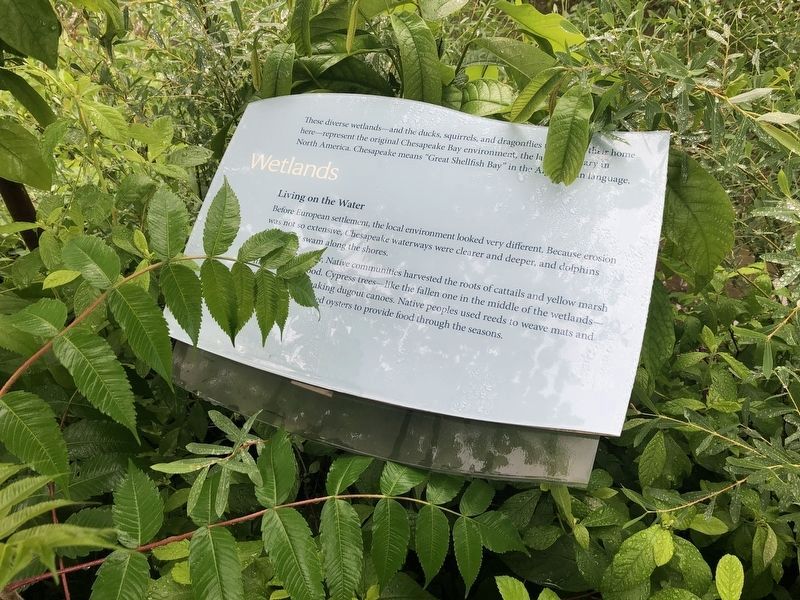
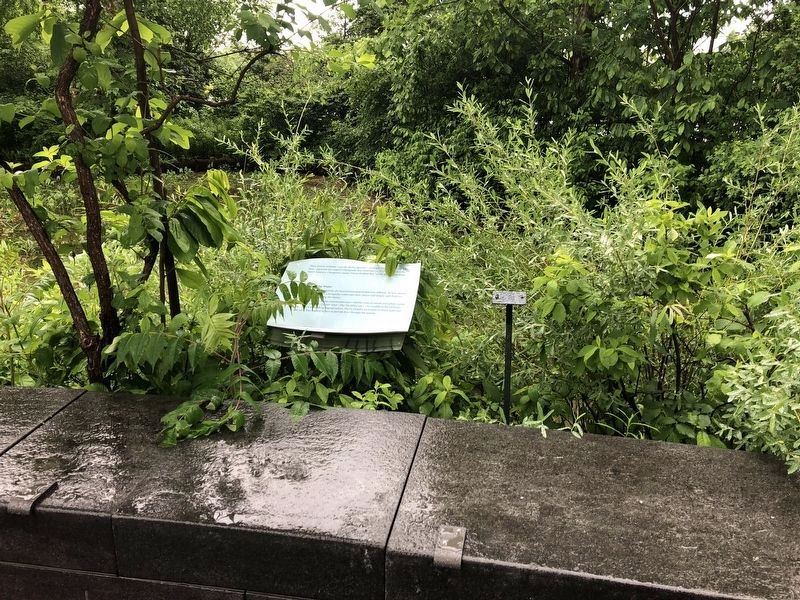
These diverse wetlands—and the ducks, squirrels, and dragonflies that make their home here—represent the original Chesapeake Bay environment, the largest estuary in North America. Chesapeake means "Great Shellfish Bay" in the Algonquian language.
Living on the Water
Before European settlement, the local environment looked very different. Because erosion was not so extensive, Chesapeake waterways were clearer and deeper, and dolphins frequently swam along the shores.
During the winter, Native communities harvested the roots of cattails and yellow marsh marigolds for food. Cypress trees—like the fallen one in the middle of the wetlands—were prized for making dugout canoes. Native peoples used reeds to weave mats and fish nets. They roasted oysters to provide food through the seasons.
Erected by Smithsonian Institution.
Topics. This historical marker is listed in these topic lists: Anthropology & Archaeology • Environment • Indigenous Peoples and Communities.
Location. This marker has been replaced by another marker nearby. It was located near 38° 53.299′ N, 77° 0.951′ W.
this page online

Regionally, this marker was in the Washington Metropolitan Area. It was also in the American Northeast, in the Upper South, in the Mid-Atlantic, in the Tidewater, and in the Chesapeake Bay Region. Globally, it was in North America, the Western Hemisphere, the Western World, and the Anglosphere.
Other nearby markers. At least 4 other markers are within walking distance of this location: National Native American Veterans Memorial (a few steps from this marker); Cardinal Direction Marker: East (a few steps from this marker); a different marker also named George Rivera (within shouting distance of this marker); Traditional Croplands (within shouting distance of this marker). Touch for a list and map
Other markers no longer nearby. Wingapo (was a few steps from this marker but has been replaced with another marker now near it); Bald Cypress • Ártu (ar-too) (was a few steps from this marker but has been permanently removed); Broadleaf Cattail • Káhkáhaskwar (kaw-kaw-has-quar) (was a few steps from this marker but has been permanently removed); Swamp Milkweed • Wihsakán (wee-sah-quam) (was a few steps from this marker but has been permanently removed); Can you find symbols… (was a few steps from this marker but has been permanently removed); a different marker also named Cardinal Direction Marker: East (was within shouting distance of this marker but has been replaced with another marker now near it); What is a Grandfather Rock? (was within shouting distance of this marker but has been permanently removed); George Rivera (was within shouting distance of this marker but has been replaced with another marker now near it); Sunflower • Wádxaweew (wah-ha-way-oh) (was within shouting distance of this marker but has been permanently removed); Witchhazel • Suhwe?t (suh-whet) (was within
Photographed by Devry Becker Jones (CC0), November 24, 2022
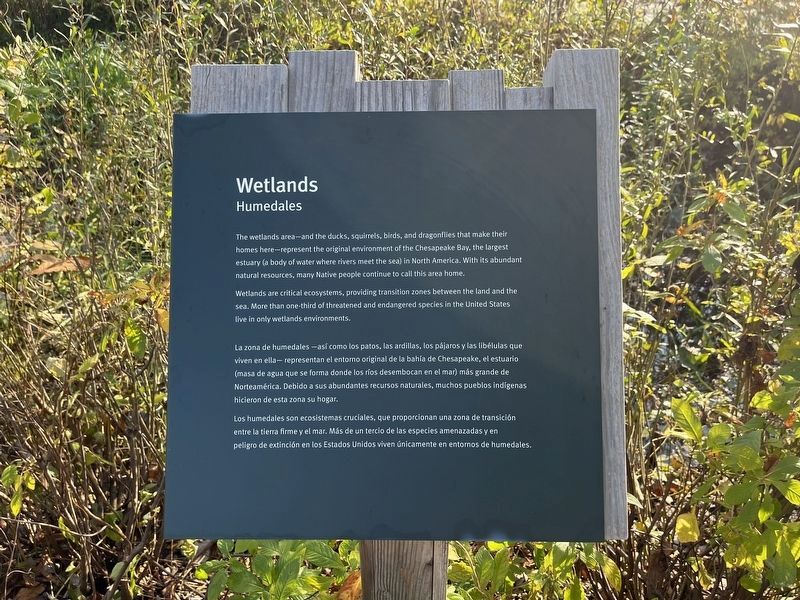
3. The replacement for the Wetlands marker
This replacement marker features no historical information.
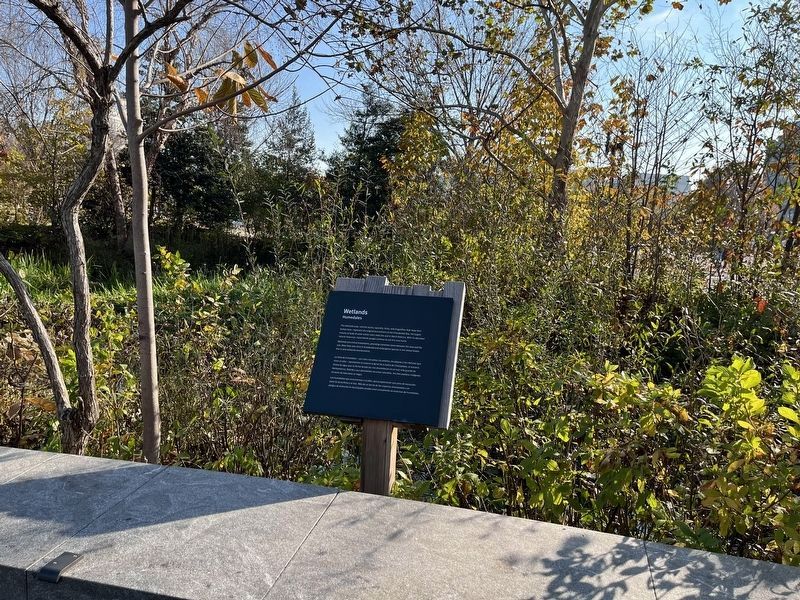
Photographed by Devry Becker Jones (CC0), November 24, 2022
4. The replacement for the Wetlands marker in context
Credits. This page was last revised on August 25, 2024. It was originally submitted on November 14, 2017, by Devry Becker Jones of Washington, District of Columbia. This page has been viewed 293 times since then and 12 times this year. Last updated on February 10, 2018, by Devry Becker Jones of Washington, District of Columbia. Photos: 1, 2. submitted on May 13, 2019, by Devry Becker Jones of Washington, District of Columbia. 3, 4. submitted on November 24, 2022, by Devry Becker Jones of Washington, District of Columbia. • Bill Pfingsten was the editor who published this page.
