Tancoyol in Jalpan de Serra, Querétaro, Mexico — The Central Highlands (North America)
Nuestra Señora de la Luz de Tancoyol Franciscan Mission
Sierra Gorda Franciscan Missions UNESCO World Heritage Site
Photographed by J. Makali Bruton, July 14, 2018
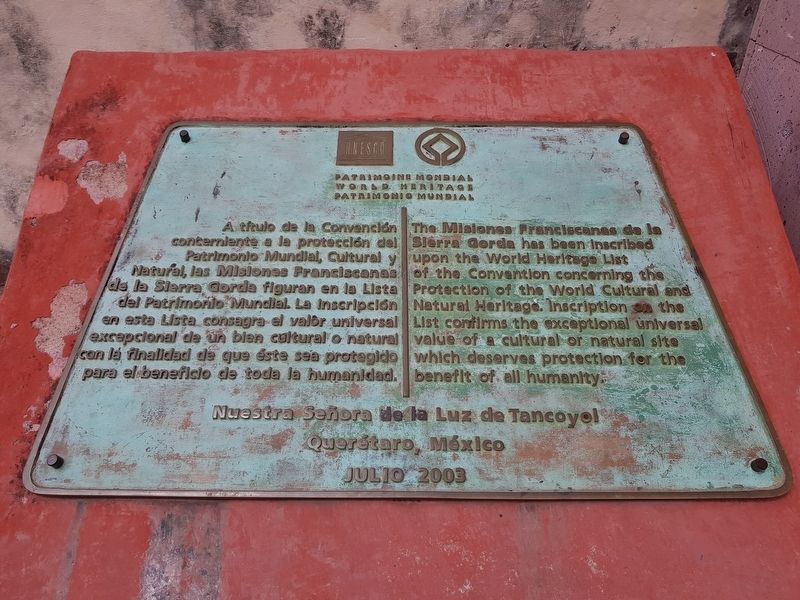
1. Nuestra Señora de la Luz de Tancoyol Franciscan Mission Marker

A título de la Convención concierniente a la protección del Patrimonio Mundial, Cultural y Natural, las Misiones Franciscanas de la Sierra Gorda figurán en la Lista del Patrimonio Mundial. La inscripción en esta Lista consagra el valor universal excepcional de un bien cultural o natural con la finalidad de que éste sea protegido para el beneficio de toda la humanidad.
Nuestra Señora de la Luz de Tancoyol
Querétaro, México
Julio 2003
Erected by United Nations Educational, Scientific and Cultural Organization.
Topics and series. This historical marker is listed in these topic lists: Colonial Era • Man-Made Features • Religion & Religious Structures. In addition, it is included in the UNESCO World Heritage Sites
this page online
Location. 21° 23.943′ N, 99° 19.794′ W. Marker is in Tancoyol, Querétaro, in Jalpan de Serra. It can be reached from Route 190, on the right when traveling north. Touch for map. Marker is in this post office area: Tancoyol QUE 76350, Mexico. Touch for directions.

Regionally, this marker is in Central Mexico and in the Bajío. Globally, it is in North America, specifically in Mesoamerica, on the Ring of Fire, and in the Western Hemisphere. Historically, it finds itself in what was once New Spain, a Spanish colony, and the Aztec Empire.
Other nearby markers. At least 8 other markers are within 26 kilometers of this marker, measured as the crow flies: 250th Anniversary of the Founding of the Mission at Tancoyol (within shouting distance of this marker); Saint Junípero Serra and the Five Sierra Gorda Missions (approx. 15.7 kilometers away); 100th Anniversary of the Construction of the Temple of Purísima de Arista (approx. 21.2 kilometers away); The Sierra Gorda Historical Museum (approx. 25.1 kilometers away); Chronology of the Saint James Mission of Jalpan (approx. 25.2
Photographed by J. Makali Bruton, July 14, 2018
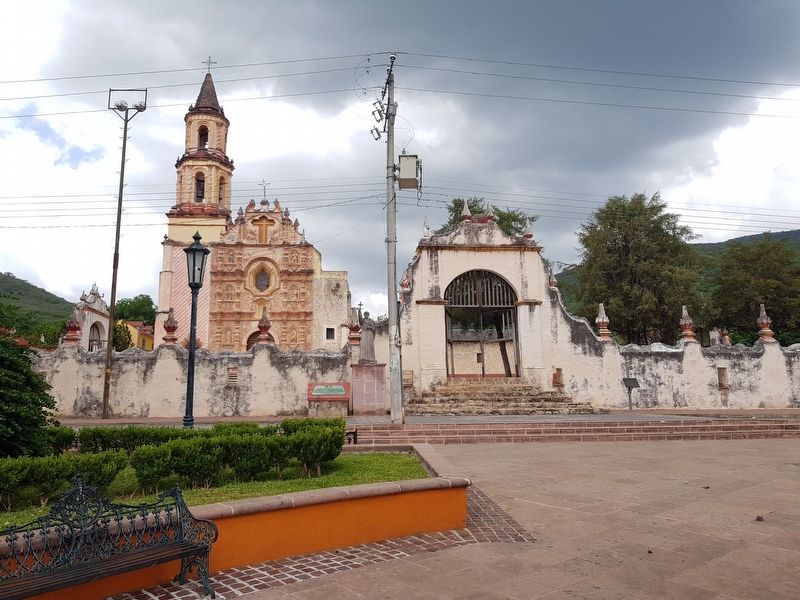
2. Nuestra Señora de la Luz de Tancoyol Franciscan Mission Marker
The marker can be seen to the left of the entrance to the atrium of the mission, to the left of a statue of Saint Junípero Serra. The additional marker is to the right of the entrance. The mission church is in the background.
Photographed by J. Makali Bruton, July 14, 2018
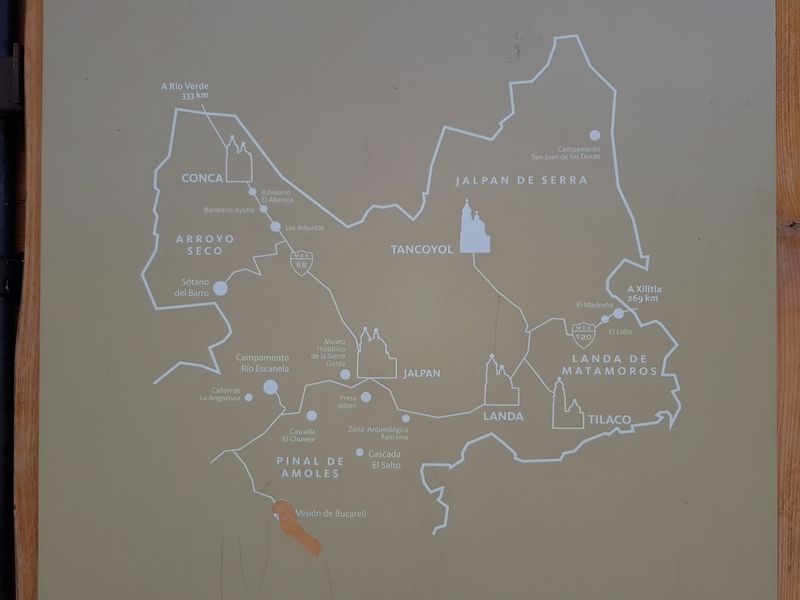
3. A map in the Tancoyol central park of the Sierra Gorda Franciscan Missions
Photographed by J. Makali Bruton, July 14, 2018
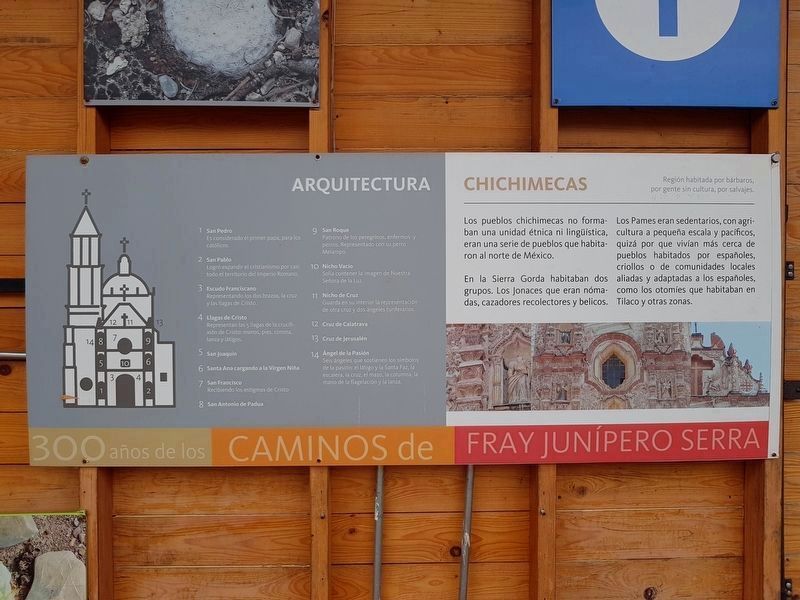
4. An additional marker near the Tancoyol central square
Arquitectura
1 San Pedro Es considerado el primer papa, para los católicos.
2 San Pablo Logró expandir el cristianismo por casi todo el territorio del Imperio Romano.
3 Escudo Franciscano Representando los dos brazos, la cruz y las llagas de Cristo
4 Llagas de Cristo Representan las 5 llagas de la crucifixión de Cristo: manos, pies, corona, lanza y látigos.
5 San Joaquín
6 Santa Ana cargando a la Virgen Niña
7 San Francisco Recibiendo lose stigmas de Cristo
8 San Antonio de Padua
9 San Roque Patrono de los peregrinos, enfermos y perros. Representado con su perro Melampo.
10 Nicho Vacio Solia contener la imagen de Nuestra Señora de la Luz.
11 Nicho de Cruz Guarda en su interior la representación de otra cruz y dos ángeles turiferarios.
12 Cruz de Calatrava
13 Cruz de Jerusalén
14 Ángel de la Pasión Seis ángeles que sostienen los símbolos de la pasión: el látigo y la Santa Faz, la escalera, la cruz, el mazo, la columna, la mano de la flagelación y la lanza.
Chichimecas
Región habitada por bárbaros, por gente sin cultura, por salvajes.
Los pueblos chichimecas no formaban una unidad étnica ni lingüística, eran una serie de pueblos que habitaron al norte de México.
En la Sierra Gorda habitaban dos grupos. Los Jonaces que eran nómadas, cazadores recolectores y belicos. Los Pames eran eran sedentarios, con agricultura a pequeña escala y pacíficos, quizá por que vivían más cerca de pueblos habitados por españoles, criollos o de comunidades locales aliadas y adaptadas a los españoles, como los otomíes que habitaban en Tilaco y otras zonas.
300 years of the Path Friar Junípero Serra
Architecture
1 Saint Peter He is considered to be the first pope, for Catholics.
2 Saint Paul He expanded Christianity throughout most of the territory of the Roman Empire.
3 Franciscan Shield Represented by two arms, the cross and the wounds of Christ
4 Wounds of Christ Representing the 5 wounds of the crucifixion of Christ: hands, feet, crown, spear and whips.
5 Saint Joachim
6 Saint Anna carrying the Virgin Girl
7 Saint Francis Receiving the stigmas of Christ
8 Saint Anthony of Padua
9 Saint Roch Patron of pilgrims, the sick and dogs. Represented with his dog Melampo.
10 Empty Niche Used to contain the image of Our Lady of Light.
11 Niche of the Cross It houses in its interior the representation of another cross and two angels with lighted incense.
12 Cross of Calatrava
13 Cross of Jerusalem
14 Angel of the Passion Six angels holding the symbols of the Passion: the whip and the Holy Face, the ladder, the cross, the mallet, the column, the flogging hand and the spear.
Chichimecas
A region inhabited by barbarians, by people without culture, by savages.
The Chichimeca people did not form an ethnic or linguistic group, they were a series of peoples that inhabited the north of Mexico.
In Sierra Gorda two groups of Chichimecas lived here. The Jonaces were nomads, hunter-gatherers and warlike. The Pames were sedentary, practiced small-scale agriculture and were peaceful, perhaps because they lived closer to towns inhabited by Spaniards, Creoles or local communities allied and adapted to the Spanish, for example the Otomí who lived in Tilaco and other areas.
Photographed by J. Makali Bruton, July 14, 2018
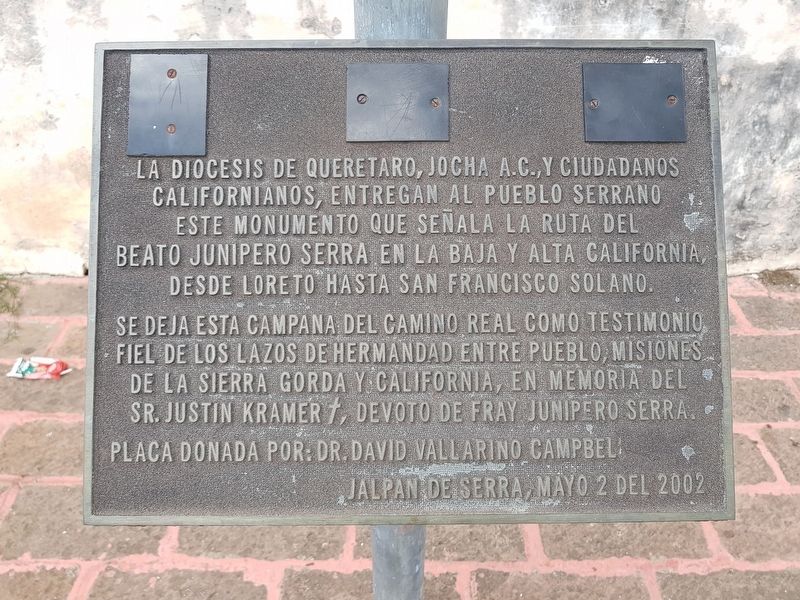
5. An additional, nearby Junípero Serra and Camino Real bell marker
This additional marker is to the right of the entrance to the atrium of the mission church. It probably had a Camino Real bell at one time. It reads:
La Diocesis de Queretaro, Jocha A.C., y ciudadanos californianos, entregan al pueblo serrano este monumento que señala la ruta del beato Junipero Serra en la Baja y Alta California, desde Loreto hasta San Francisco Solano. Se deja esta campana del Camino Real como testimonio fiel de los lazos de hermandad entre pueblo, misiones de la Sierra Gorda y California, en memoria del Sr. Justin Kramer✝, devoto de Fray Junipero Serra.
Placa donada por: Dr. David Vallarino Campbel
Jalpan de Serra, Mayo 2 del 2002
English translation:
The Diocese of Querétaro, Jocha A.C., and Californian citizens, give to the Serrano people this monument that marks the route of Blessed Junípero Serra in Baja and Alta California, from Loreto to San Francisco Solano. This bell of the Camino Real (Royal Road) is placed as a faithful testimony of the bonds of brotherhood between the people and missions of the Sierra Gorda and California, in memory of Mr. Justin Kramer✝, a devotee of Fray Junípero Serra.
Marker donated by: Dr. David Vallarino Campbel
Jalpan de Serra, May 2, 2002
Placa donada por: Dr. David Vallarino Campbel
Jalpan de Serra, Mayo 2 del 2002
Marker donated by: Dr. David Vallarino Campbel
Jalpan de Serra, May 2, 2002
Photographed by J. Makali Bruton, July 14, 2018
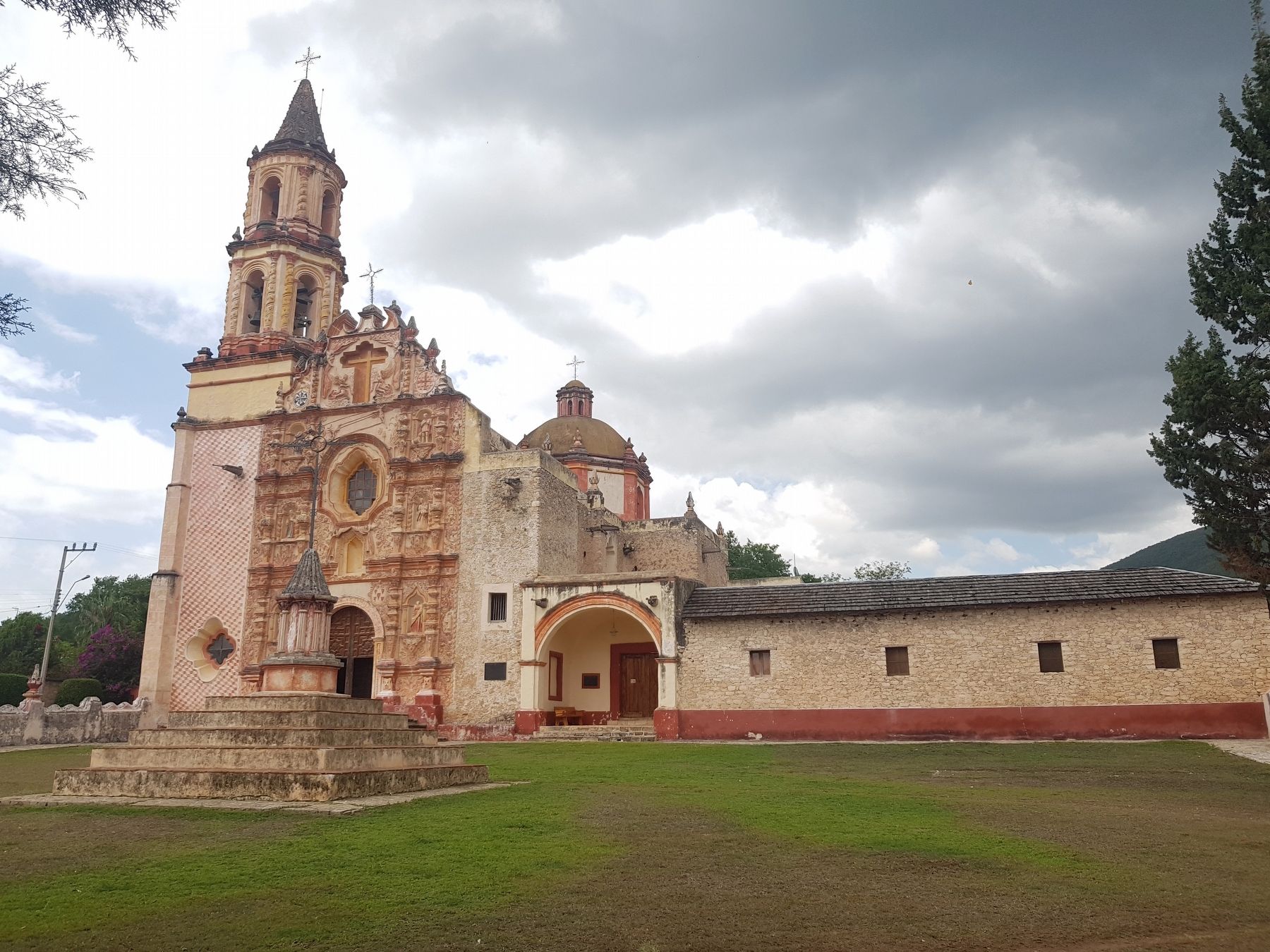
6. Nuestra Señora de la Luz de Tancoyol Franciscan Mission
Credits. This page was last revised on July 27, 2018. It was originally submitted on July 26, 2018, by J. Makali Bruton of Washington, District of Columbia. This page has been viewed 445 times since then and 34 times this year. Photos: 1, 2, 3. submitted on July 26, 2018, by J. Makali Bruton of Washington, District of Columbia. 4. submitted on July 27, 2018, by J. Makali Bruton of Washington, District of Columbia. 5, 6. submitted on July 26, 2018, by J. Makali Bruton of Washington, District of Columbia.
