Miamisburg in Montgomery County, Ohio — The American Midwest (Great Lakes)
The Miami Connection
Photographed by J. J. Prats, October 19, 2018
1. The Miami Connection Marker
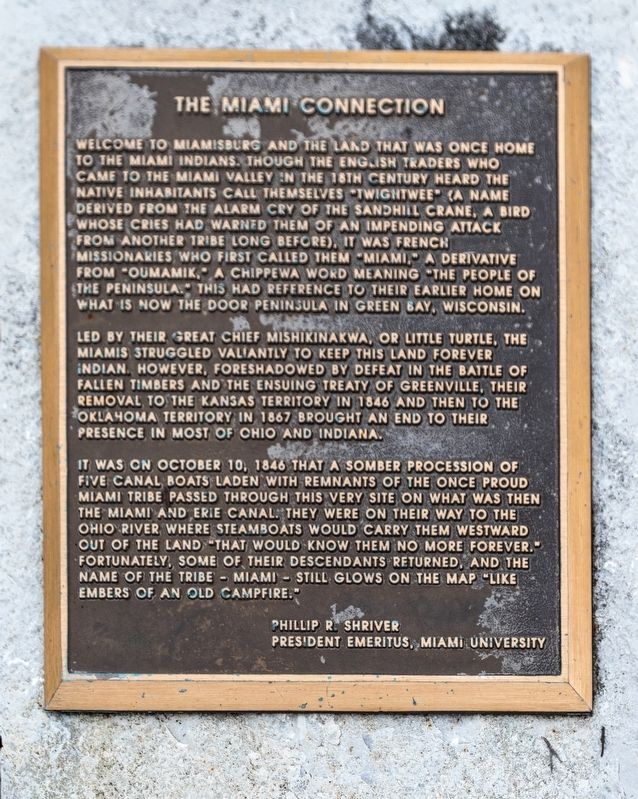
Welcome to Miamisburg and the land that was once home to the Miami Indians. Though the English traders who came to the Miami Valley in the 18th century heard the native inhabitants call themselves “twightwee” (a name derived from the alarm cry of the sandhill crane, a bird whose cries had warned them of an impending attack from another tribe long before) it was French missionaries who first called them “Miami,” a derivative from “Oumamik,” a Chippewa word meaning “the people of the peninsula.” This had reference to their earlier home on what is now the Door Peninsula in Green Bay, Wisconsin.
Led by their great chief Mishikinakwa, or little turtle, the Miamis struggled valiantly to keep this land forever Indian. However, foreshadowed by defeat in the Battle of Fallen Timbers and the ensuing Treaty of Greenville, their removal to the Kansas Territory in 1846 and then to the Oklahoma Territory in 1867 brought an end to their presence in most of Ohio and indiana. It was on October 10, 1846, that a somber procession of five canal boats laden with remnants of the once proud Miami tribe passed through
this page online
—Phillip R. Shriver, President Emeritus, Miami University
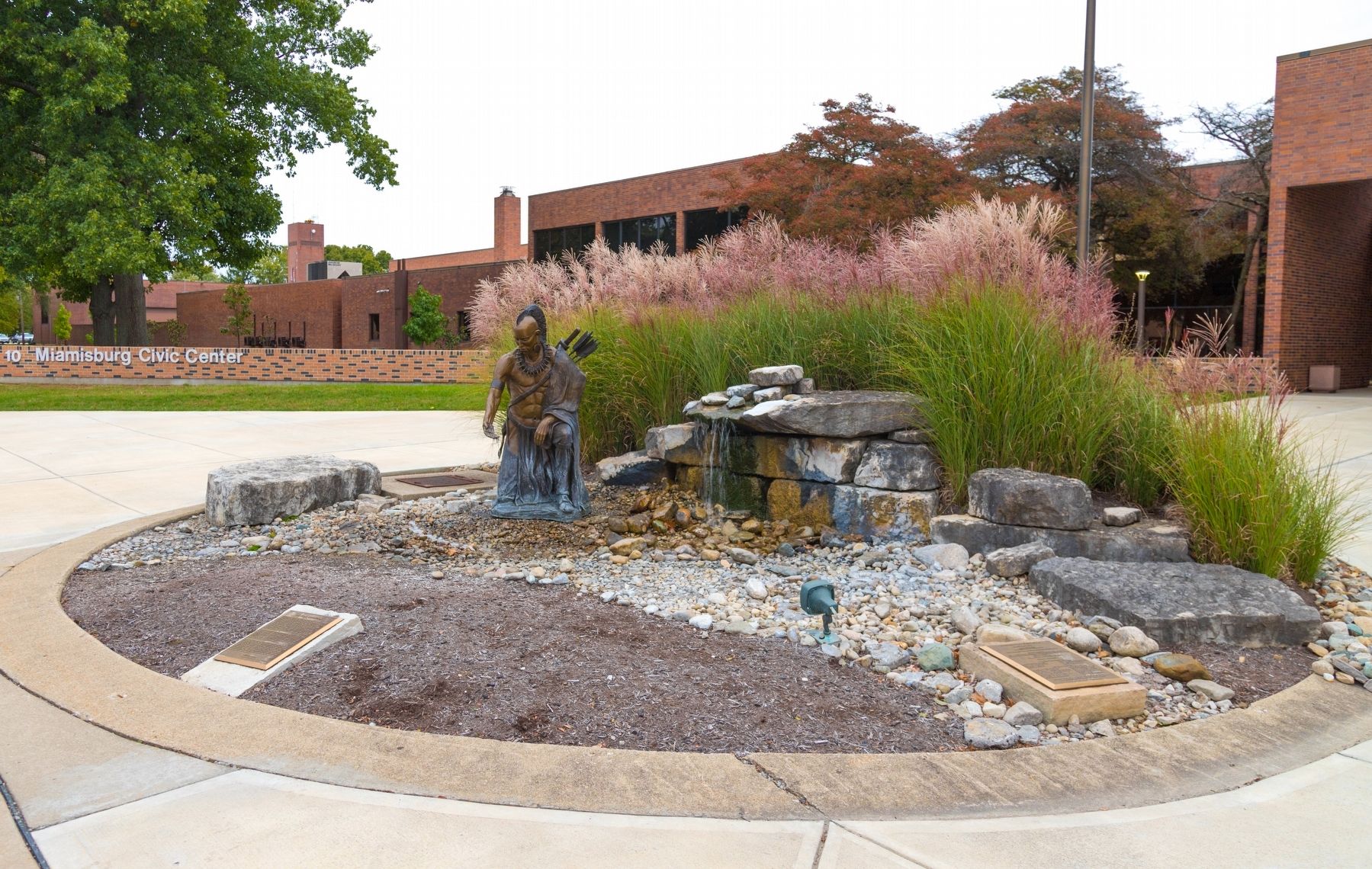
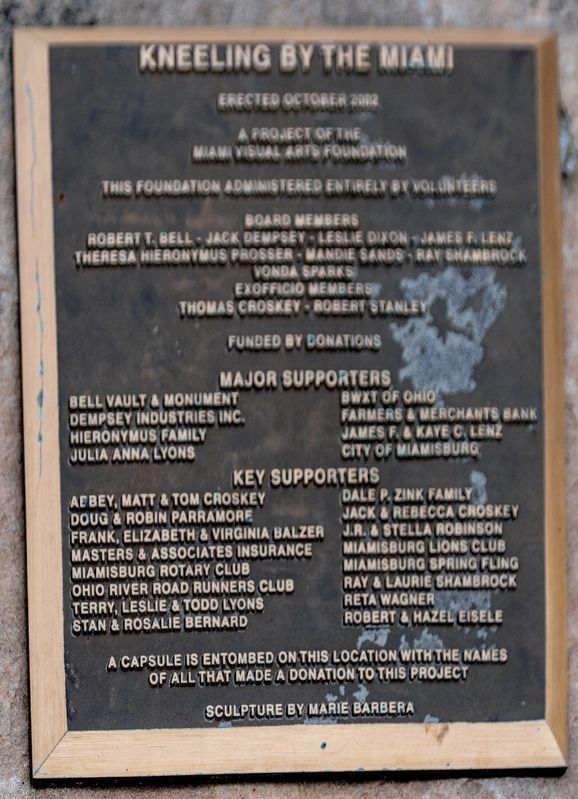
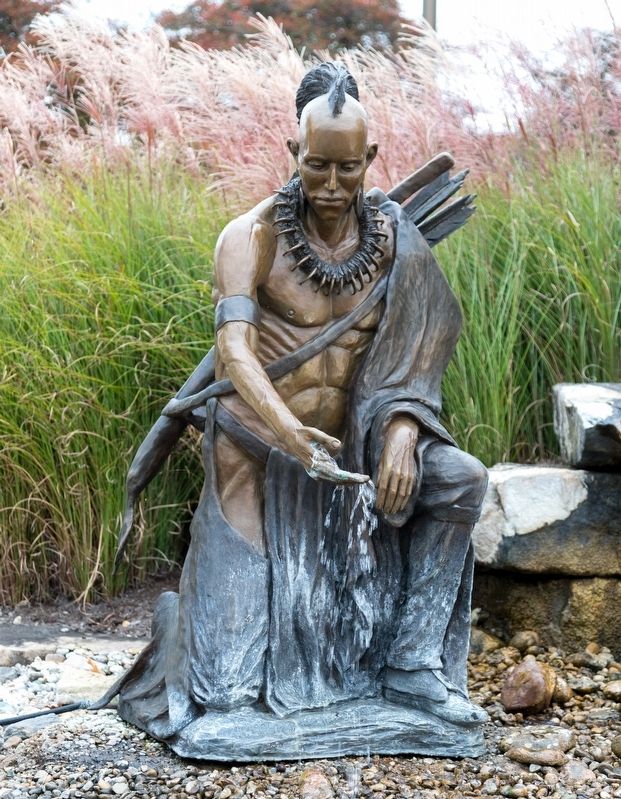
Kneeling by the Miami. Erected October 2002 • A Project of the Miami Visual Arts Foundation. • This foundation administered entirely by volunteers
Board Members: Robert T. Bell • Jack Dempsey • Leslie Dixon • James F. Lenz • Theresa Hieronymus Prosser • Mandie Sands • Ray Snambrock • Vonda Sparks •• Exofficio members: Thomas Croskey • Robert Stanley
Major Supporters: Bell Vault & Monument • Dempsey Industries Inc. • Hieronymus Family • Julia Anna Lyons, BWXT of Ohio • Farmers & Merchants Bank • James F. & Kaye C. Lenz • City of Miamisburg
Key Supporters: Abbey, Matt & Tom Croskey • Doug & Robin Parramore • Dale P. Zink Family • Jack & Rebecca Croskey • Frank, Elizabeth & Virginia Balzer • J.R. &
Photographed by J. J. Prats, October 19, 2018
2. Kneeling by the Miami
A capsule is entombed on this location with the names of all that made a donation to this project.
Erected 2002.
Topics. This historical marker is listed in these topic lists: Indigenous Peoples and Communities • Notable Events • Settlements & Settlers • Wars, US Indian. A significant historical date for this entry is October 10, 1846.
Location. 39° 38.525′ N, 84° 17.256′ W. Marker is in Miamisburg, Ohio, in Montgomery County. It is on North 1st Street (Ohio Route 725) north of East Central Avenue, on the right when traveling north. Touch for map. Marker is in this post office area: Miamisburg OH 45342, United States of America. Touch for directions.

Regionally, this marker is in Ohio’s Dayton Metro and in the Miami Valley. It is also in the American Midwest and in the Corn Belt. Globally, it is in North America,
Photographed by J. J. Prats, October 19, 2018
3. Kneeling by the Miami Tablet
Other nearby markers. At least 8 other markers are within walking distance of this marker: Welcome to The Ginkgo Stage (about 700 feet away, measured in a direct line); History of the 1913 Flood in Miamisburg (about 700 feet away); Welcome To The Farmers & Merchants Bank Playground (about 800 feet away); Miamisburg in the Great Flood of 1913 (approx. 0.2 miles away); Miamisburg POW-MIA Memorial (approx. 0.2 miles away); Vietnam War (approx. 0.2 miles away); "Lest We Forget" (approx. 0.2 miles away); Korean Conflict (approx. 0.2 miles away). Touch for a list and map of all markers in Miamisburg.
Also see . . .
1. Wikipedia entry for the Miami People. “The Northwest Indian War ended with the Battle of Fallen Timbers and Treaty of Greenville. Those Miami who still resented the United States gathered around Ouiatenon and Prophetstown, where Shawnee Chief Tecumseh led a coalition of Native
Bronze by Marie Barbera, photograph by J.J. Prats, October 19, 2018
4. Kneeling by the Miami
2. Sculptures of Native Americans by Sculptor Marie Barbera. “Indigenous Americans are peoples of the earth and I feel I have developed a dialogue with them as I recreate their stories from their history into clay and into bronze. I develop my ideas from researching books. Something I read will intrigue me and I’ll seek out additional information and become so involved in that story that I will integrate it to my own remembrance. These stories allow me to relate to you, through my works...” (Submitted on December 9, 2018.)
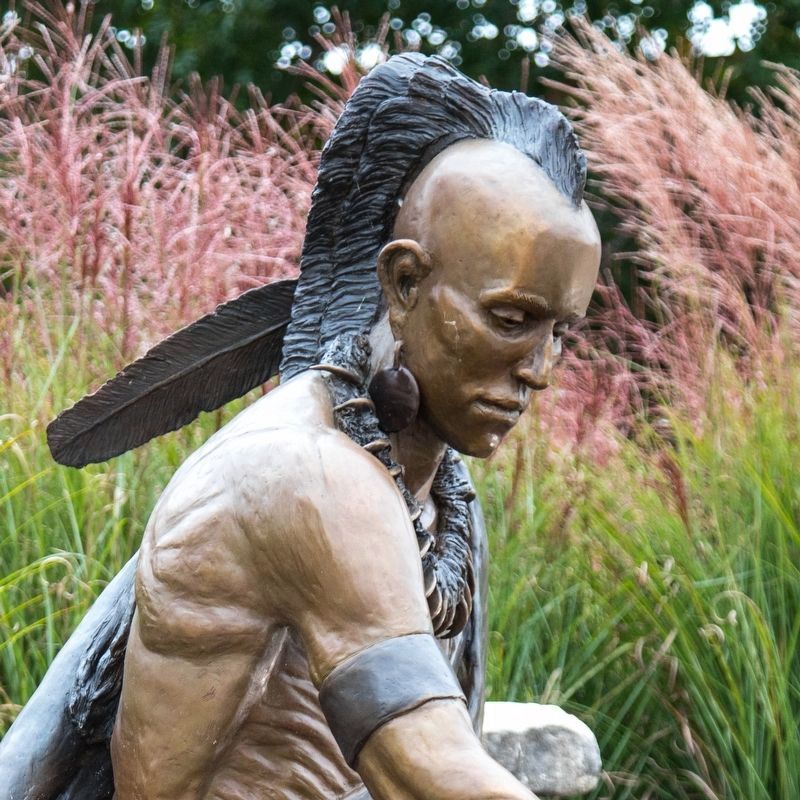
Bronze by Marie Barbera, photograph by J.J. Prats, October 19, 2018
5. Kneeling by the Miami
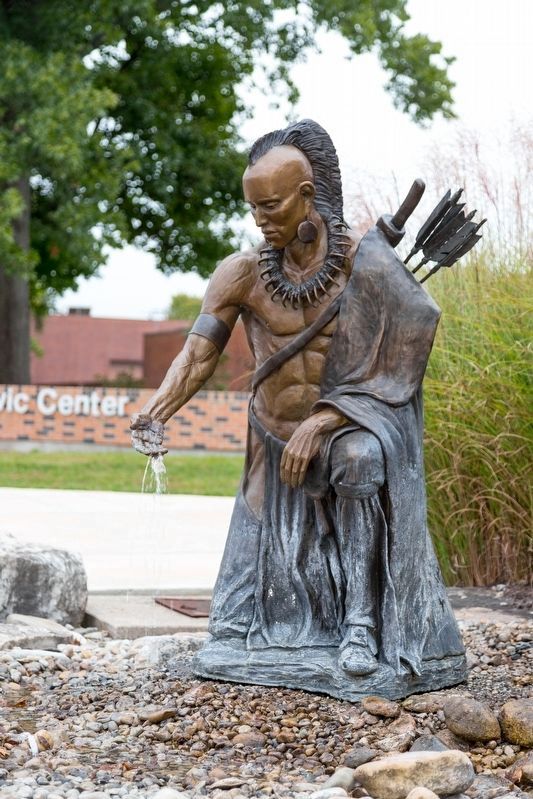
Bronze by Marie Barbera, photograph by J.J. Prats, October 19, 2018
6. Kneeling by the Miami
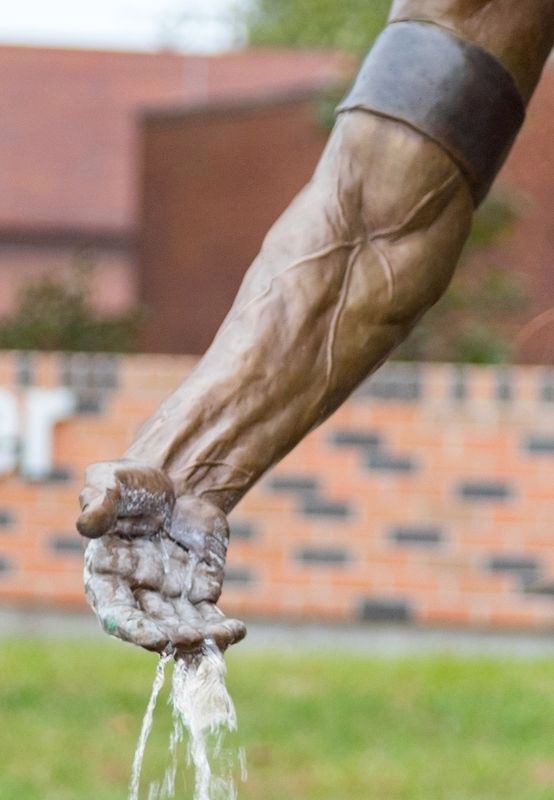
Bronze by Marie Barbera, photograph by J.J. Prats, October 19, 2018
7. Kneeling by the Miami
Credits. This page was last revised on August 4, 2025. It was originally submitted on December 9, 2018, by J. J. Prats of Powell, Ohio. This page has been viewed 906 times since then and 69 times this year. Last updated on January 14, 2019, by Craig Baker of Sylmar, California. Photos: 1, 2, 3, 4, 5, 6, 7. submitted on December 9, 2018, by J. J. Prats of Powell, Ohio.
