St. Simons Island in Glynn County, Georgia — The American South (South Atlantic)
Frederica — Tavernkeeper and Doctor
Fort Frederica National Monument
Photographed by Cosmos Mariner, March 10, 2016
1. Frederica — Tavernkeeper and Doctor Marker
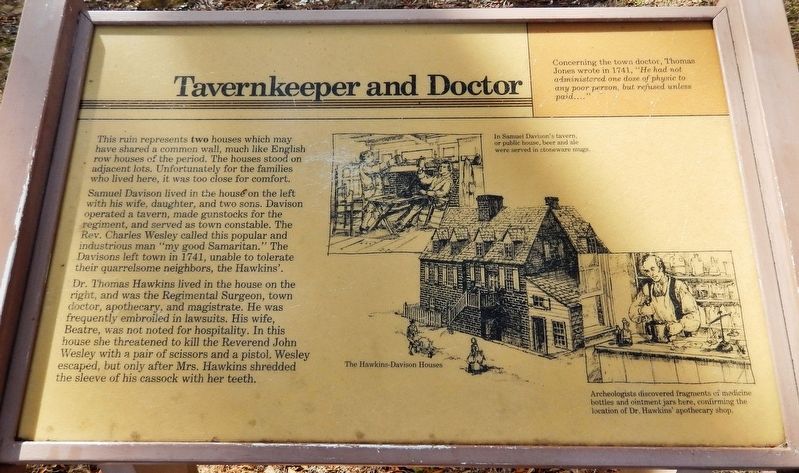
Concerning the town doctor, Thomas Jones wrote in 1741, "He had not administered one dose of physic to any poor person, but refused unless paid…”
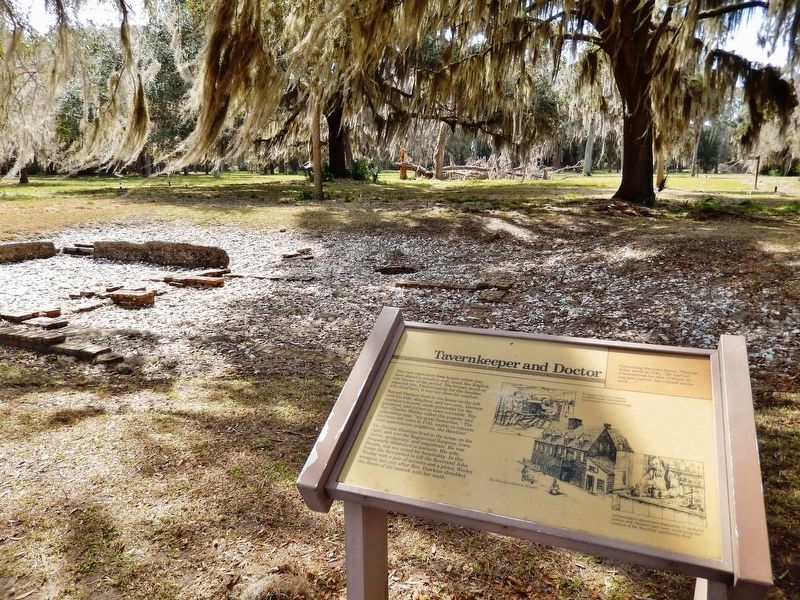
This ruin represents two houses which may have shared a common wall, much like English row houses of the period. The houses stood on adjacent lots. Unfortunately for the families who lived here, it was too close for comfort.
Samuel Davison lived in the house on the left with his wife, daughter, and two sons. Davison operated a tavern, made gunstocks for the regiment, and served as town constable. The Rev. Charles Wesley called this popular and industrious man "my good Samaritan." The Davisons left town in 1741, unable to tolerate their quarrelsome neighbors, the Hawkins’.
Dr. Thomas Hawkins lived in the house on the right, and was the Regimental Surgeon, town doctor, apothecary, and magistrate. He was frequently embroiled in lawsuits. His wife, Beatre, was not noted for hospitality. In this house she threatened to kill the Reverend John Wesley with a pair of scissors and a pistol. Wesley escaped, but only after Mrs. Hawkins shredded the sleeve of his cassock with her teeth.
Erected by National
this page online
Topics. This historical marker is listed in these topic lists: Anthropology & Archaeology • Colonial Era • Science & Medicine • Settlements & Settlers. A significant historical year for this entry is 1741.
Location. 31° 13.418′ N, 81° 23.527′ W. Marker is on St. Simons Island, Georgia, in Glynn County. It can be reached from Mimosa Drive 0.3 miles west of Frederica Road. Marker is located along the interpretive trail at Fort Frederica National Monument. Touch for map. Marker is at or near this postal address: 6515 Frederica Road, Saint Simons Island GA 31522, United States of America. Touch for directions.

Regionally, this marker is on the Coastal Plain, on the Georgia Coast and the Golden Isles, and on the Sea Islands. It is also in the American South, specifically in the Deep South, and on the Eastern Seaboard. Globally, it is in the North Atlantic Region, North America, the Western Hemisphere, the Western World, and the Anglosphere. Historically, it finds itself in what was once New Spain, the territory of the Mississippian Culture, one of the original Thirteen
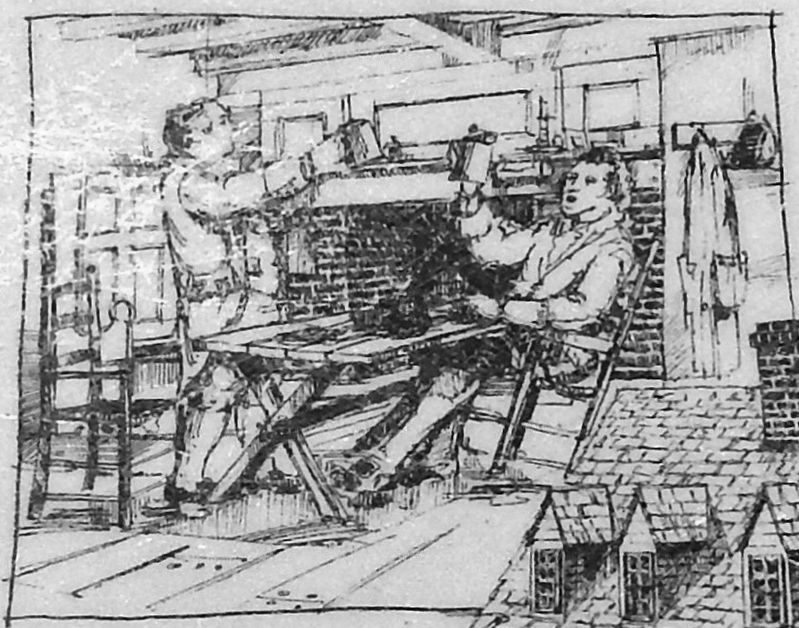
2. Marker illustration: Samuel Davison's Tavern
In Samuel Davison's tavern, or public house, beer and ale were served in stoneware mugs.
Other nearby markers. At least 8 other markers are within walking distance of this marker: Five Years at Frederica (within shouting distance of this marker); Patrick and Priscilla Houstoun (within shouting distance of this marker); Frederica — Keeper of the Kings Stores (within shouting distance of this marker); Frederica - Candlemaker (within shouting distance of this marker); Frederica - Indian Interpreter (within shouting distance of this marker); Citadel of the Town of Frederica (within shouting distance of this marker); Frederica — Carpenter and Oarmaker (about 300 feet away, measured in a direct line); Frederica — Destroyed by Fire (about 300 feet away). Touch for a list and map of all markers in St. Simons Island.
Also see . . . Fort Frederica National Monument. After more than 275 years, the fort community is now an archeological site with some exposed building foundations and other remains. For the new community to succeed, it needed settlers with a variety of skills. The buildings used by residents of the city included the Hawkins-Davison
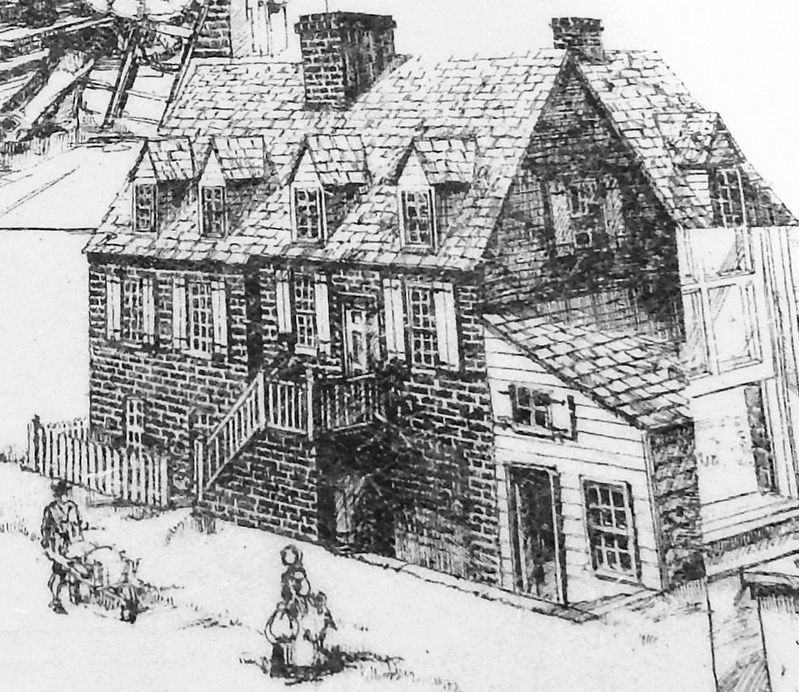
3. Marker illustration: The Hawkins-Davison Houses

4. Marker illustration: Dr. Hawkins' Apothecary Shop
Archeologists discovered fragments of medicine bottles and ointment jars here, confirming the location of Dr. Hawkins' apothecary shop.
Photographed by Cosmos Mariner, March 10, 2016
5. Frederica — Tavernkeeper and Doctor Marker
Credits. This page was last revised on April 3, 2021. It was originally submitted on March 12, 2021, by Cosmos Mariner of Cape Canaveral, Florida. This page has been viewed 535 times since then and 53 times this year. Photos: 1, 2, 3, 4, 5. submitted on March 15, 2021, by Cosmos Mariner of Cape Canaveral, Florida.
