Near Boyce in Clarke County, Virginia — The American South (Mid-Atlantic)
Blandy Experimental Farm
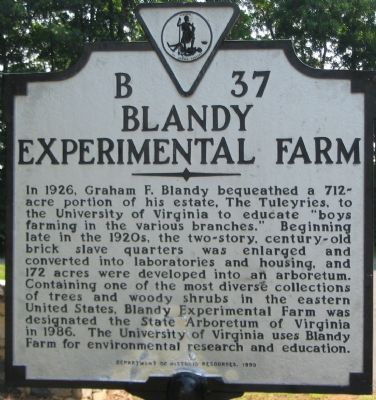
Photographed by Craig Swain, July 15, 2007
1. Blandy Experimental Farm Marker
Erected 1999 by Department of Historic Resources. (Marker Number B-37.)
Topics and series. This historical marker is listed in these topic lists: Agriculture • Education • Horticulture & Forestry • Science & Medicine. In addition, it is included in the Virginia Department of Historic Resources (DHR) series list. A significant historical year for this entry is 1926.
Location. 39° 4.157′ N, 78° 3.745′ W. Marker is near Boyce, Virginia, in Clarke County. It is at the intersection of John
this page online

Regionally, this marker is in the Washington Metropolitan Area and in Northern Virginia. It is also in the American South, specifically in the Upper South, and in the Mid-Atlantic. Globally, it is in North America, the Western Hemisphere, the Western World, and the Anglosphere. Historically, it finds itself in what was once the territory of the Mississippian Culture, one of the original Thirteen Colonies, one of the Confederate States of America, and the Antebellum South.
Other nearby markers. At least 8 other markers are within 2 miles of this marker, measured as the crow flies: Millwood (approx. 1.3 miles away); The Burwell-Morgan Mill (approx. 1.3 miles away); Greenway Historic District (approx. 1.3 miles away); Greenway Court (approx. 1½ miles away); Carter Hall (approx. 1½ miles away); Long Branch (approx. 1.6 miles away);
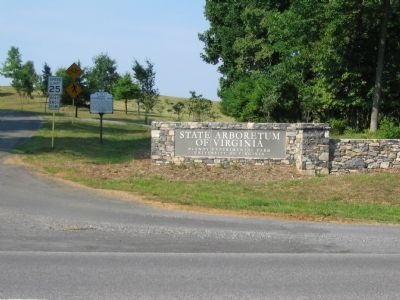
Photographed by Craig Swain, July 15, 2007
2. Entrance to the State Arboretum
Also see . . .
1. Blandy Experimental Farm. (Submitted on July 22, 2007, by Craig Swain of Leesburg, Virginia.)
2. Virginia Birding and Wildlife Trail. Article featuring a trail stop at Blandy. (Submitted on July 22, 2007, by Craig Swain of Leesburg, Virginia.)
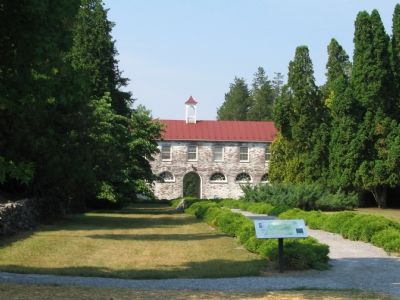
Photographed by Craig Swain, July 15, 2007
3. Entrance to the Quarters
Originally a slave quarters for the Tuleyries, portions of the building date to the 1820s or 1830s. Dr. Orland E. White, who directed the farm from 1927 to 1955, added more dormitory, office, library, and administrative spaces starting in the 1940s.
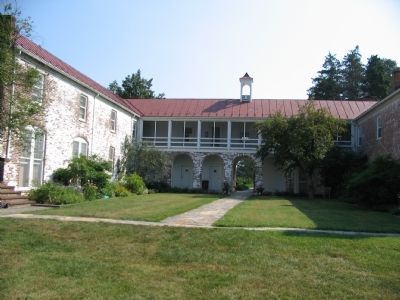
Photographed by Craig Swain, July 15, 2007
4. Interior Courtyard of the Quaters
Photographed by Craig Swain, July 15, 2007
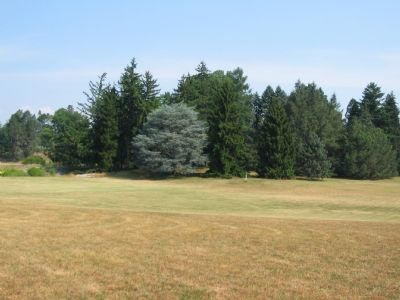
5. Conifer Collection
A walking tour starting behind the quarters features one of the most diverse conifer collections in the United States.
Photographed by Craig Swain, July 15, 2007
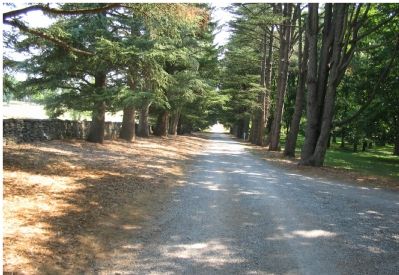
6. Cedars of Lebanon
The driving tour through the grounds takes a visitor down old country lanes lined with Cedars of Lebanon. Planted in 1932, these are in a grove also including Norway Spruce, native oak and chestunts.
Photographed by Craig Swain, July 15, 2007
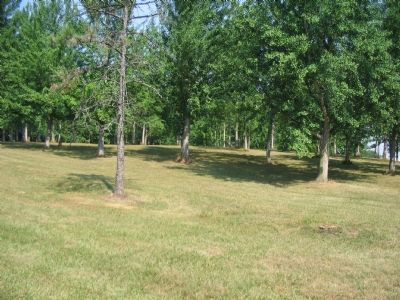
7. Ginkgo Grove
With 340 trees, this is one of the largest collections of Ginkgo trees outside of China. The grove started in the 1930s from seedlings brought from the Charlottsville campus of University of Virginia.
Photographed by Craig Swain, July 15, 2007
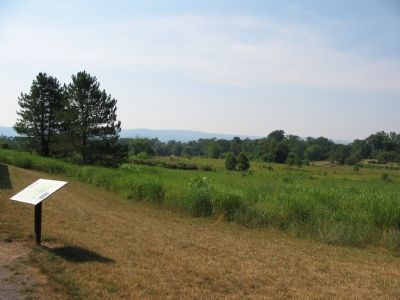
8. Native Meadows
Blandy also conducts experiments with the species native to the Shenandoah Valley. In particular the warm season grasses and wildflowers. The meadow also blooms in April with quince, crabapple, and plum.
Photographed by Craig Swain, July 15, 2007
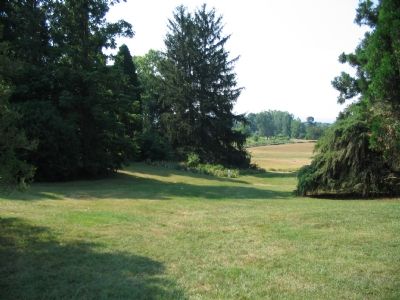
9. Walking the Grounds
Not only does Blandy offer exhibits of native and non-native species, but additionally some exceptional views of the surrounding landscape, to include the Blue Ridge Mountains to the east.
Photographed by Craig Swain, July 15, 2007
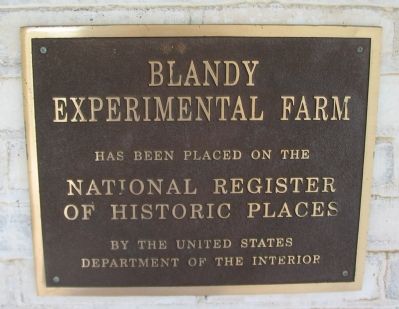
10. Blandy Experimental Farm is on the National Register of Historic Places
Credits. This page was last revised on August 6, 2020. It was originally submitted on July 22, 2007, by Craig Swain of Leesburg, Virginia. This page has been viewed 3,367 times since then and 47 times this year. Photos: 1, 2, 3, 4, 5, 6, 7, 8, 9, 10. submitted on July 22, 2007, by Craig Swain of Leesburg, Virginia. • J. J. Prats was the editor who published this page.
