Astor in Lake County, Florida — The American South (South Atlantic)
Astor: "The Jewel of the St. Johns River"
Florida Black Bear Scenic Byway

Photographed by Cosmos Mariner, December 15, 2021
1. Astor: "The Jewel of the St. Johns River" Marker
A wide diversity of people have traversed this spot on the St. Johns River, starting with the ancient tribes and Timucuan and Mayacan Indians. The St. Johns River was named one of fourteen American Heritage Rivers because of its importance to the life, culture and history of the area.
Early Settlers
In 1562 a French Huguenot colony was established at the present site of Astor. The entire colony was wiped out by the Spanish in 1566.
"We found the third village of the savages on the West bank, halfway between a very big lake and a smaller one farther upstream on a likable spot in the shade of formidable trees. The river seems to be full of goodly fish, and the forest inhabited by all kinds of birds and beasts, the meat of which is quite tasty."
Don Pedro Menendez, while Exploring the St. John's River in early 1596, information from Astor Historical Society
Naturalist William Bartram
In 1765, famed botanist William Bartram explored the Astor area, declaring it an Eden in his book Travels, which includes over 70 pages about the Astor area.
The author was said to have worked under the beautiful "Bartram Oak" located in Astor near
this page online
"The Yearling" Connection
Marjorie Kinnan Rawlings won the Pulitzer Prize for her novel The Yearling, which was based upon her time spent in the Ocala National Forest living with the local families and listening to their stories.
Set in the late 1870s, both Astor and Volusia (the town across the river) factor into the novel's locations. The Baxter family took the ferry across to Volusia to buy goods at the general store.
For more Yearling history, visit the Yearling Trail on the byway.
The Astors
The wealthy Astor family of New York was interested in developing the area which is Astor today, and bought 12,000 acres in 1874. William Backhouse Astor, Jr. first called the town Manhattan and tourists visited his hotel on the St. Johns River by steamboat.
Just up SR 40, Astor Park grew up along the shores of Lake Schermerhorn, which was named for Astor's wife, Caroline Schermerhorn Astor. After William died, the town was renamed Astor.
William's son, John Jacob Astor IV, inherited his father's estate and continued to promote the area. Sadly, he died on the sinking Titanic in 1912, and his descendants

Library of Congress
2. Marker detail: Don Pedro Menendez
The Jewel of the St. Johns River
Astor is a thriving town along the Florida Black Bear Scenic Byway. The St. Johns River is the heart of the community, which makes boating, fishing, and nature the core of Astor's livelihood.
Topics. This historical marker is listed in these topic lists: Colonial Era • Indigenous Peoples and Communities • Settlements & Settlers • Waterways & Vessels. A significant historical year for this entry is 1562.
Location. 29° 10.013′ N, 81° 31.42′ W. Marker is in Astor, Florida, in Lake County. It can be reached from Front Street/Blackwater Lane just south of Butler Street (Florida Route 40). Marker is on the east side of scenic byway kiosk at the east end of the Williams Landing parking lot, near the Astor Bridge, on the west side of the St. Johns River. Touch for map. Marker is at or near this postal address: 55716 Front Street, Astor FL 32102, United States of America. Touch for directions.

Regionally, this marker is in Greater Orlando and in Central Florida. It is also in the American South. Globally, it is in the North
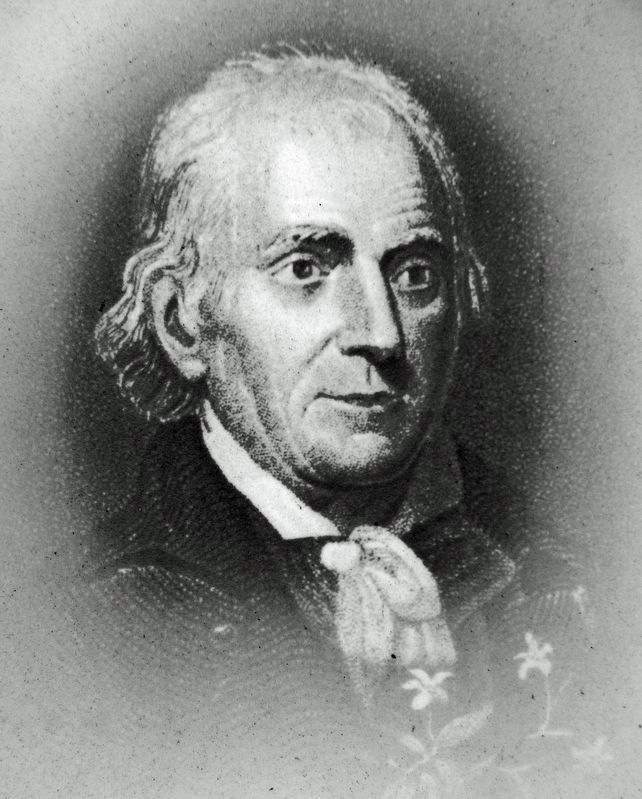
Library of Congress
3. Marker detail: William Bartram
Other nearby markers. At least 8 other markers are within 7 miles of this marker, measured as the crow flies: Volusia (approx. ¼ mile away); William Bartram Trail (approx. ¼ mile away); Fort Butler (approx. ¼ mile away); Quarter's House (approx. 6.1 miles away); Lewis Log Cabin (approx. 6.1 miles away); Convict Cage Wagon (approx. 6.1 miles away); Midway Methodist Church (approx. 6.1 miles away); Huntington Post Office (approx. 6.1 miles away).
Also see . . .
1. Astor, Florida. Florida Back Roads Travel website entry (Submitted on February 14, 2022, by Larry Gertner of New York, New York.)
2. Astor history can be traced back to first Spanish era in Florida. Orlando Sentinel website entry (Submitted on February 14, 2022, by Larry Gertner of New York, New York.)

University of Florida Archives
4. Marker detail: Marjorie Kinnan Rawlings,
author of “The Yearling”
author of “The Yearling”

West Volusia Historical Society
5. Marker detail: 1800s Travelers on the St. Johns River

Photographed by Cosmos Mariner, December 15, 2021
6. Astor: "The Jewel of the St. Johns River" Marker

Photographed by Cosmos Mariner, December 15, 2021
7. Astor Bridge (carries SR 40 across the St. Johns River)
Credits. This page was last revised on November 28, 2024. It was originally submitted on December 18, 2021, by Cosmos Mariner of Cape Canaveral, Florida. This page has been viewed 2,215 times since then and 157 times this year. Photos: 1, 2, 3, 4, 5, 6, 7. submitted on December 18, 2021, by Cosmos Mariner of Cape Canaveral, Florida.
