The San Agustín: St. Augustine’s Workboat
A New World Workhorse
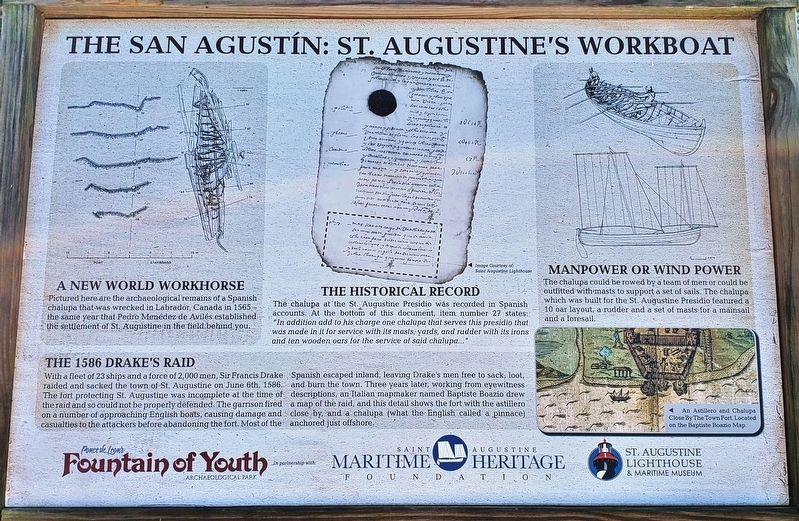
Pictured here are the archaeological remains of a Spanish chalupa that was wrecked in Labrador, Canada in 1565 — the same year that Pedro Menéndez de Avilés established the settlement of St. Augustine in the field behind you.
The Historical Record
The chalupa at the St. Augustine Presidio was recorded in Spanish accounts. At the bottom of this document, item number 27 states: ”In addition add to his charge one chalupa that serves this presidio that was made in it for service with its masts, yards, and rudder with its irons and ten wooden oars for the service of said chalupa…”
Manpower or Wind Power
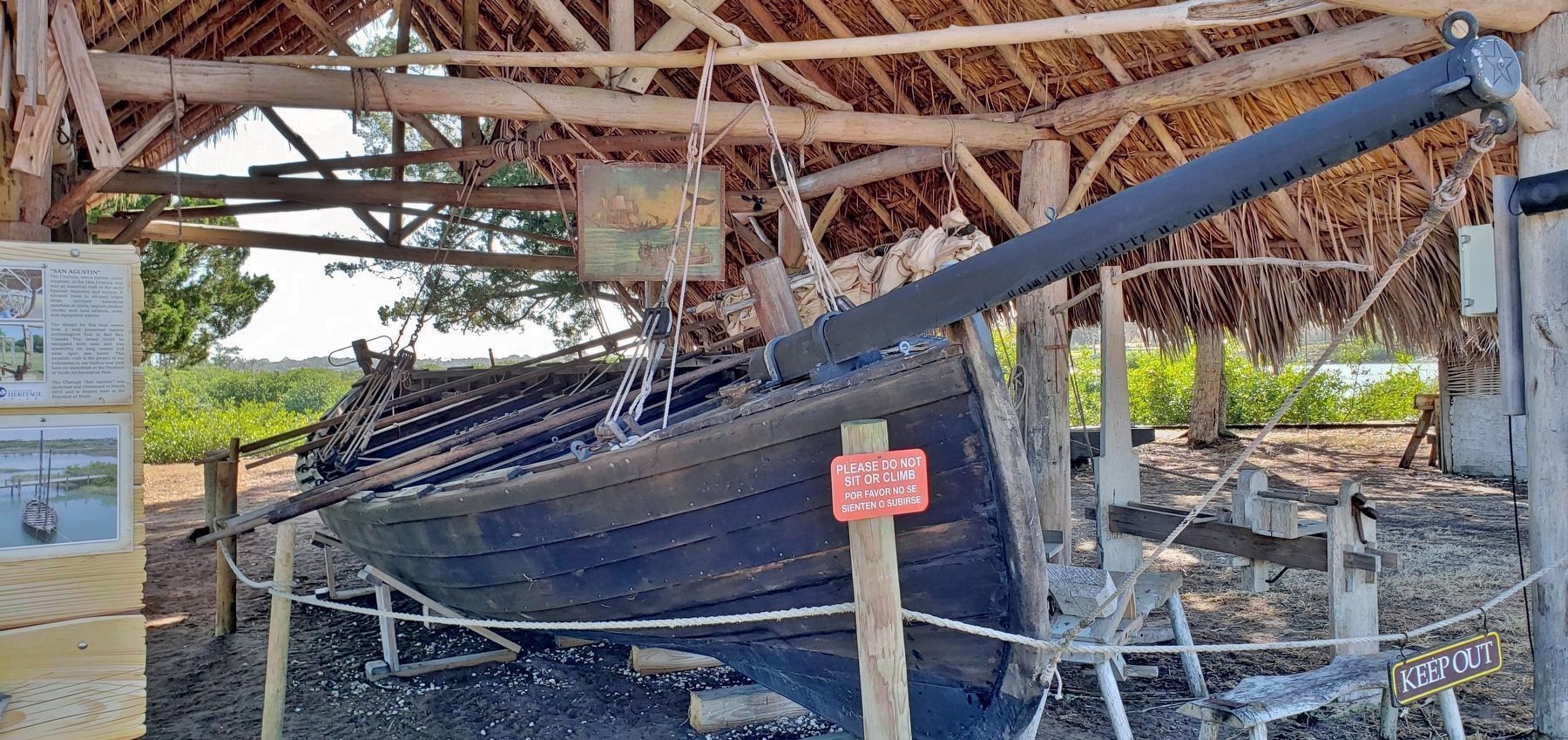
The chalupa could be rowed by a team of men or could be outfitted with masts to support a set of sails. The chalupa which was built for the St. Augustine Presidio featured a 10 oar layout, a rudder and a set of masts for a mainsail and a foresail.
The 1586 Drake’s Raid
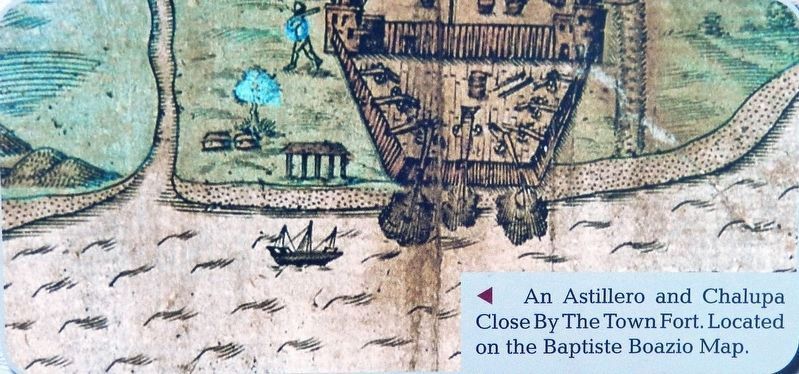
With a fleet of 23 ships and a force of 2,000 men, Sir Francis Drake raided and sacked the town of St Augustine on June 6th, 1586. The fort protecting St. Augustine was incomplete at the time of the raid and so could not be properly defended. The
this page online
Erected by Fountain of Youth Archaeological Park; Saint Augustine Maritime Heritage Foundation; and St. Augustine Lighthouse & Maritime Museum.
Topics. This historical marker is listed in these topic lists: Anthropology & Archaeology • Colonial Era • Forts and Castles • Waterways & Vessels. A significant historical date for this entry is June 6, 1586.
Location. 29° 54.362′ N, 81° 18.838′ W. Marker is in St. Augustine, Florida, in St. Johns County. It can be reached from Williams Street east of Magnolia Avenue. Marker is located along the interpretive trail in Ponce de León's Fountain of Youth Archaeological Park. Touch for map. Marker is at or near

Regionally, this marker is in First Coast and in Greater Jacksonville. It is also in the American South and on the Eastern Seaboard. Globally, it is in the North Atlantic Region, North America, a Gulf of Mexico state, the Western Hemisphere, the Western World, and the Anglosphere. Historically, it finds itself in what was once New Spain, the territory of the Mississippian Culture, one of the Confederate States of America, and the Antebellum South.
Other nearby markers. At least 8 other markers are within walking distance of this marker: "San Agustin" (a few steps from this marker); Block And Tackle (a few steps from this marker); Reef Knot (a few steps from this marker); Site of the First Fort San Juan de Pinos (within shouting distance of this marker); First Muster of Militiamen in the Continental United States (within shouting distance of this marker); 17th & 18th Century Cannons / 17o y Cañones del 18o siglo (within shouting distance of this marker); The Blacksmith Demonstration (within shouting distance
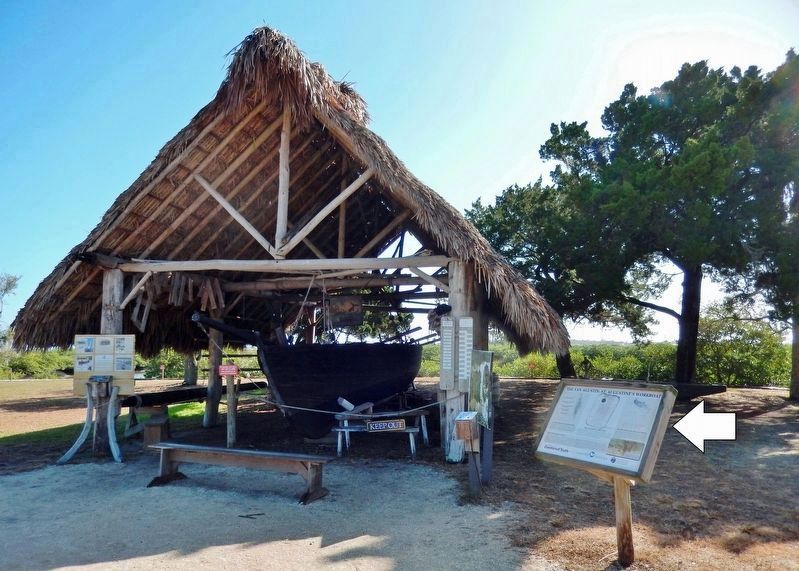
More about this marker. There are two identical copies of this marker — one on either side of the "San Agustín" Chalupa replica exhibit.
Related markers. Click here for a list of markers that are related to this marker. Ponce de León's Fountain of Youth Archaeological Park
(located near marker)
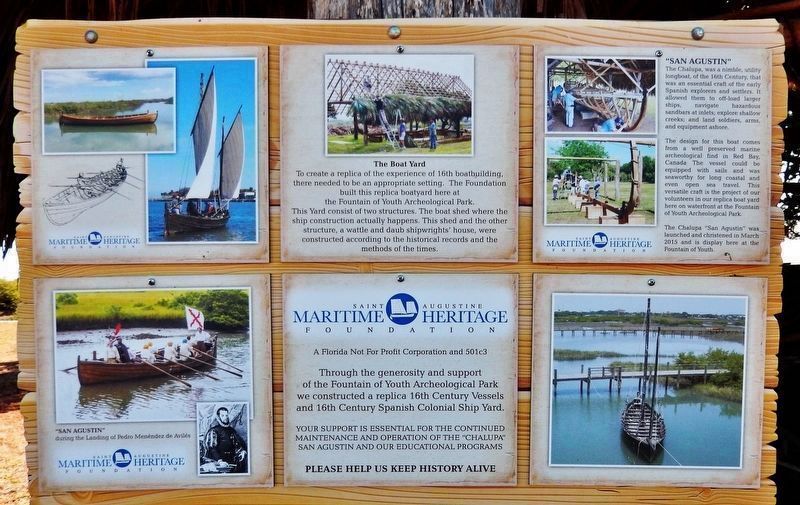
To create a replica of the experience of 16th century boatbuilding, there needed to be an appropriate setting. The Foundation built this replica boatyard here at the Fountain of Youth Archeological Park. This Yard consists of two structures. The boat shed is where the ship construction actually happens. This shed and the other structure, a wattle and daub shipwrights' house, were constructed according to the historical records and the methods of the times.
"San Agustín"
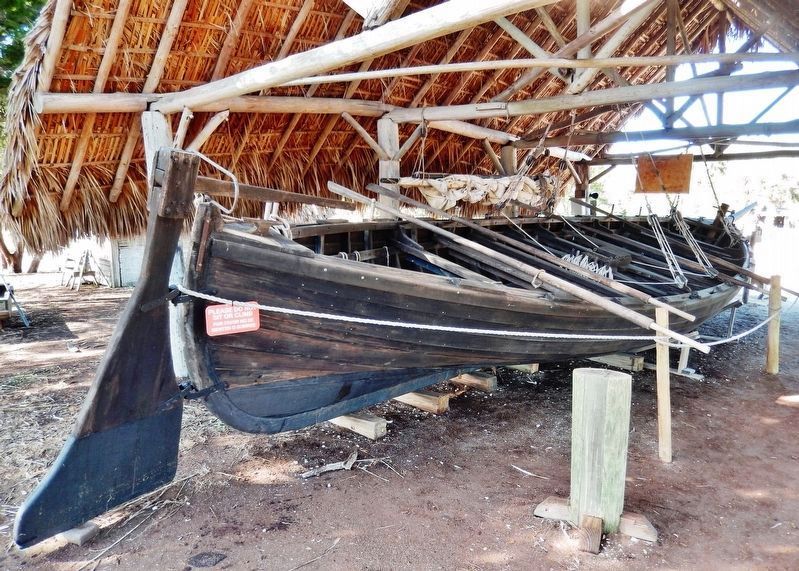
The Chalupa was a nimble, utility longboat of the 16th Century, that was an essential craft of the early Spanish explorers and settlers. It allowed them to off-load larger ships, navigate hazardous sandbars at inlets; explore shallow creeks; and land soldiers, arms, and equipment ashore.
The design for this boat comes from a well preserved marine archeological find in Red Bay, Canada. The vessel could be equipped with sails and was seaworthy for long coastal and even open sea travel. This versatile craft is the project of our volunteers in our replica boat yard here on the waterfront at the Fountain of Youth Archaeological Park.
The Chalupa "San Agustín" was launched and christened in March 2015 and is on display here at the Fountain of Youth.
Credits. This page was last revised on September 5, 2024. It was originally submitted on December 28, 2021, by Cosmos Mariner of Cape Canaveral, Florida. This page has been viewed 534 times since then and 50 times this year. Photos: 1, 2, 3, 4, 5, 6. submitted on December 29, 2021, by Cosmos Mariner of Cape Canaveral, Florida.
