Vicksburg in Warren County, Mississippi — The American South (East South Central)
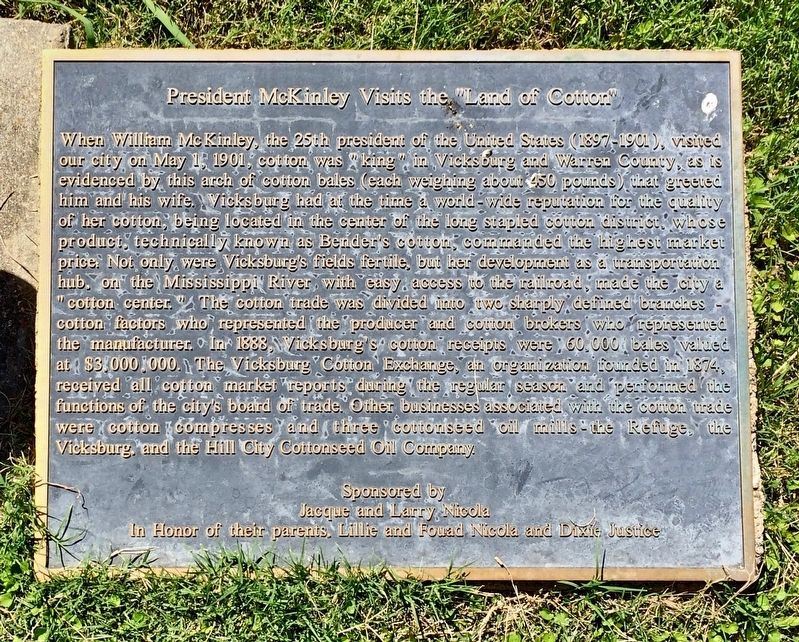
President McKinley Visits the "Land of Cotton"
Photographed by Mark Hilton, May 25, 2017
1. President McKinley Visits the "Land of Cotton" Marker
this page online
Jacque and Larry Nicola
In Honor of their parents, Lillie and Fouad Nicola and Dixie Justice
Erected 2007 by the City of Vicksburg Riverfront Mural Committee.
Topics and series. This historical marker is listed in these topic lists: Agriculture • Industry & Commerce • Waterways & Vessels. In addition, it is included in the Former U.S. Presidents: #25 William McKinley series list. A significant historical date for this entry is May 1, 1901.
Location. 32° 21.098′ N, 90° 53.017′ W. Marker is in Vicksburg, Mississippi, in Warren County. It can be reached from Levee Street south of Grove Street. The Vicksburg Riverfront Murals are located on the Yazoo Diversion Canal levee wall. Touch for map. Marker is at or near this postal address: Levee Street, Vicksburg MS 39183, United States of America. Touch for directions.

Regionally, this marker is in Natchez Trace Corridor and in Greater Jackson. It is also in the American South, specifically in the Deep South,
Photographed by Mark Hilton, May 25, 2017
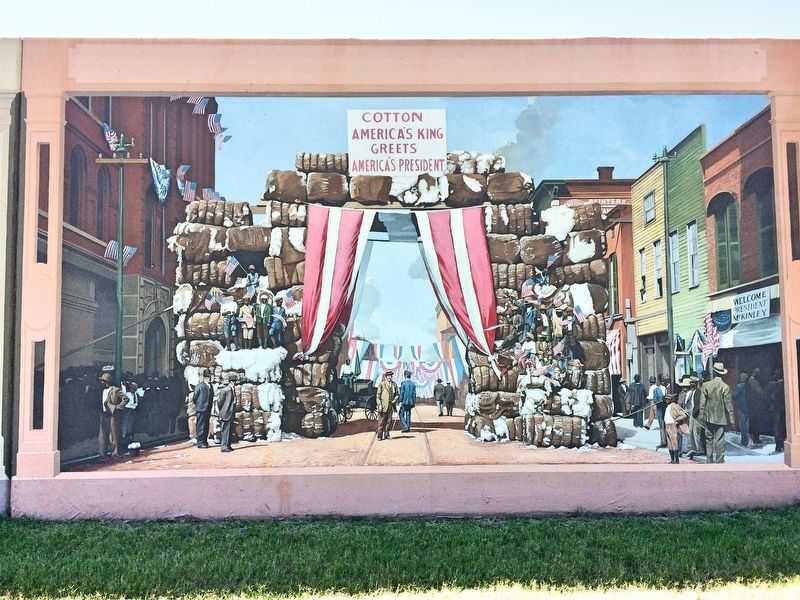
2. President McKinley Visits the "Land of Cotton" Mural
Other nearby markers. At least 8 other markers are within walking distance of this marker: The Nation's Most Destructive Flood (here, next to this marker); "The Blues are the Roots, the Rest are the Fruits"-Willie Dixon (here, next to this marker); Carr School (a few steps from this marker); The Steamer Sprague (a few steps from this marker); Brothers of the Sacred Heart (within shouting distance of this marker); "Logging on the River" (within shouting distance of this marker); "The Founding of Vicksburg and Methodism" (within shouting distance of this marker); The Vicksburg Garden Clubs and Planters Hall (within shouting distance of this marker). Touch for a list and map of all markers in Vicksburg.
Also see . . . The Vicksburg Riverfront Mural website. (Submitted on June 6, 2017, by Mark Hilton of Montgomery, Alabama.)
Photographed by Mark Hilton, May 25, 2017
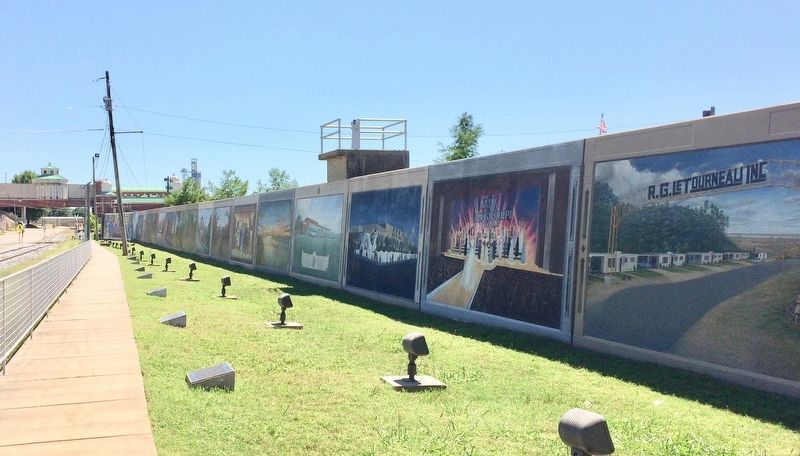
3. Vicksburg, Mississippi waterfront levee wall murals.
Credits. This page was last revised on January 25, 2022. It was originally submitted on June 6, 2017, by Mark Hilton of Montgomery, Alabama. This page has been viewed 703 times since then and 84 times this year. Last updated on January 24, 2022, by Carl Gordon Moore Jr. of North East, Maryland. Photos: 1, 2, 3. submitted on June 6, 2017, by Mark Hilton of Montgomery, Alabama. • J. Makali Bruton was the editor who published this page.
