Chiefland in Levy County, Florida — The American South (South Atlantic)
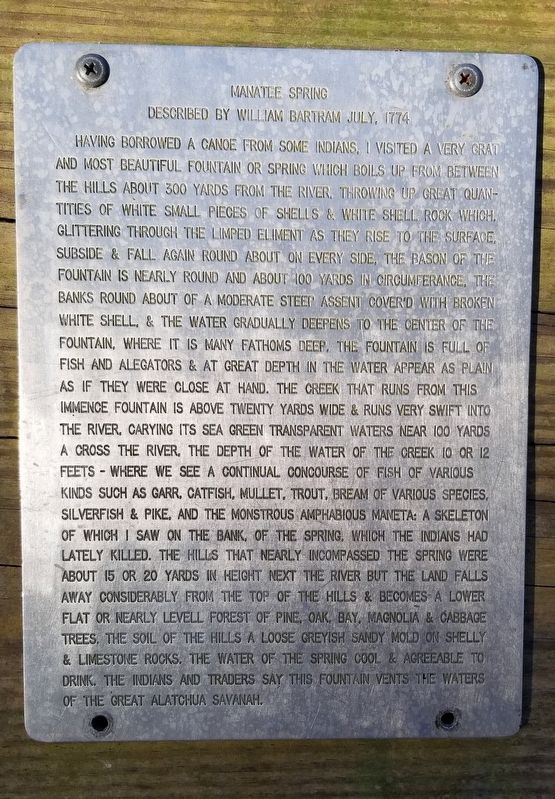
Manatee Spring
Described by William Bartram July, 1774
Photographed by James Hulse, January 19, 2022
1. Manatee Spring Marker
this page online
Erected by Manatee Springs State Park.
Topics. This historical marker is listed in these topic lists: Animals • Colonial Era • Indigenous Peoples and Communities • Parks & Recreational Areas.
Location. 29° 29.365′ N, 82° 58.627′ W. Marker is in Chiefland, Florida, in Levy County. It can be reached from NW 115th Street (Florida Route 320) half a mile west of North Young Boulevard (U.S. 98). The marker is located 250 feet north of the Manatee Springs parking lot next to the boardwalk at the springs.
Photographed by James Hulse, January 19, 2022
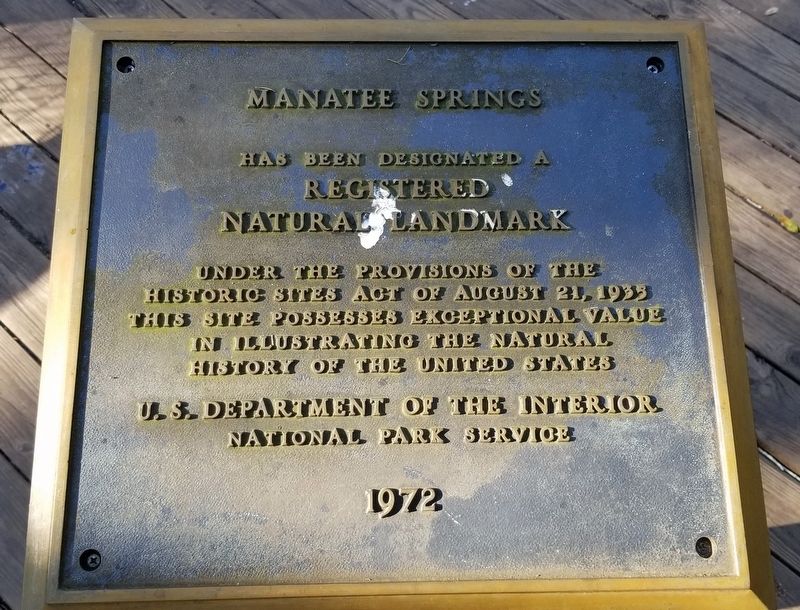
2. Manatee Springs Registered National Landmark

Regionally, this marker is in North Florida. It is also in the American South and on the Gulf Coast. Globally, it is in the North Atlantic Region, North America, a Gulf of Mexico state, the Western Hemisphere, the Western World, and the Anglosphere. Historically, it finds itself in what was once New Spain, the territory of the Mississippian Culture, one of the Confederate States of America, and the Antebellum South.
Other nearby markers. At least 8 other markers are within 8 miles of this marker, measured as the crow flies: Waterfront Dining for Thousands of Years (about 300 feet away, measured in a direct line); Sink Trail (approx. ¼ mile away); Old Town School (approx. 7 miles away); Dancing Dragonflies (approx. 7.1 miles away); Fanning Springs Bridge (approx. 7.4 miles away); Steamboat "City of Hawkinsville" (approx. 7.4 miles away); The History of Fort Fanning (approx. 7½ miles away); Oldtown (approx. 7.8 miles away). Touch for a list and map of all markers in Chiefland.
More about this marker.
Photographed by James Hulse, January 19, 2022
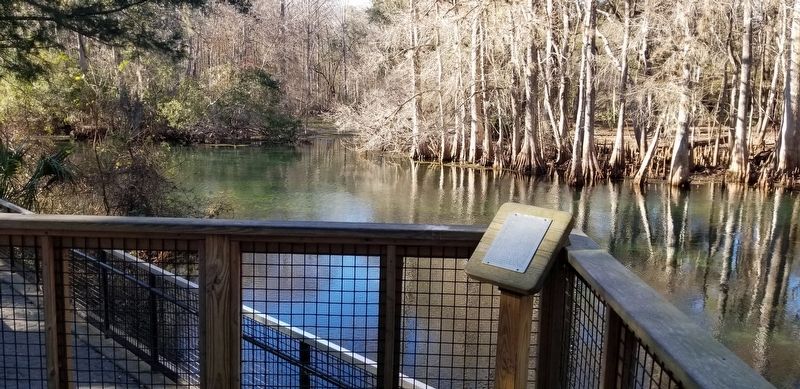
3. The Manatee Springs and Marker along the boardwalk
Also see . . . William Bartram.
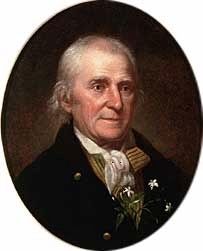
William Bartram (April 20, 1739 – July 22, 1823) was an American botanist, ornithologist, natural historian, and explorer. Bartram was author of an acclaimed book, now known by the shortened title Bartram's Travels, which chronicled his explorations of the southern British colonies in North America from 1773–1777. Bartram has been described as "the first naturalist who penetrated the dense tropical forests of Florida." Source: Wikipedia(Submitted on January 28, 2022, by James Hulse of Medina, Texas.)

Photographed by James Hulse, January 19, 2022
4. A Manatee display next to the springs
Public Domain - Wikipedia, circa 1800s
5. William Bartram (April 20, 1739 — July 22, 1823) was an American naturalist
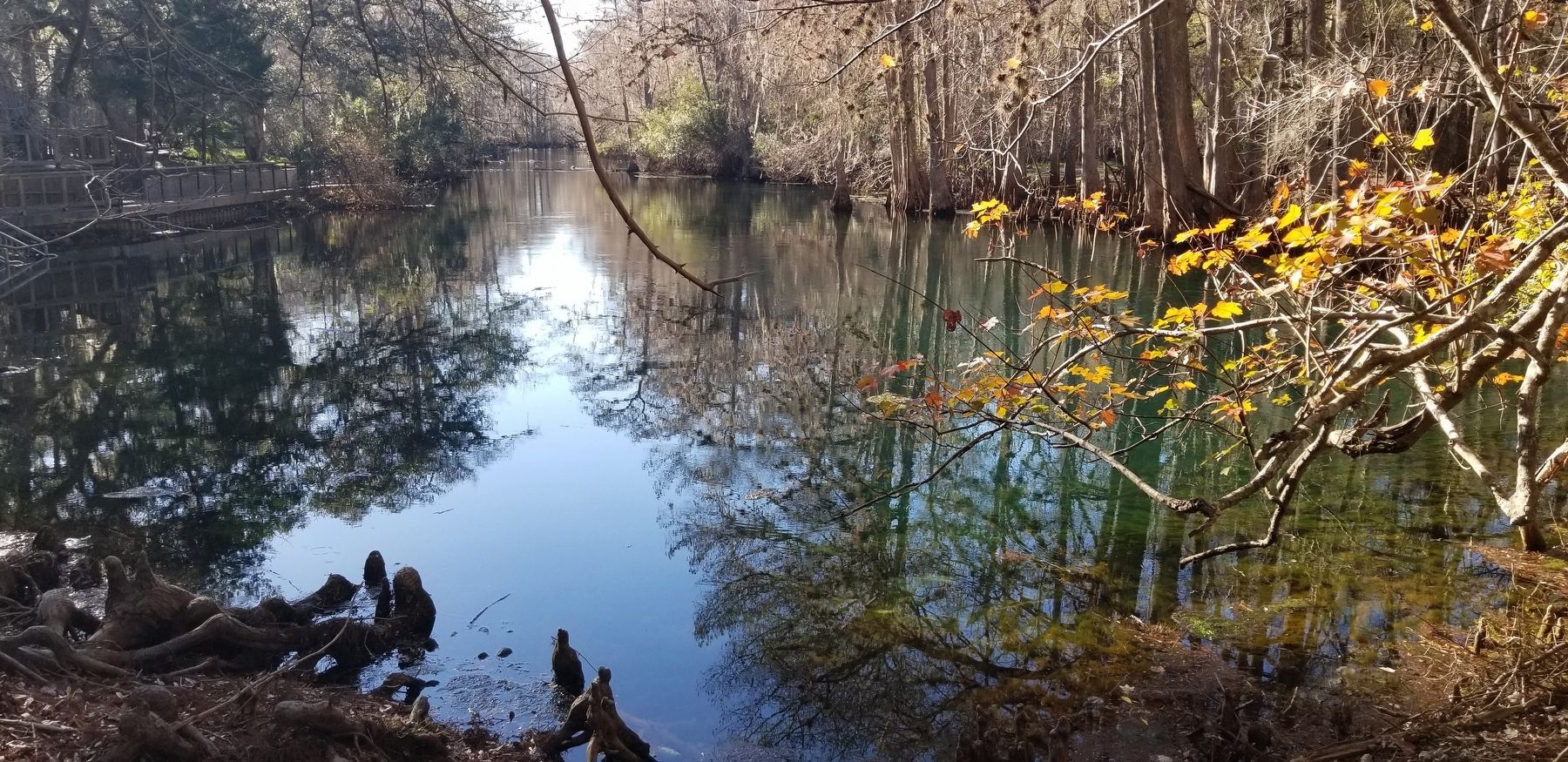
Photographed by James Hulse, January 19, 2022
6. The view of the Manatee Springs along the boardwalk
Credits. This page was last revised on January 28, 2022. It was originally submitted on January 28, 2022, by James Hulse of Medina, Texas. This page has been viewed 682 times since then and 39 times this year. Photos: 1, 2, 3, 4, 5, 6. submitted on January 28, 2022, by James Hulse of Medina, Texas.
