Adams Morgan in Northwest Washington in Washington, District of Columbia — The American Northeast (Mid-Atlantic)
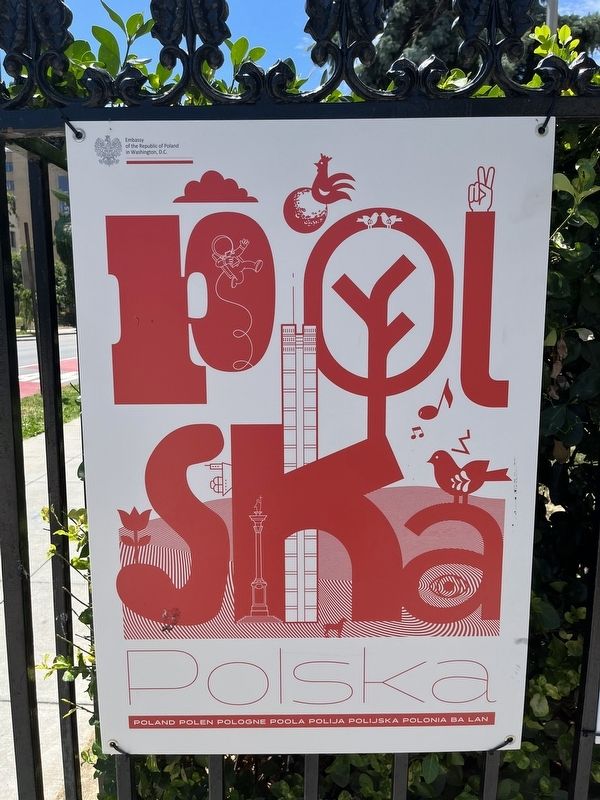
Polska
Poland • Polen • Pologne • Poola • Polija • Polijska • Polonia • Ba Lan
| — | Embassy of the Republic of Poland in Washington, D.C. | — |
People
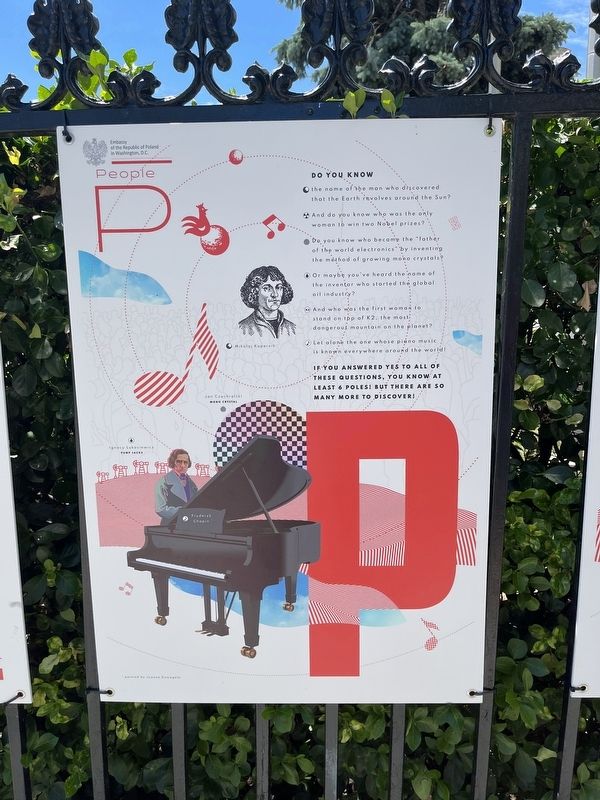
Do you know
🌍 the name of the man who discovered that the Earth revolves around the Sun?
☢️ And do you know who was the only woman to win two Nobel prizes?
• Do you know who became the "father of the world electronics" by inventing the method of growing mono crystals?
• Or maybe you've heard the name of the inventor who started the global oil industry?
• And who was the first woman to stand on top of K2, the most dangerous mountain on the planet?
🎶 Let alone the one whose piano music is known weverywhere around the world!
If you answered yes to all these questions, you know at least 6 Poles! But there are so many more to discover!
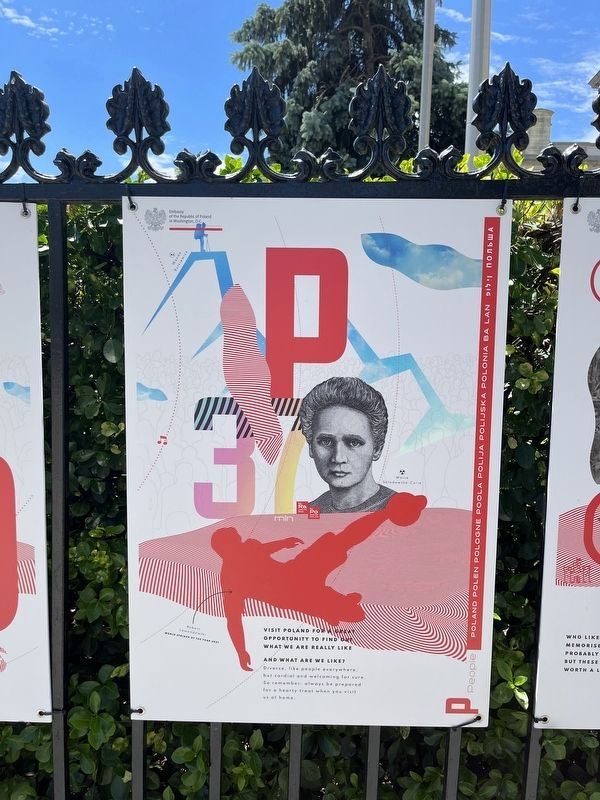
Visit Poland for a great opportunity to find out what we are really like
And what are we like?
Diverse, like people everywhere, but cordial and welcoming for sure. So remember: always be prepared for a hearty treat when you visit us at home.
Robert Lewandowski, World Striker of the Year 2021
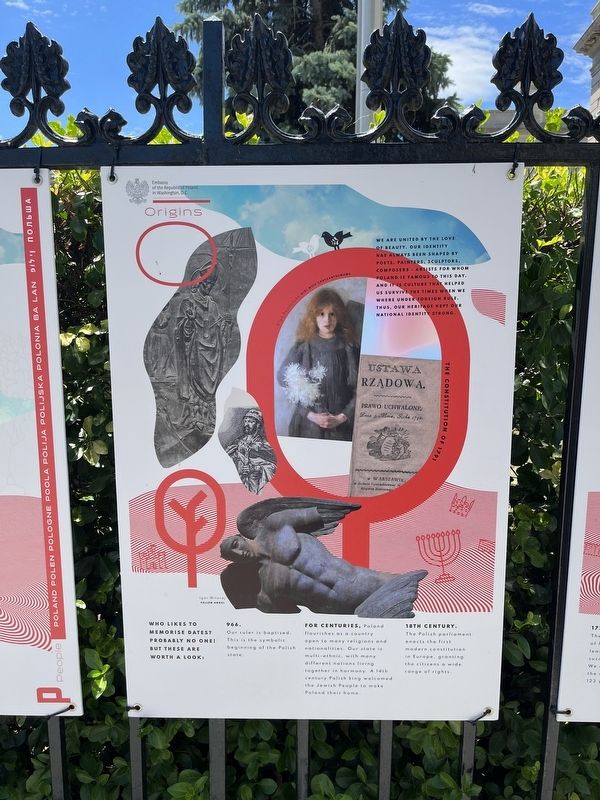
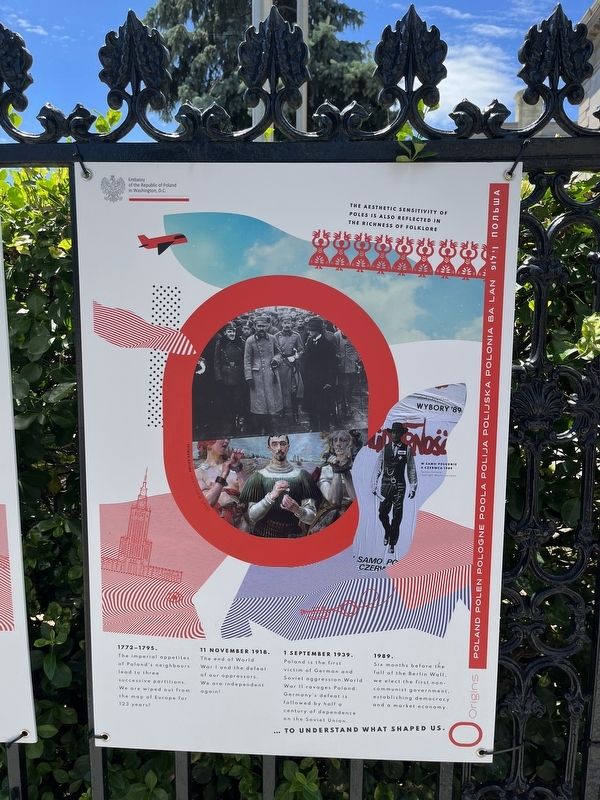
Origins
We are united by the love of beauty, our identity has always been shaped by poets, painters, sculptors, composers - artists for whom Poland is famous to this day. And it is culture that helped us survive the times when we where under foreign rule. Thus, our heritage kept our national identity strong.
Who likes to memorise dates? Probably no one! But these are worth a look:
966.
this page online
For centuries, Poland flourishes as a country open to many religions and nationalities. Our state is multi-ethnic, with many different nations living together in harmony. A 14th century Polish king welcomed the Jewish People to make Poland their home.
18th century. The Polish parliament enacts the first modern constitution in Europe, granting the citizens a wide range of rights.
1772-1795. The imperial appetites of Poland's neighbours lead the three successive partitions. We are wiped out from the map of Europe for 123 years!
11 November 1918. The end of World War I and the defeat of our oppressors. we are independent again!
1 September 1939. Poland is the first victim of German and Soviet aggression. World War II ravages Poland. Germany's defeat is followed by half a century of dependence on the Soviet Union.
1989. Six months before the fall of the Berlin Wall, we elected the first non-communist government, established democracy and a market economy.
… to understand what shaped us.
Landscape
What is Poland's landscape like?
Highland?
You will find everything here. The Polish landscape amazes even us, every day.
It's the beautiful white sand, cliffs, salt water, thousands of lakes, rivers, primeval forests inhabited by the European bison, woods, a desert, plains, hills, rocks, volcanoes (fortunately extinct), high mountains …
Wait a minute, a desert?
What desert?
A major and rare European desert area!
Volcanoes? Yes, very beautiful although thankfully extinct!
See? Amazing, isn't it?
Solidarity
Solidarność is
Helping Hand
From Africa to Asia, everyone can count on our help. We go wherever there is a need for humanitarian aid and support in the fight against disasters — like in Italy, where Polish doctors rushed to help when Covid-19 took its heaviest toll there.
The Polish word for solidarity,
Solidarność, has two meanings:
Solidarność is
Freedom
This is the reason why we are where we are now. The protests of 10 million Poles in 1980 changed the face of the world, spread to neighboring countries, leading to the fall of the Berlin Wall.
The Iron Curtain
Knowledge
Did you know that…
Oumuamua, an asteroid from outside the Solar System, does not rotate around the axis, but rather tumbles through space?
And did you know that…
This strange moving pattern was discovered by Polish astronomers?
This is just one example but the number of names originating from Poland in science is truly impressive.
Our scientists make discoveries and develop technical solutions that serve people all over the world.
Mars rovers, the use of holographic visualization technology in medicine, prosthetic limbs, tools for remote monitoring of patients' health, extensive face transplants, the world's first cochlear implant surgery for a partially deaf person … Yes, poles have contributed to these and many other achievements.
A special place in Poland is occupied by "The Queen of Sciences", mathematics.
It is enough to mention the group of math genius that flourished in Poland in the 20th century known in the world as the Polish School of Mathematics or about Marian Rejewski who together with mathematecian-cryptologists
We are pioneers not only in the sciences.
Archaeology and preservation are other fields in which Poles have achieved success on a global scale. An excellent example is the discovery and rescue of works of ancient Nubian art in Faras by Polish archaeologists.
However, it all starts here in Poland, where excellent universities educate future specialists, and state-of-the-art educational science centres are created for children and youth … because we know the potential that lies in their minds. Our universities are also open to foreign students, giving them the opportunity to pursue education in virtually any field of study. Who knows, maybe one day you'll make a breakthrough in math, computer science, medicine or any other field offered by Polish universities?
:-)
Architecture
What is Polish architecture like? Well, it depends on where you look.
If you look back, you'll see many magnificent traces of history, castles, palaces, churches, manors, tenement houses - because every historic site that has survived the turmoil
We have put a huge effort into restoring them to their former glory. This is where our vast experience and achievements in conservation and archaeology come from. We put it into use not only in Poland, but also all over the world: from the Easter Islands, Bolivia, Peru, Egypt, Sudan, to Europe and Cambodia.
If you look ahead, you will see how seamlessly the old can bleed with the new. You will see how Poland encourages aesthetic and architectural expression, becoming a magnet for international designers and giving Polish architects great opportunities to create.
Why not start your visit at the POLIN Museum of the History of Polish Jews in Warsaw? Or the Szczecin Philharmonic awarded the European Prize for Contemporary Architecture, or perhaps the MS2 in Lódz, a breathtaking museum of modern art converted from former factory buildigns? And you simply can't miss the Dialogue Centre "Przełomy" (Breakthroughs) in Szczecin, winner of the 2016 World Building of the Year, awarded for the first time to a project from Poland.
Or better still… just stay here for longer!
Erected by Embassy of
Photographed by Devry Becker Jones (CC0), June 20, 2022
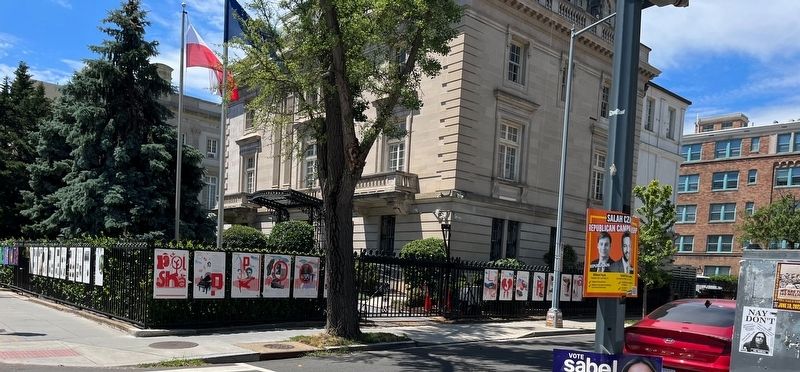
6. Polska display on the north side of the Polish Embassy in the United States
Topics. This historical marker is listed in these topic lists: Air & Space • Anthropology & Archaeology • Architecture • Charity & Public Work • Education • Government & Politics • Science & Medicine • War, Cold • War, World I. A significant historical date for this entry is September 1, 1939.
Location. Marker has been permanently removed. It was located near 38° 55.483′ N, 77° 2.2′ W. Marker was in Northwest Washington in Washington, District of Columbia. It was in Adams Morgan. It was at the intersection of Fuller Street Northwest and 16th Street Northwest, on the left when traveling west on Fuller Street Northwest. Touch for map. Marker was at or near this postal address: 2640 16th St NW, Washington DC 20009, United States of America.
We have been informed that this marker is no longer there and will not be replaced. This page is an archival view of what was.
Regionally, this marker was in the Washington Metropolitan Area. It was also in the American Northeast, in the Upper South, in the Mid-Atlantic, in the Tidewater, and in the Chesapeake Bay Region. Globally, it was in North America, the Western Hemisphere, the Western World, and the Anglosphere.

Other nearby markers. within walking distance of this location: Touch for a list and map of all markers in Northwest Washington.
Other markers no longer nearby. Canoandes'79 - 40 years later! (was here, next to this marker but has been replaced with another marker now near it); Development of the Colca Valley (was here, next to this marker but has been replaced with another marker now near it); Works For Piano And Orchestra (was here, next to this marker but has been permanently removed); Songs (was here, next to this marker but has been permanently removed); Return to the Colca Canyon (was here, next to this marker but has been replaced with another marker now near it); Jan Czochralski (was here, next to this marker but has been permanently removed); Return from the rock abyss (was here, next to this marker but has been replaced with another marker now near it); The first run of the Colca Canyon - May/June 1981 (was here, next to this marker but has been replaced with another marker now near it); Preludes (was here, next to this marker but has been permanently removed); Nocturns (was here, next to this marker but has been permanently removed); Impromptus (was here, next to this marker but has been permanently removed); Historic Expedition (was here, next to this marker but has been replaced with another marker now near it); Waltzes (was here, next to this marker but has been permanently removed); a different marker also named The first run of the Colca Canyon - May/June 1981 (was here, next to this marker but has been replaced with another marker now near it); Sonatas (was here, next to this marker but has been permanently removed); a different marker also named The first run of the Colca Canyon - May/June 1981 (was here, next to this marker but has been replaced with another marker now near it).
Also see . . . Polska Marker Photos 06-20-2022. Additional photos taken of the marker. (Submitted on June 20, 2022, by Devry Becker Jones of Washington, District of Columbia.)
Credits. This page was last revised on October 14, 2024. It was originally submitted on June 20, 2022, by Devry Becker Jones of Washington, District of Columbia. This page has been viewed 290 times since then and 14 times this year. Photos: 1, 2, 3, 4, 5, 6. submitted on June 20, 2022, by Devry Becker Jones of Washington, District of Columbia.
