Turtlecreek Township near Lebanon in Warren County, Ohio — The American Midwest (Great Lakes)
Ohio Native Plants
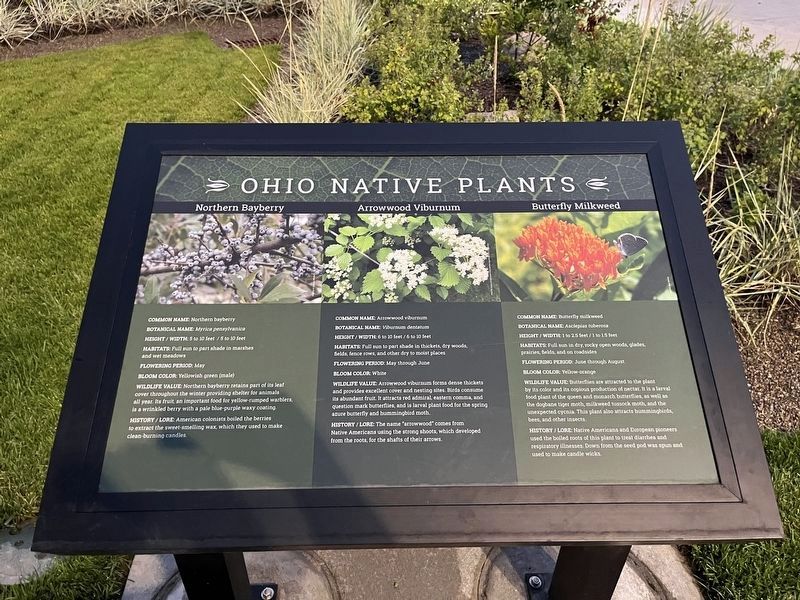
Botanical Name: Myrica pensylvanica
Height / Width: 5 to 10 feet / 5 to 10 feet
Habitats: Full sun to part shade in marshes and wet meadows
Flowering Period: May
Bloom Color: Yellowish green (male)
Wildlife Value: Northern bayberry retains part of its leaf cover throughout the winter providing shelter for animals all year. Its fruit, an improvement food for yellow-rumped warblers, is a wrinkled berry with a pale blue-purple waxy coating.
History / Lore: American colonist boiled the berries to extract sweet-smelling wax, which they used to make clean burning candles.
Botanical Name: Viburnum dentatum
Height / Width: 6 to 10 feet / 6 to 10 feet
Habitats: Full sun to part shade in thickets, dry woods, fields, fence rows, and other dry to moist places.
Flowering Period: May through June
Bloom Color: White
Wildlife Value: Arrowwood viburnum forms dense thickets and provides excellent cover and nesting sites. Birds consume its abundant fruit. It attracts red admiral, eastern comma,
this page online
History / Lore: The name "arrowwood" comes from Native Americans using the strong shoots, which developed from the roots, for the shafts of their arrows.
Botanical Name: Ascepias tuberosa
Height / Width: 1 to 2.5 feet / 1 to 1.5 feet
Habitats: Full sun in dry, rocky open woods, glades, prairies, fields, on the roadsides.
Flowering Period: June through August
Bloom Color: Yellow-orange
Wildlife Value: Butterflies are attracted to the plant by its color and its copious production of nectar. It is a larval food plant of the queen and monarch tussock moth, and the unexpected cycnia. This plant also attracts hummingbirds, bees, and other insects.
History / Lore: Native Americans and European pioneers used the boiled roots of this plant to treat diarrhea and respiratory illnesses. Down from the seed pod was spun and used to make candle wicks.
Topics. This historical marker is listed in these topic lists: Anthropology & Archaeology • Colonial Era
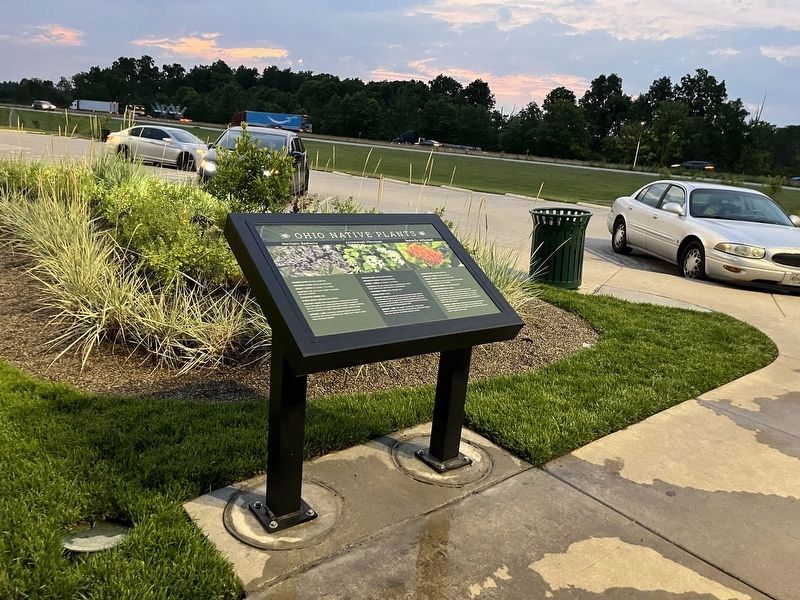
Location. 39° 24.85′ N, 84° 7.404′ W. Marker is near Lebanon, Ohio, in Warren County. It is in Turtlecreek Township. It is on Interstate 71 north of Ohio Route 123, on the right when traveling north. Touch for map. Marker is in this post office area: Lebanon OH 45036, United States of America. Touch for directions.

Regionally, this marker is in Greater Cincinnati and in the Miami Valley. It is also in the American Midwest and in the Corn Belt. Globally, it is in North America, the Western Hemisphere, the Western World, and the Anglosphere. Historically, it finds itself in what was once the Haudenosaunee (Iroquois) Confederacy, the territory of the Mississippian Culture, and the Northwest Territory.
Other nearby markers. At least 8 other markers are within walking distance of this marker: A different marker also named Ohio Native Plants (a few steps from this marker); Ohio Buckeye Tree (within shouting distance of this marker); a different marker also named Ohio Native Plants (within shouting distance of this marker); a different marker also named Ohio Native Plants (within shouting distance of this marker); a different marker also named Ohio Native Plants (about 500 feet away, measured in a direct line); a different marker also named Ohio Native Plants (about 500 feet away); a different marker also named Ohio Native Plants (about 500 feet away); a different marker also named Ohio Native Plants (about 600 feet away). Touch for a list and map of all markers in Lebanon.
Credits. This page was last revised on February 6, 2023. It was originally submitted on July 2, 2022, by Devry Becker Jones of Washington, District of Columbia. This page has been viewed 393 times since then and 26 times this year. Photos: 1, 2. submitted on July 2, 2022, by Devry Becker Jones of Washington, District of Columbia.
