Brooklyn Botanic Garden in Kings County, New York — The American Northeast (Mid-Atlantic)
Working Plants
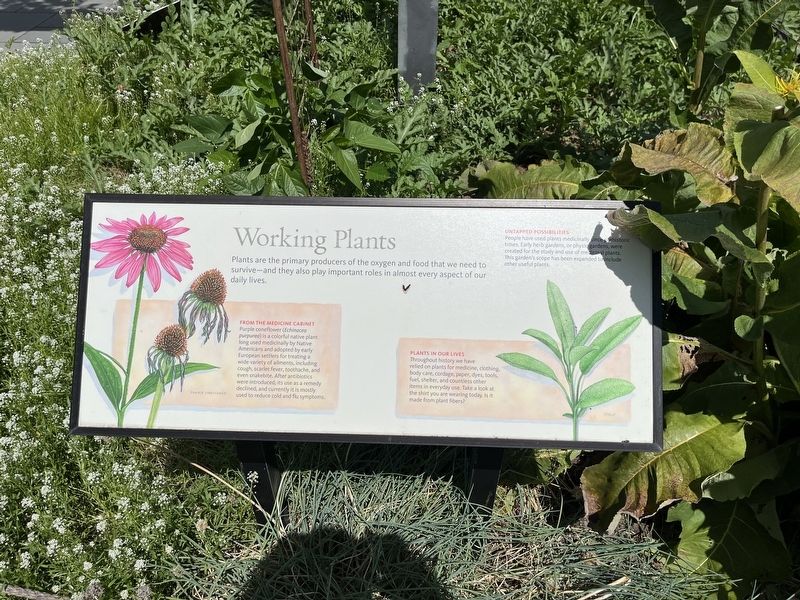
Plants are the primary producers of the oxygen and food that we need to survive—and they also play important roles in almost every aspect of our daily lives.
Untapped Possibility
People have used plants medicinally since prehistoric times. Early herb gardens, or physic gardens, were created for the study and use of medicinal plants. This garden's scope has been expanded to include other useful plants.
From the Medicine Cabinet
Purple coneflower (Echinacea purpurea) is a colorful native plant long used medicinally by Native Americans and adopted by early European settlers for treating a wide variety of ailments, including cough, scarlet fever, toothache, and even snakebite. After antibiotics were introduced, its use as a remedy declined, and currently it is mostly used to reduce cold and flu symptoms.
Plants In Our Lives
Throughout history we have relied on plants for medicine, clothing, body care, cordage, paper, dyes, tools, fuel, shelter, and countless other items in everyday use. Take a look at the shirt you are wearing today. Is it made from plant fibers?
Erected by Brooklyn Botanic Garden.
Topics.
this page online
Location. 40° 39.903′ N, 73° 57.792′ W. Marker is in Brooklyn, New York, in Kings County. It is in Brooklyn Botanic Garden. It can be reached from Flatbush Avenue 0.1 miles north of Empire Boulevard, on the right when traveling north. Touch for map. Marker is at or near this postal address: 455 Flatbush Ave, Brooklyn NY 11225, United States of America. Touch for directions.

Regionally, this marker is in New York City and on Long Island. It is also in the American Northeast, in the Mid-Atlantic, and on the Eastern Seaboard. Globally, it is in the North Atlantic Region, North America, the Western Hemisphere, the Western World, and the Anglosphere. Historically, it finds itself in what was once New Netherland and also one of the original Thirteen Colonies.
Other nearby markers. At least 8 other markers are within walking distance of this marker: Marigold (Tagetes erecta) (here, next to this marker);
Credits. This page was last revised on February 7, 2023. It was originally submitted on August 16, 2022, by Devry Becker Jones of Washington, District of Columbia. This page has been viewed 146 times since then and 19 times this year. Photos: 1, 2. submitted on August 16, 2022, by Devry Becker Jones of Washington, District of Columbia.
