Midtown in San Antonio in Bexar County, Texas — The American South (West South Central)
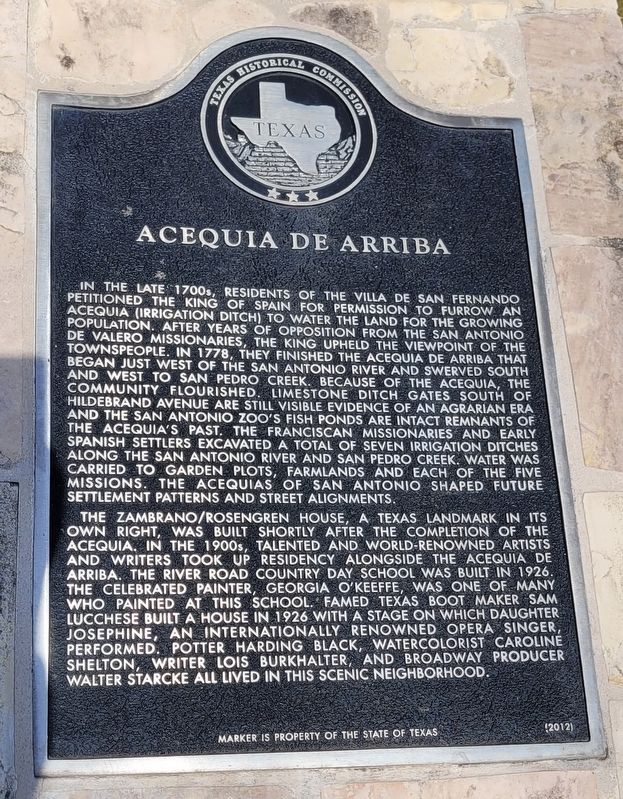
Acequia de Arriba
Photographed by James Hulse, December 27, 2022
1. Acequia de Arriba Marker
The Zambrano/Rosengren House, a Texas Landmark in its own right, was built shortly after the completion of the acequia. In the 1900s, talented and world-renowned
this page online
Erected 2012 by Texas Historical Commission. (Marker Number 17368.)
Topics. This historical marker is listed in these topic lists: Colonial Era • Hispanic Americans • Settlements & Settlers • Waterways & Vessels. A significant historical year for this entry is 1778.
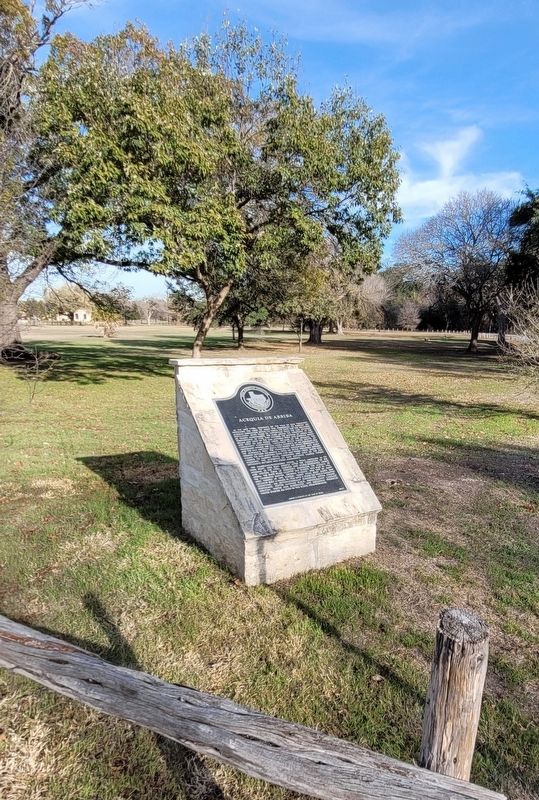
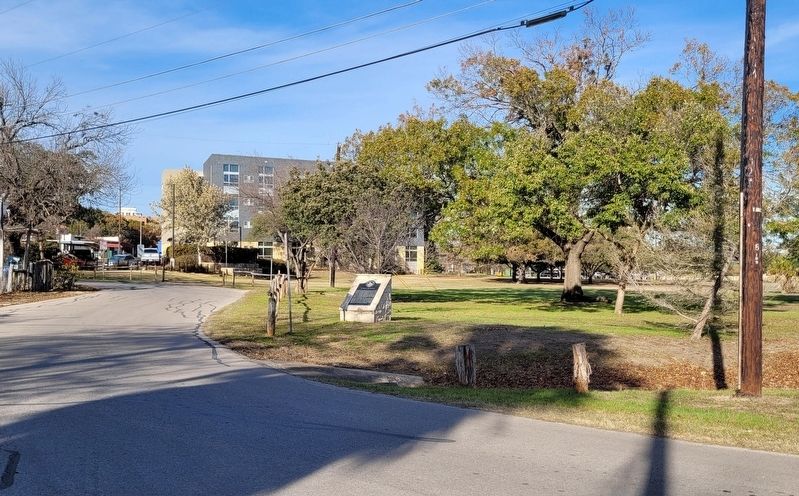
Location. 29° 27.334′ N, 98° 28.73′ W. Marker is in San Antonio, Texas, in Bexar County. It is in Midtown. It is at the intersection of Allison Road and Anastacia Place, on the left when traveling south on Allison Road. The marker is located in Davis Park just inside the park. Touch for map. Marker is in this post office area: San Antonio TX 78212,
Photographed by James Hulse, December 27, 2022
2. Acequia de Arriba Marker

Regionally, this marker is in South Texas. It is also in the American South. Globally, it is in North America, a Gulf of Mexico state, the Western Hemisphere, the Western World, and the Anglosphere. Historically, it finds itself in what was once New Spain, the Republic of Texas, and one of the Confederate States of America.
Other nearby markers. At least 8 other markers are within walking distance of this marker: Acequia Labor de Arriba (within shouting distance of this marker); Polo Field (approx. 0.2 miles away); Archaeology in Brackenridge Park (approx. ¼ mile away); Water Works Channel (approx. ¼ mile away); The Mexican Village (approx. 0.4 miles away); Japanese Tea Garden (approx. 0.4 miles away); Upper Labor Acequia (approx. 0.4 miles away); Alamo Portland and Roman Cement Company (approx. 0.4 miles away). Touch for a list and map of all markers in San Antonio.
Also see . . . Acequias. Texas State Historical Association
The building of acequias, or irrigation canals, was an important element in Spanish efforts to colonize Texas. Much of the region occupied by the Spanish in Texas was semiarid, and irrigation was vitally necessary for the success of agriculture. Acequias had been widely used throughout Spain since the time of the Moorish conquest, and the early Spanish colonists brought with them sophisticated knowledge of how to construct large-scale irrigation systems. The earliest acequias in Texas were dug near Ysleta, below El Paso, after 1680 by Pueblo Indians under the supervision of Spanish friars. These first acequias eventually became part of a large irrigation network, portions of which were still in use in the early 1990s.(Submitted on January 3, 2023, by James Hulse of Medina, Texas.)
Photographed by James Hulse, December 27, 2022
3. The view of the Acequia de Arriba Marker from the street
Credits. This page was last revised on February 2, 2023. It was originally submitted on January 3, 2023, by James Hulse of Medina, Texas. This page has been viewed 461 times since then and 50 times this year. Photos: 1, 2, 3. submitted on January 3, 2023, by James Hulse of Medina, Texas.
